Vietnam targets 2.6 billion litres of domestic raw milk a year by 2030
Vietnam plans to raise domestic raw-milk output to about 2.6 billion litres a year by 2030, covering 60-65% of processors’ demand. The strategy combines herd and feed-zone expansion with investment reform, stronger cold-chain links, updated standards and tighter market oversight.
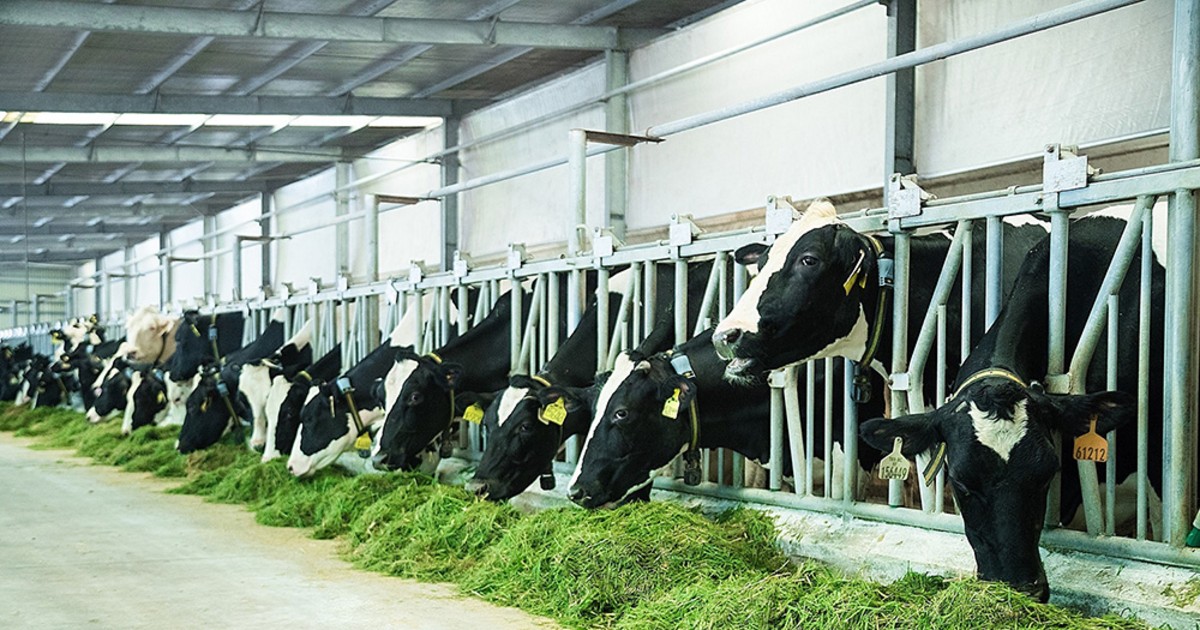
Domestic milk target rises to 60-65% of demand
Vietnam is seeking to reduce its dairy industry’s dependence on external raw-material supplies by lifting domestic fresh-milk production to about 2.6 billion litres a year by 2030. That volume is intended to cover roughly 60-65% of demand from the country’s dairy-processing industry, according to the Vietnam Dairy Association. Domestic fresh milk currently meets only about 40% of production needs, leaving a substantial gap for the industry to close.
The objectives form part of Vietnam’s dairy development strategy through 2030, with a vision to 2045. The prime minister approved the strategy under Decision No. 309/QD-TTg on 23 February 2026, while the Ministry of Industry and Trade issued its action plan under Decision No. 2188/QD-BCT on 8 September 2026. The plan focuses on increasing herd size and productivity, expanding domestic raw-material supply, developing higher-value processed products and growing both domestic consumption and exports.
Land, feed and finance constrain farm expansion
VnEconomy reported that high production costs, inefficient logistics, weak value-chain links and uneven technological capacity continue to limit competitiveness. Smaller farms and cooperatives face particular pressure. Tống Xuân Chinh, vice chairman and secretary-general of the Vietnam Dairy Association, said they require support involving breeds, forage cultivation and the processing of agricultural by-products if they are to compete with large companies operating integrated supply chains.
Large producers also face constraints. A TH true MILK representative said the company has a herd of about 80,000 cattle and plans to raise it to 150,000 in the coming years, but access to land for growing grass and securing feed is a major obstacle. The company has proposed allowing low-efficiency agricultural land to be converted to forage production. The association also advocates suitable farming zones, improved breeding and veterinary services, environmental treatment, long-term credit, stable procurement agreements and stronger refrigerated storage and collection networks.
Public funding should concentrate on shared industry infrastructure, including applied research, standards, testing, market surveillance, sector data and technical training, Chinh told Công Thương. Private capital would remain the main source of investment in farms, raw-material zones, processing plants, technology and market development. For investors, the association identified access to suitable land, long-term finance, production costs, infrastructure and the duration of approval procedures as issues requiring further attention.
Standards and enforcement move up the agenda
Market transparency is another part of the strategy. Between 2025 and the end of the first quarter of 2026, market-management authorities handled nearly 200 dairy-related violations, imposed administrative fines exceeding 1.8 billion Vietnamese dong and confiscated infringing goods worth more than 1.7 billion dong, VnEconomy reported. Cases included smuggled products, goods of unclear origin and breaches involving labels and displayed prices. Misleading claims about product characteristics and benefits are also increasing across e-commerce platforms, social networks and livestream sales.
Authorities are studying revisions to the national technical regulation for liquid milk while encouraging advanced processing, cleaner production, digital systems and product traceability. The Dairy Association wants labels to distinguish clearly between products made from fresh raw milk and those based on reconstituted milk. It supports risk-based inspections and firm action on verified breaches, while seeking to avoid duplicate checks on compliant companies. Expanded school milk or school-meal programmes could also support demand, provided that quality, safety and traceability are assured.
Competitiveness depends on coordinated execution
The 2030 target will require annual assessment against actual milk output, herd size and yield, processors’ demand, project implementation and domestic and export-market conditions. International investment by Vietnamese dairy companies may help secure raw materials, technology and new markets, but it also increases pressure to make domestic investment more predictable. The strategy’s outcome will therefore depend on linking herd expansion with feed supply, processing capacity, reliable purchasing arrangements and enforceable product standards across the entire dairy chain.