Vietnam targets 20% domestic supply of pharmaceutical ingredients by 2030
Vietnam has approved a pharmaceutical chemicals program targeting domestic production of about 20% of the ingredients needed by its drug manufacturers by 2030. The plan also calls for at least two advanced research centers, universal compliance with quality and safety requirements, and annual export growth of at least 10% for high-value pharmaceutical chemicals.
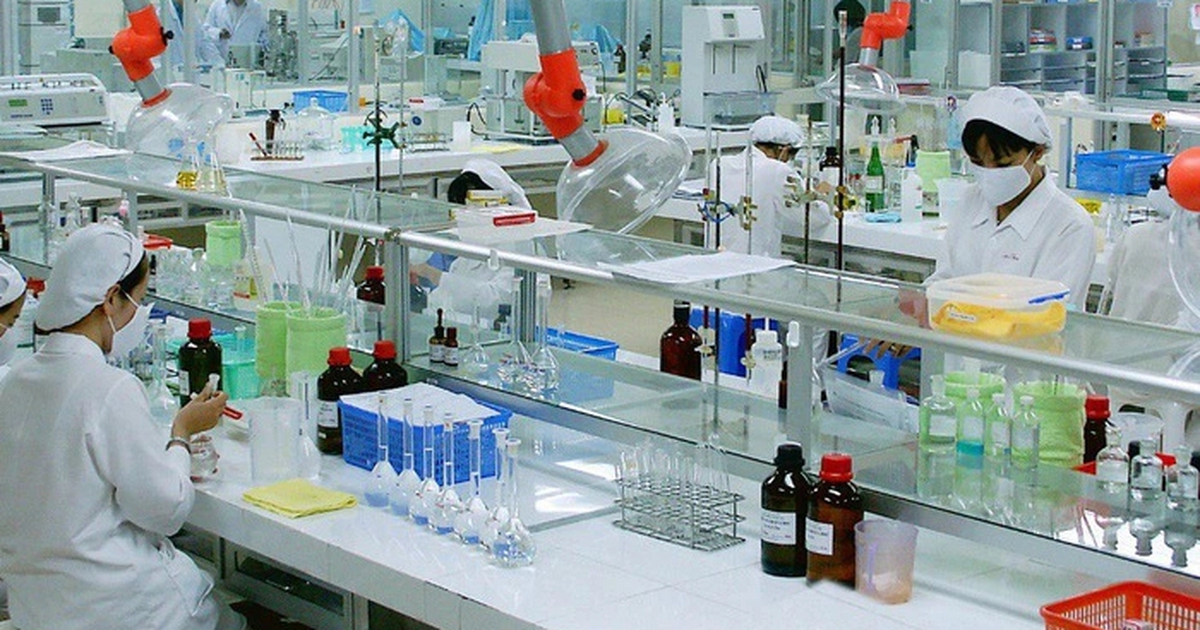
Vietnam sets pharmaceutical ingredient production target
Vietnam has approved a national program to develop its pharmaceutical chemicals industry through 2030, with a longer-term vision extending to 2045. Deputy Prime Minister Phạm Thị Thanh Trà signed Decision No. 1954/QĐ-TTg on October 8, 2026, according to the Government Electronic Newspaper.
The central target is to supply about 20% of the pharmaceutical ingredients required for domestic drug production by 2030. Priority categories include active pharmaceutical ingredients, starting materials, chemical intermediates and excipients considered essential, strategic or commercially competitive. The program is intended to reduce dependence on imported inputs and improve Vietnam’s ability to withstand disruptions in international pharmaceutical supply chains.
Research centers and production standards
By 2030, Vietnam plans to establish at least two advanced pharmaceutical chemistry research and development centers that meet international standards. Their work is expected to cover process development, testing, scale-up, technology transfer and support for commercializing pharmaceutical technologies and products.
The program also requires all domestic manufacturers of active ingredients, excipients and other pharmaceutical materials to meet applicable quality, Good Manufacturing Practice and chemical safety requirements. At least 50% of production facilities are expected to use digital systems for manufacturing management, quality control and traceability.
Technology priorities include synthesis, extraction, purification, biotechnology and peptides. The government will support companies seeking to acquire, adapt, scale up and transfer production technology, with particular attention to widely used active ingredients, inputs for essential medicines, high-value products and materials capable of replacing imports. Research into new-generation excipients and other potentially competitive pharmaceutical chemicals will also be encouraged.
Exports and international partnerships
Vietnam aims to commercialize selected high-value pharmaceutical chemical technologies and products, initially concentrating on materials that can replace imports, supply domestic drug plants or reach export markets. The program sets a target of at least 10% annual export growth for high-value pharmaceutical chemical products, while seeking a larger role for Vietnamese suppliers in regional and global value chains.
International cooperation will focus on countries, research organizations, universities and multinational pharmaceutical and chemical groups with capabilities in starting materials, intermediates, active ingredients, excipients and advanced production technologies. Cooperation on standards, testing, GMP, conformity assessment and mutual recognition is intended to strengthen Vietnam’s capacity to manufacture and export pharmaceutical inputs.
Skills, regulation and supply security
Training priorities include synthetic and process chemistry, biotechnology, peptide technology, analysis, GMP, quality assurance and control, validation, technology transfer, smart manufacturing, digital systems and chemical safety. The plan calls for closer cooperation among companies, universities and research institutes, including training in laboratories, pilot facilities and manufacturing plants.
Investment Review reported that the Ministry of Health is also simplifying administrative procedures and expanding online public services. Of 47 digital public services covering pharmaceuticals and cosmetics, 37 are fully online and 10 are partly online; 24 of the fully online services are connected to the National Single Window for pharmaceutical import-export procedures and imported cosmetics notifications. The ministry is separately working to process import permits for unregistered medicines, controlled pharmaceutical ingredients, rare drugs and products with limited supply.
By 2045, Vietnam wants a modern, competitive pharmaceutical chemicals industry with stronger control over essential and strategic inputs and a more complete network linking research, technology, manufacturing and commercialization. For producers and investors, the nearer-term tests will be whether technology transfer, skilled labor, financing and regulatory execution can convert the 20% target into commercially viable domestic capacity.