Vietnam Steps Up Pharmaceutical Expansion to Meet 2030 Production Targets
Vietnam is accelerating investment in domestic pharmaceuticals and medicinal materials as it seeks to reduce dependence on external supply. Local drugs currently represent about 60% of medicines used and 46% of consumption value, below the 2030 targets of 80% and 70%, respectively.
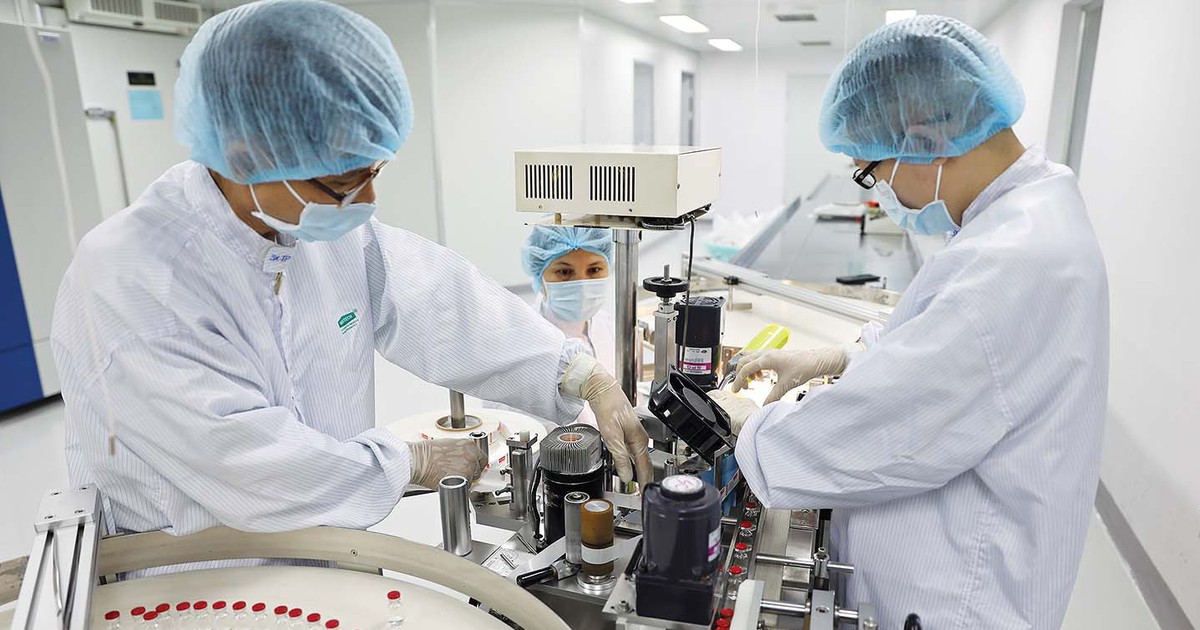
Domestic production remains below 2030 goals
Vietnam is intensifying implementation of its pharmaceutical and medicinal-material development program in 2026, aiming to expand domestic capacity, improve health security and reduce exposure to external supply disruptions. The program was approved under Prime Ministerial Decision No. 376/QĐ-TTg dated March 17, 2021, and sets targets through 2030 with a longer-term vision to 2045.
By 2030, domestically manufactured medicines are expected to account for about 80% of the volume used in Vietnam and 70% of market value. The program also prioritizes technology transfer and production of specialized medicines, vaccines, biological products and products that the country cannot yet manufacture.
Figures published by the Ministry of Health in 2026 and reported by Sức khỏe & Đời sống put Vietnam’s pharmaceutical market at about $7 billion, growing by approximately 10-15% annually. The country has 245 pharmaceutical manufacturing facilities, including 26 plants certified to EU-GMP or equivalent standards. Domestic medicines currently supply about 60% of the volume used but only 46% of consumption value, indicating that imported products retain a larger position in higher-value categories.
Advanced products and inputs are the main gap
The difference between the volume and value shares highlights the industry’s central challenge. Vietnam has expanded manufacturing, but further investment is needed in high-value products, advanced technologies and pharmaceutical ingredients. The government’s concept of greater self-reliance does not imply closing the market; it focuses on gaining control over essential medicines, key inputs, vaccines, biological products and other high-demand categories.
Vietnam has produced 15 types of vaccine, including 10 used in the Expanded Programme on Immunization. The presence of 26 EU-GMP or equivalent plants also shows that part of the domestic industry has reached international manufacturing standards. However, Sức khỏe & Đời sống noted that factories alone are insufficient: research and development, production technology, testing and quality control will determine whether local companies can move into more complex products.
Closer cooperation among pharmaceutical companies, research institutes, universities and training centers is therefore part of the development agenda. Authorities are also emphasizing skilled personnel in research, manufacturing technology, testing and quality management. These capabilities will be important for converting scientific work into commercial products and narrowing the gap between current output and the 2030 targets.
Medicinal plants offer a domestic value chain
Vietnam has more than 5,000 medicinal plant species, but turning that resource into industrial capacity requires an integrated chain covering genetic conservation, cultivation, harvesting, preliminary processing, extraction, research, manufacturing and quality control. Ngọc Linh ginseng illustrates the opportunity: researchers have identified 87 saponin compounds in different parts of the plant, supporting the development of higher-value medicines and herbal products instead of sales focused on raw material.
In 2026, Da Nang organized the Ngọc Linh Ginseng and International Medicinal Herbs Festival as well as a seminar on developing the product from a national asset into a global brand. Experts stressed that larger cultivation areas must be accompanied by control of planting material, medicinal quality, extraction and formulation technology, and branding. Connecting these stages could raise value added while providing more consistent inputs for domestic processors.
The government continues to prioritize reliable supplies of medicines, vaccines and medical equipment alongside development of local pharmaceutical and medicinal-material production. International market and supply-chain disruptions have shown the risks of relying heavily on foreign sources. Progress toward 2030 will depend on technology investment, technical transfer, stronger medicinal-plant regions and higher product quality rather than capacity additions alone.