Vietnamese Seafood Targets UK Market Through UKVFTA and CPTPP Preferences
With both the UKVFTA and the CPTPP in force, Vietnamese seafood exporters can choose which agreement to claim preferential treatment under when shipping to Britain. According to Thuong Truong, tariff preferences are only an entry condition, and growth in market share will depend on compliance capacity and competitiveness rather than duty levels.
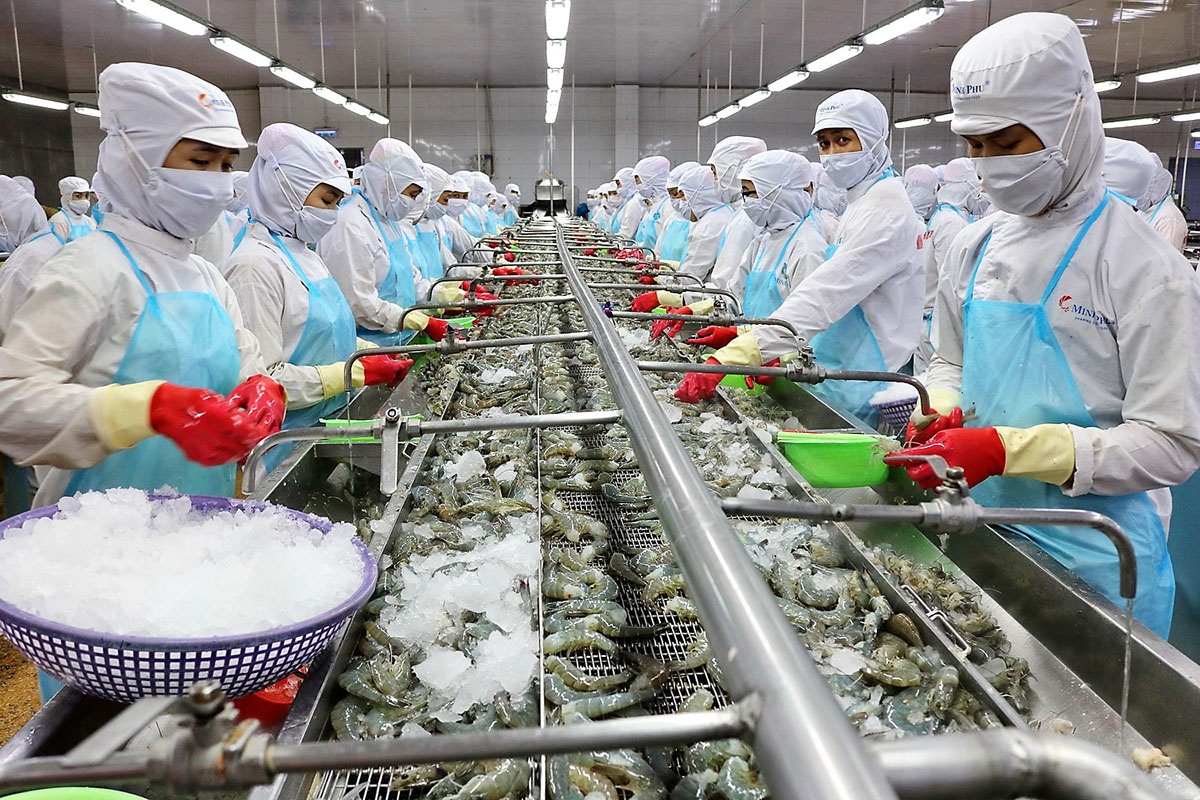
Vietnamese seafood exporters now have two preferential routes into the United Kingdom, with the UK–Vietnam Free Trade Agreement (UKVFTA) and the Comprehensive and Progressive Agreement for Trans-Pacific Partnership (CPTPP) both in force, according to the Vietnamese business publication Thuong Truong (thuongtruong.com.vn). The publication reports that tariff preferences are only an initial condition, and that any gain in market share will depend on how exporters use them.
Two agreements, one market
The UKVFTA is the bilateral agreement between Vietnam and the United Kingdom. The CPTPP is the multilateral Asia-Pacific pact in which the United Kingdom and Vietnam are both parties. For a single consignment of frozen shrimp or fish fillet moving from a Vietnamese plant to a British importer, the two instruments overlap: the same product, the same destination, two separate sets of preferential terms.
That overlap is the substance of the situation Thuong Truong describes. Exporters are not receiving a double concession. They are choosing, shipment by shipment, which agreement to claim under, and the choice is governed less by the headline tariff line than by the rules each agreement applies to origin, documentation and proof.
The United Kingdom is a developed, import-dependent market for whitefish and shellfish, and Vietnamese suppliers compete there against other Asian and Latin American origins. Thuong Truong treats access to that market as now secured on paper, with execution the open question.
Tariff preference is the entry condition, not the outcome
The publication's assessment is that preferential duty treatment establishes access but does not by itself convert into volume. Several requirements sit between a tariff line and a signed contract with a British buyer:
- Rules of origin: seafood preferences typically hinge on where the catch or the farmed raw material originates, which constrains processors that rely on imported raw fish.
- Documentation: each agreement operates its own origin-proof mechanism, and claiming under the wrong one invalidates the preference.
- Sanitary and veterinary compliance: clearance into the United Kingdom depends on health certification and approved establishment status, not on tariff eligibility.
- Traceability: catch documentation and controls against illegal, unreported and unregulated fishing are a condition of market access for wild-caught products.
Where competitiveness is decided
The report frames competitiveness, rather than tariff level, as the variable that will determine Vietnam's share of the British seafood market. On that reading, the comparison that matters is not Vietnam before and after the agreements, but Vietnam against other suppliers that also ship into the United Kingdom on preferential or near-preferential terms. Where duties are low or zero for multiple origins, buyers differentiate on cold-chain performance, consistency of grading and sizing, contract reliability across harvest cycles, and the administrative burden a supplier imposes on the importer.
The dual-agreement structure also carries a planning dimension. Because the UKVFTA and the CPTPP treat origin differently, decisions on where raw material is sourced, which plant processes it and how a product is classified can determine whether a preference is available at all. For integrated producers with their own farming and catch supply, that is a manageable internal question. For processors working on imported inputs, it is a constraint on which of the two routes is usable.
Thuong Truong does not attach volume, value or tariff-rate figures to its assessment, and the report contains no quantified projection of Vietnamese seafood shipments to the United Kingdom. The argument advanced is qualitative: both agreements are operative, both are available, and the binding constraint on growth has shifted from border taxes to compliance capacity and commercial execution.