Vietnam’s seafood exports reach $9.1 billion as China and Hong Kong purchases rise 33%
Vietnam exported $9.1 billion of seafood in the first nine months of 2026, up 11.4% year on year. Purchases by China and Hong Kong climbed 33% to $2.3 billion, while shrimp and pangasius remained the largest product groups.
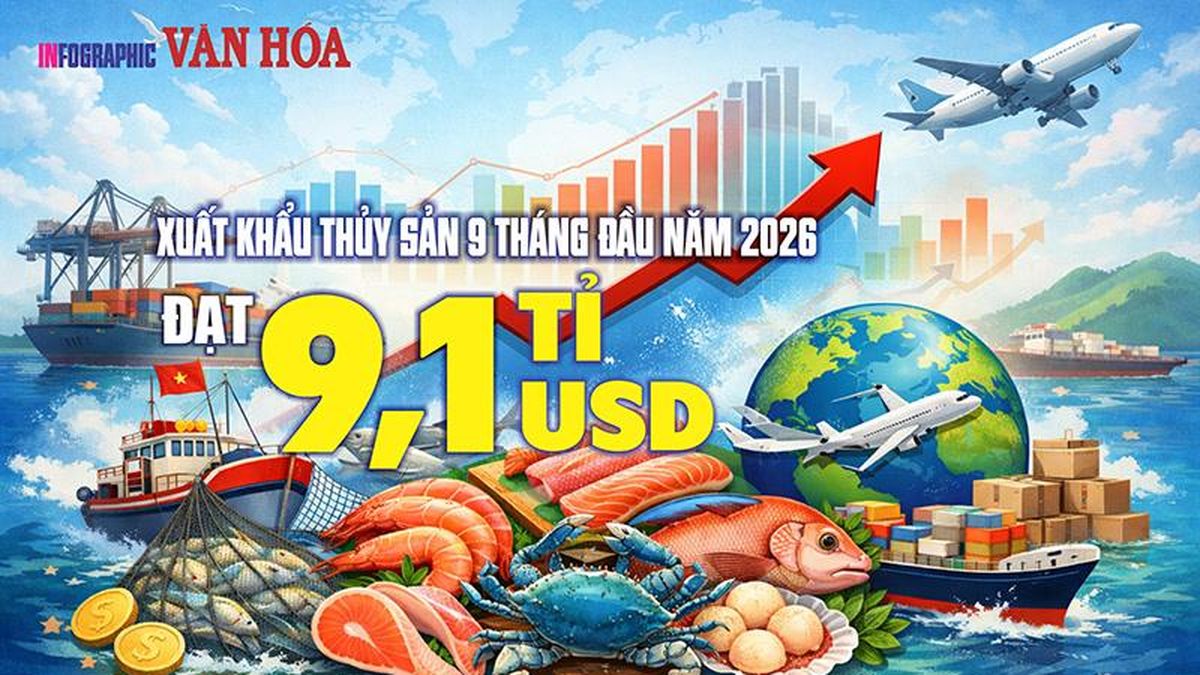
Seafood revenue rises 11.4%
Vietnam’s seafood exports reached $9.1 billion in the first nine months of 2026, an increase of 11.4% from the same period of 2025, according to Báo Văn Hóa. The result indicates that demand remained firm across the sector, although growth varied substantially by product and destination.
Shrimp continued to generate the most export revenue, bringing in $3.745 billion, up 11%. Pangasius exports were valued at $1.737 billion, an increase of 10.7%. Together, the two categories accounted for about $5.48 billion, or roughly 60% of Vietnam’s seafood export earnings during the period. Their growth rates were close to the industry average, confirming their central role in overall performance.
Crustaceans and molluscs broaden growth
Smaller categories expanded more quickly. Crab and other crustacean exports rose 31.6% to $354 million, while exports of shell-bearing molluscs increased 25.2% to $231 million. Squid and octopus generated $606 million, up 15.4% year on year.
These figures show that the increase was not confined to Vietnam’s established shrimp and pangasius businesses. Crab, other crustaceans and molluscs provided additional sources of revenue growth, even though their absolute export values remained below those of the two leading categories. For processors and exporters, the faster expansion of these products may support a broader sales mix and reduce reliance on a limited number of species.
The available figures do not separate the effects of higher shipment volumes, product mix or prices. They therefore show changes in export value rather than the precise contribution of production or market pricing. Even so, the gap between the growth rates of individual categories points to differing demand conditions across seafood segments.
China and Hong Kong lead destination growth
The sharpest expansion among the destinations identified by Báo Văn Hóa came from China and Hong Kong. Their combined purchases reached $2.3 billion in the first nine months, rising 33% from a year earlier. That pace was nearly three times Vietnam’s overall seafood export growth rate and made the market one of the industry’s main growth drivers.
By comparison, exports to the United States increased 0.9%, while shipments to Japan rose 0.8%. The contrast suggests that China and Hong Kong contributed disproportionately to the sector’s additional revenue during the period. Their combined value represented about one quarter of Vietnam’s total seafood exports, making demand in that market increasingly important for Vietnamese producers, processors and traders.
The destination figures also reveal a more concentrated near-term opportunity. Growth in the United States and Japan was positive but limited, while the 33% increase in China and Hong Kong created a much stronger commercial pull. Exporters serving that market may benefit from expanding demand, but a larger revenue share also increases exposure to changes in purchasing conditions there.
With $9.1 billion recorded after nine months, Vietnam entered the final part of 2026 with growth across both its core products and several smaller categories. Performance through the remainder of the year will depend on whether China and Hong Kong sustain their purchasing pace and whether shrimp, pangasius and the faster-growing crustacean and mollusc segments preserve their year-on-year gains.