Vietnam is the world's third-largest rubber exporter but holds little pricing power
Natural rubber futures in Asia firmed over the first 20 days of September 2026, but Vietnam's export ranking has not turned into influence over prices. The country accounts for about 14% of world rubber exports and 9% of output, while shipments to China fell 30.1% by volume in eight months.
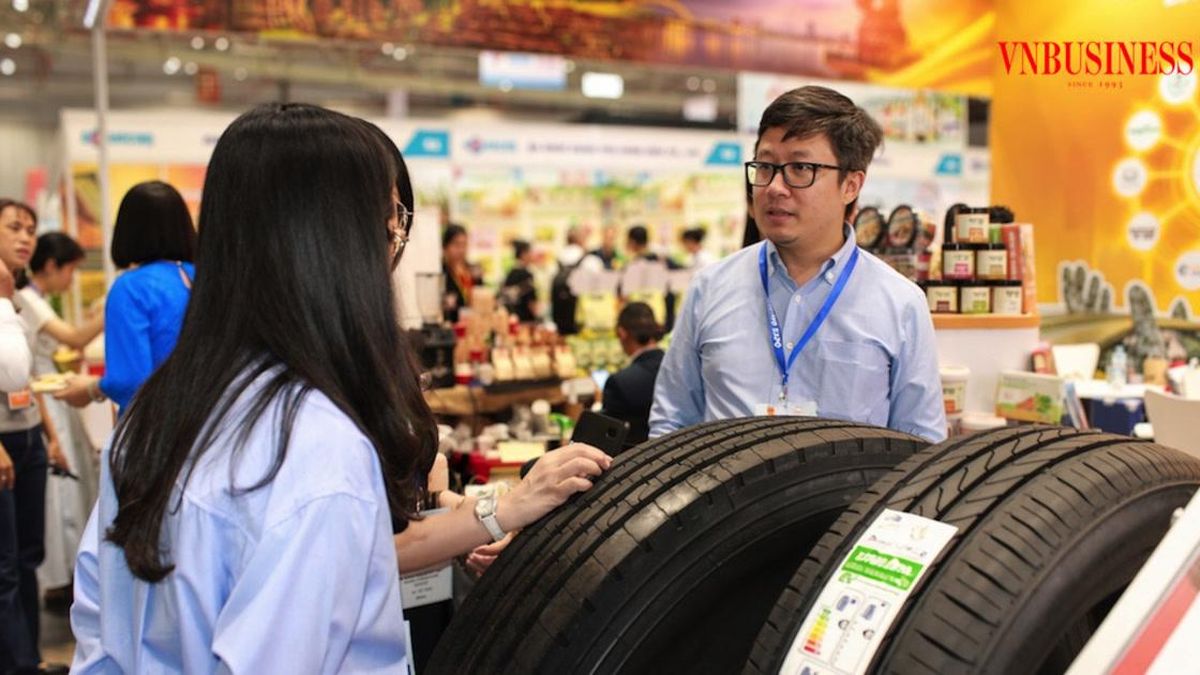
Natural rubber futures on Asia's main exchanges trended higher through the first 20 days of September 2026, supported by concern that adverse weather could disrupt supply across Southeast Asia. The move has little depth behind it: demand is recovering unevenly and synthetic rubber continues to take share, which according to Vnbusiness leaves the upward trend without a firm base.
Nguyen Viet Tuong, former Vice Chairman of the Vietnam Rubber Association (VRA), said Vietnam ranks fourth in the world for natural rubber output with about 9% of the total, and third in exports with roughly 14%, behind Thailand and Cote d'Ivoire. He argues the industry is caught in a volume trap: large tonnage, low value added, because exports are still dominated by raw material. Where a supplier controls few stages of the chain, its ability to negotiate on price, standards and commercial terms stays weak.
China's pullback moves straight down the chain
The Import-Export Department at the Ministry of Industry and Trade says China remains Vietnam's core rubber market, and its slow demand recovery is now pressing on shipment volumes. In the first eight months of this year, the volume sent to China fell 30.1% year on year and the value fell 20.8%. When a market of that size buys less, the pressure is transmitted immediately to exporters and to the growing areas.
Shipments to Russia, the United States, Germany, Pakistan and several other European markets were also weak, according to the department, while India, Malaysia, Indonesia, Sri Lanka, South Korea, Taiwan and Mexico recorded increases. The department reads that divergence as room to widen the customer base and cut dependence on traditional destinations, though diversification solves only part of the problem while the export mix stays concentrated in raw material.
Tyres carry the processing segment
Vietnam exports around 15 main groups of rubber products, Tuong said, and car tyres account for about 69% of them. Components, technical rubber goods, gloves, shoe soles, hoses and other items each hold a small share. With most output stopping short of technology-intensive stages, an advantage in raw material does not convert into an advantage in value.
Price data points the same way. The average price of Vietnamese rubber shipped to India reached about 2,168 US dollars per tonne, up 2.7% year on year, at a time when prices from several other large origins fell. Tuong sees scope in higher-value lines such as rubber thread, technically specified concentrated latex and industrial rubber goods rather than raw latex sales, with companies dealing directly with importers and building their own brands.
EUDR deadlines meet a fragmented grower base
Under the European Union Deforestation Regulation (EUDR), rubber must be shown to have no link to deforestation after 31 December 2020, with data traceable to the plot of production. On the current timetable, large companies must comply from 30 December 2026 and smaller ones by 30 June 2027. Green and traceability rules are turning from compliance obligations into entry filters for large markets.
That is a heavy lift for a sector in which about 87% of the planted area is managed by households holding less than 3 hectares, and where roughly 90% of raw latex passes through several layers of intermediaries, keeping farmers distant from value creation. The proposed response is to reorganise the chain through cooperatives, standardise processes, digitise growing-area data, extend long-term contracts and share margins, with the state supporting data systems, training and compliance costs. The Import-Export Department expects export prospects to keep tracking Chinese demand and world price swings, with possible improvement as the automotive, tyre and processing industries recover. Without a shift in the product mix, a top-three export ranking will continue to deliver volume rather than weight.