EUDR-compliant Vietnamese rubber earns premiums as smallholder traceability lags
VRG sold about 10,000 tonnes of EUDR-compliant rubber in 2025 and the first half of 2026 at premiums of $120–250 per tonne. Yet only about 6,000 of Vietnam’s 264,000 rubber smallholders participate in compliant supply-chain models ahead of the EU deadline.
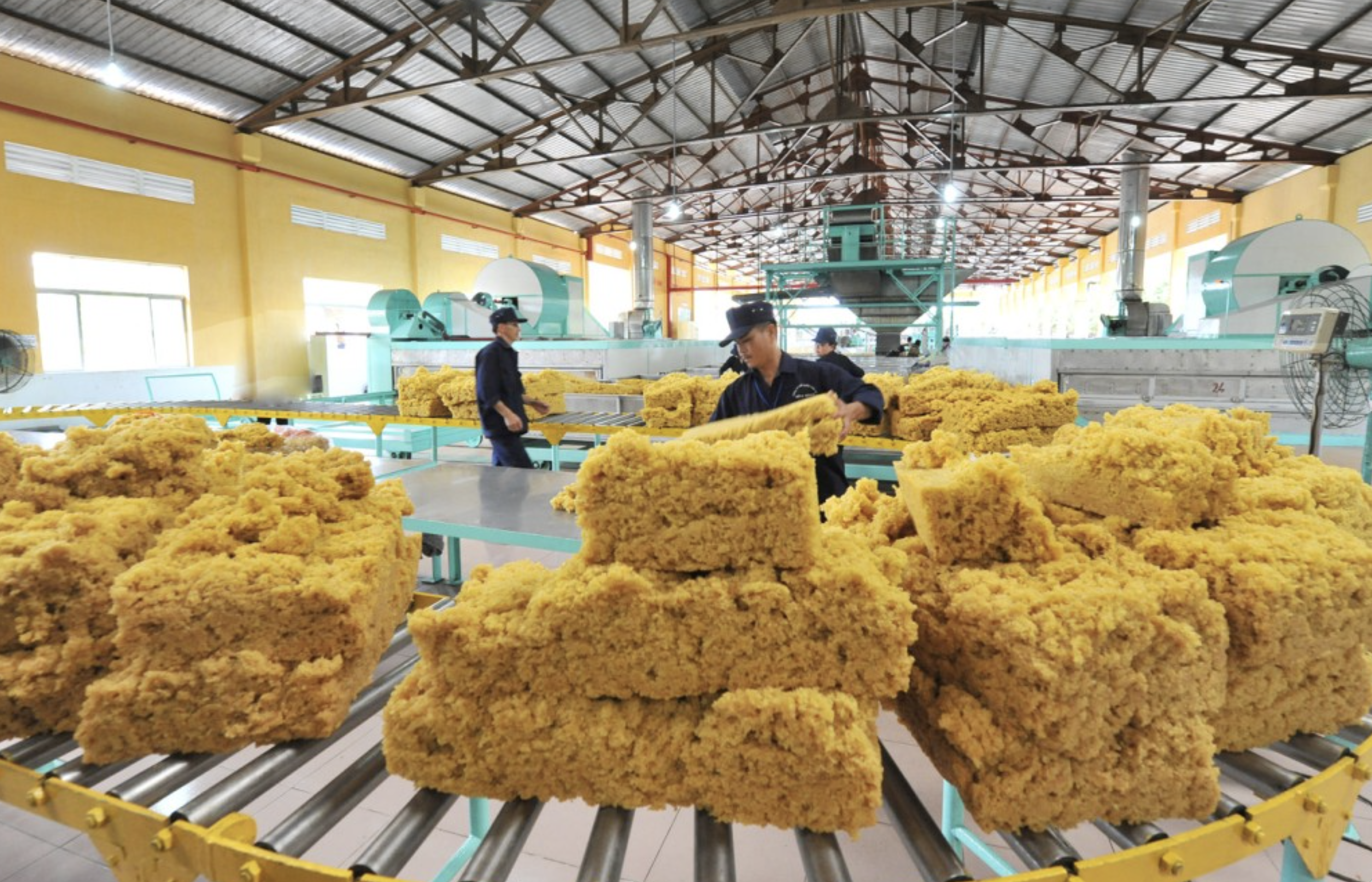
Verified rubber commands a higher price
Vietnamese rubber producers are beginning to receive a measurable return from investments in deforestation-free supply chains, even as weak traceability among smallholders threatens to restrict future access to the European Union. VietnamBiz reports that Vietnam Rubber Group, or VRG, sold about 10,000 tonnes of rubber meeting EU Deforestation Regulation requirements during 2025 and the first six months of 2026.
According to Diệp Xuân Trường, deputy head of VRG’s industrial division, compliant material sold for $120–250 per tonne more than rubber without EUDR documentation. The group estimates that the premium generated approximately 30 billion dong in additional revenue. VRG manages about 377,000 hectares of rubber, and by June 2026, 29 subsidiaries had prepared EUDR files for approximately 305,905 hectares, or 81% of the total area.
Within that portfolio, 23 companies covering around 210,304 hectares had obtained PEFC-EUDR certification or recognition from customers. VRG’s 2025 annual report also said that 20 subsidiaries held VFCS/PEFC-FM sustainable forest-management certificates for more than 148,000 hectares, while 56 factories had PEFC-CoC chain-of-custody certification.
Smallholder supply remains the main gap
The corporate progress contrasts sharply with conditions in Vietnam’s smallholder sector. A Forest Trends and Vietnam Rubber Association report found that approximately 264,000 smallholder households owned 488,000 hectares in 2024 and supplied about 819,000 tonnes of rubber. They represented 54% of national rubber area and 63% of industry output.
Only about 6,000 households, operating approximately 17,500 hectares, were participating in linked supply-chain models capable of meeting EUDR requirements. This leaves most of the country’s largest source of rubber outside established compliance systems. For processors and exporters, the gap raises the risk of having sufficient physical supply but insufficient verified supply for EU customers.
VRG has outlined plans to support smallholders through training, competitive latex purchasing and production and sales contracts. Such programs will also need to connect farm coordinates, purchasing records and processing documentation. Under the EUDR, plots larger than 4 hectares require boundary polygons, while smaller plots can be identified with a single coordinate point.
Deadline approaches amid strong rubber prices
EUDR obligations for large and medium-sized companies are scheduled to apply from December 30, 2026, followed by small and micro-enterprises on June 30, 2027. Companies placing covered goods on the EU market must demonstrate that they did not originate from land deforested or degraded after December 31, 2020, and that production complied with the laws of the producing country.
Vietnam was classified as a low-risk country by the European Commission on May 22, 2025. That removes the risk-assessment and mitigation step but not the obligation to collect geolocation information and submit due-diligence statements for individual consignments. EU authorities must annually inspect at least 1% of operators importing from low-risk countries, compared with 3% for standard-risk origins and 9% for high-risk origins.
The EU was Vietnam’s third-largest rubber market after China and the United States, according to Vietnam Rubber Association secretary-general Võ Hoàng An. Vietnam’s rubber exports to the bloc reached about $110 million in 2025, up 18.8% from 2024, while the average export price rose 6.1% to $1,865 per tonne. The compliance deadline also arrives in a firm global market: the International Rubber Study Group reported that September 2026 prices for five natural-rubber grades were 33–68% higher year on year. These conditions increase the value of market access, but they may also deepen the divide between traceable corporate plantations and smallholders that remain outside verified supply chains.