Vietnam Rice Prices Stabilize as Heavy Supply and Weak Buying Limit Recovery
Vietnamese paddy and rice prices are showing signs of stabilizing as the summer-autumn harvest winds down, but subdued buying and lower-priced Indian supply are limiting the recovery. Vietnam exported about 6 million tonnes worth $2.86 billion in the first eight months of 2026, with both volume and value below year-earlier levels.
Paddy decline pauses as harvest pressure eases
Vietnamese rice prices are beginning to stabilize after a sharp decline, although abundant summer-autumn supply and restrained purchasing by mills and exporters continue to limit the scope for a broad recovery.
Trang Trai Viet reported that prices across the Mekong Delta were generally unchanged on September 7. Fresh OM 18 and Dai Thom 8 paddy traded at 6,500-6,700 dong per kilogram in An Giang, while OM 5451 stood at 6,400-6,500 dong. IR 50404 was quoted at 6,200-6,400 dong and OM 34 at 5,800-5,900 dong.
Raw rice prices were also steady. OM 5451 was assessed at 9,300-9,400 dong per kilogram and Dai Thom 8 at 9,200-9,400 dong, according to Trang Trai Viet. IR 504 and CL 555 remained below 9,000 dong at 8,700-8,800 dong, indicating that purchasing demand was still insufficient to drive a clear rebound.
Thanh Nien reported a modest increase of 200-300 dong per kilogram in early September, taking farm-gate paddy to 6,000-6,100 dong depending on quality. Even after that rise, prices remained about 1,000 dong below both the previous month and the same period last year. The publication said farmers were operating around break-even or at a loss as input costs remained elevated, particularly on rented land.
Export prices face pressure from competing origins
Export assessments differed by rice category and reporting period. According to Vietnam Financial Times, Vietnamese 5% broken rice averaged $437.3 per tonne in August, up $15 from July. Trang Trai Viet, citing the Vietnam Food Association, placed aromatic 5% broken rice at $470-480 per tonne in early September, Jasmine at $534-538 and aromatic 100% broken rice at $373-377.
India remained the main source of price pressure in the standard-grade market. Trang Trai Viet quoted Indian 5% broken rice at $364-368 per tonne and 100% broken rice at $304-308. Thai 5% broken rice was assessed at $453-457, although Thanh Nien cited the Thai Rice Exporters Association as reporting an increase from $466 to $471 during August and then to $483 in early September.
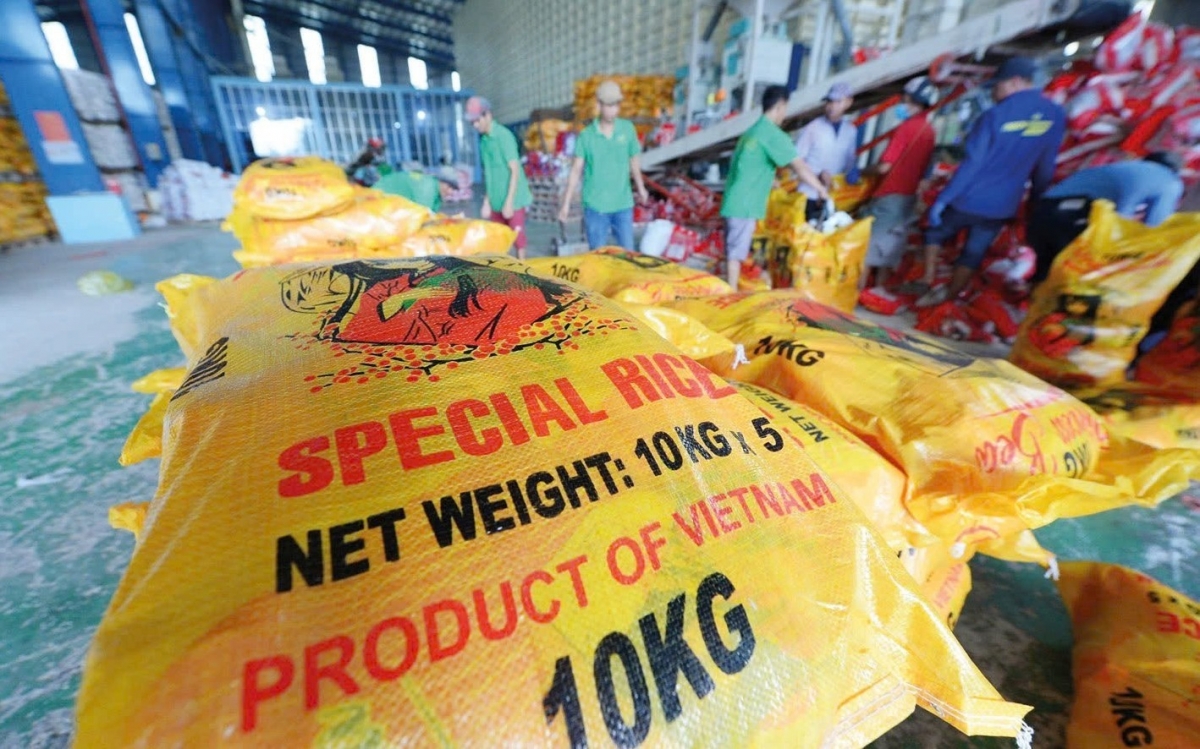
Vietnam exported about 459,500 tonnes valued at $240.6 million in August, according to Trang Trai Viet. Shipments during the first eight months reached approximately 6 million tonnes worth $2.86 billion, down 6.3% in volume and 11.9% in value from the same period of 2025. Vietnam Financial Times put the eight-month average export price at $480.9 per tonne, a decline of 6%.
Philippine demand offers support but policy risk persists
The Philippines remained Vietnam's largest market, accounting for 43.2% of exports, followed by China at 18.4% and Ghana at 11%, Trang Trai Viet reported. Philippine data cited by the publication showed imports of about 3.46 million tonnes by August 13, already above the 3.39 million tonnes imported during all of 2025. Vietnam supplied approximately 2.59 million tonnes, compared with 378,404 tonnes from Thailand and 286,052 tonnes from Myanmar.
Outlooks for Philippine demand vary. Thanh Nien reported that the country expected to import a record 5 million tonnes in 2026, while Vietnam Financial Times cited projected imports of about 5.6 million tonnes during the 2026-27 season. Actual buying has nevertheless been slow at times as importers waited for harvest pressure to reduce Vietnamese prices and Philippine authorities delayed issuing permits, Thanh Nien reported.
Policy remains a downside risk. Vietnam Financial Times said the Philippines was considering an additional safeguard tariff on rice from Vietnam and other suppliers; a total duty above 35% would materially weaken Vietnamese competitiveness. Indonesia, meanwhile, had no plan to import rice during 2026 because of high domestic production and stocks, while Ivory Coast and Ghana reduced purchases from Vietnam in response to cheaper Indian and Pakistani offers.
Higher-value varieties provide a stronger outlet. Vietnam Financial Times reported that certified, low-emission rice had achieved prices above $1,000 per tonne in some sales to Japan, the European Union and Australia. A sustained market recovery, however, will depend on firmer physical orders as summer-autumn supplies recede, as well as weather, financing costs and import policies in major destinations.