Vietnam rice prices rise as Philippine imports approach a new record
Vietnamese export quotations strengthened on November 24 while the Philippines moved closer to a new annual rice import record. Vietnam supplied 2.81 million tonnes, or nearly 61% of Philippine imports through November 5.
Vietnamese export quotations strengthen
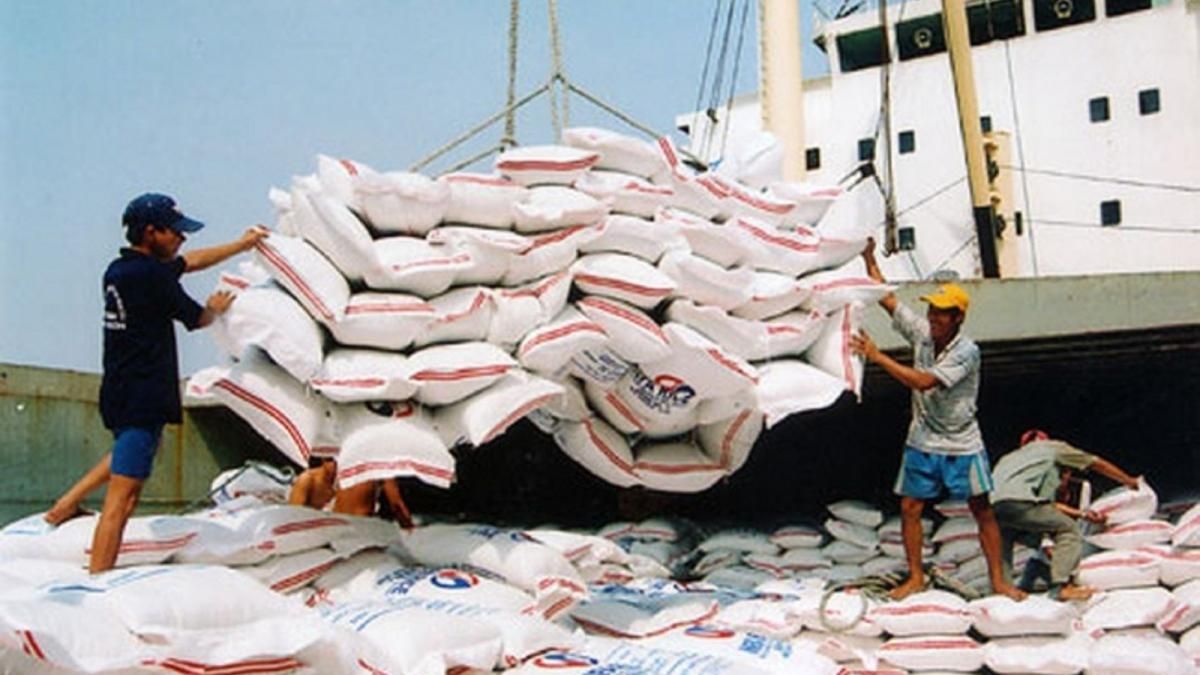
Vietnamese rice export prices rose on November 24 as import demand from the Philippines, the country’s largest foreign supplier, moved toward another record year. The Vietnam Food Association data cited by Vietnam Financial Times showed 100% broken fragrant rice at $412–416 per tonne, up $2 per tonne, and Jasmine rice at $585–589 per tonne, up $5. Fragrant rice with 5% broken content was quoted at $520–535 per tonne.
VietnamBiz reported the same Jasmine range but placed fragrant 5% broken rice at $515–520 per tonne and white 5% broken rice at $468–472. The differing quotations indicate variation between assessed grades or market observations. Thailand’s white 5% broken rice was quoted at $498–502 per tonne, compared with $415–419 in Pakistan and $399–403 in India. Indian parboiled 5% broken rice stood at $394–397.
Domestic trading in the Mekong Delta remained slow, but prices varied by variety. VietnamBiz, citing the An Giang Department of Agriculture and Environment, said fresh OM 5451 paddy rose by 500 dong per kilogram to 7,500–7,600 dong, while OM 34 gained 200 dong to 6,800–7,000 dong. ST24 fell by 300 dong to 7,500–8,000 dong, and IR 50404 declined by 100 dong to 6,700–6,900 dong per kilogram.
Philippine purchases surpass 2025 total
Philippine rice imports reached 4.62 million tonnes by November 5, according to Bureau of Plant Industry figures reported by Manila Bulletin and cited by VietnamBiz. That was 36% above the 3.39 million tonnes imported during all of 2025 and only about 200,000 tonnes below the 2024 record of 4.81 million tonnes.
Vietnam accounted for nearly 61% of the total, supplying 2.81 million tonnes. Its shipments had already exceeded the 2.76 million tonnes recorded for all of the previous year. Thailand supplied 709,594 tonnes, roughly four times its 2025 volume of 176,865 tonnes. Myanmar followed with 514,084 tonnes, Pakistan with 350,326 tonnes, Cambodia with 189,468 tonnes and India with 43,118 tonnes.
The Philippine Department of Agriculture expects imports to reach about 5 million tonnes this year to offset a projected decline of more than 1 million tonnes in domestic rice production. The USDA projects 5.5 million tonnes this year and 5.7 million tonnes in 2027, while the FAO expects about 5.2 million tonnes this year and a similar volume next year. FAO estimates consumption at around 17 million tonnes, against the USDA forecast of 17.6 million tonnes.
Production losses and import controls shape demand
Agriculture Secretary Francisco Tiu Laurel Jr. linked weaker planting to higher fertilizer costs. El Niño has added pressure: the Department of Agriculture estimated that the weather event had damaged 129,757 tonnes of unmilled rice by November 20, representing losses of about 4.05 billion Philippine pesos.
Manila is also adjusting the composition and supervision of purchases. Laurel said the department had reached an informal, voluntary agreement with industry participants to limit premium 5% broken rice imports and prioritize 25% broken grades. Millers and importers had raised concerns about competing with higher-quality Vietnamese rice, particularly the DT8 variety. Existing rules still permit 5% broken rice, and the arrangement is not a formal import restriction.
Since November 1, importers applying for sanitary and phytosanitary import clearance have also been required to submit purchase contracts. The measure is intended to improve oversight of delivery schedules and prevent large arrivals during the domestic harvest from depressing farm-gate paddy prices. For Vietnamese exporters, strong Philippine volumes support sales, but the shift toward cheaper 25% broken grades may alter product mix and margins even if total demand continues to expand.