Vietnam rice industry urged to prioritize value as export prices fall
Vietnam’s rice exports reached 5.5 million tonnes in the first seven months of 2026, but revenue fell as average prices declined. With global supply exceeding consumption, the industry is being pushed toward branded, aromatic and higher-value rice.
Export volumes rise while prices retreat
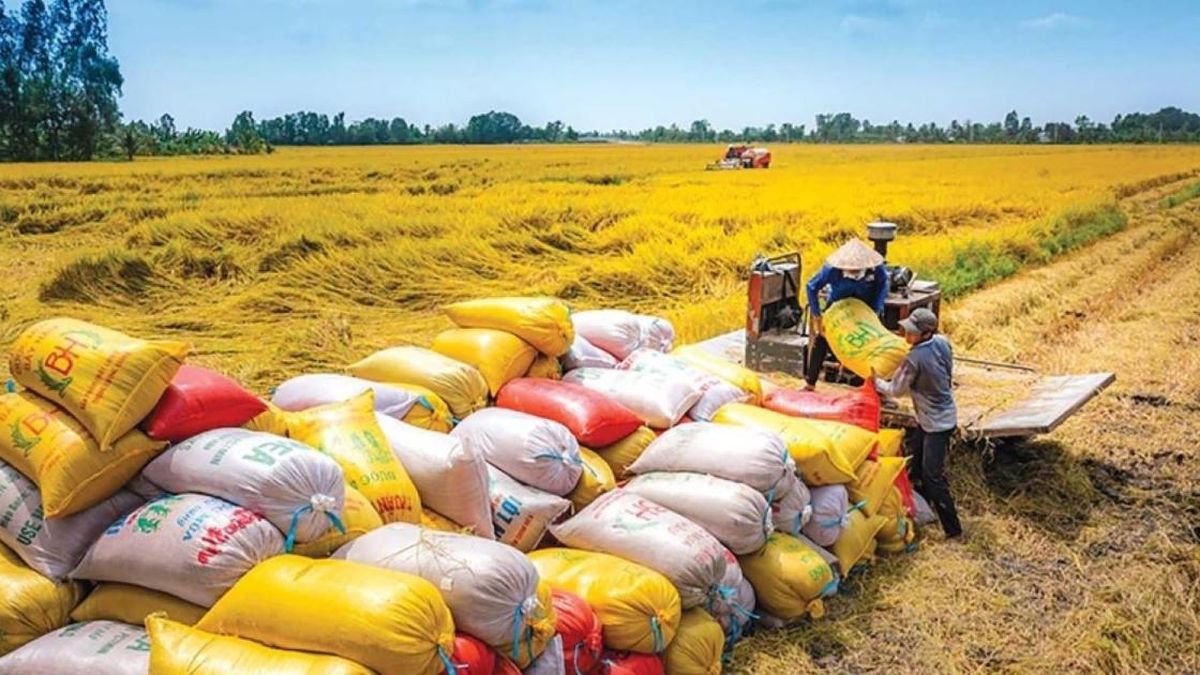
Vietnam exported an estimated 505,000 tonnes of rice worth $252.8 million in July 2026, according to the Ministry of Agriculture and Environment. That brought exports in the first seven months of the year to 5.5 million tonnes valued at $2.64 billion. Volume increased 0.5% from the same period of 2025, while value declined 6.7%.
The average export price was estimated at $476.6 per tonne, down 7.1% year on year. The figures underline the pressure facing exporters: shipments are holding up, but each tonne is generating less revenue. The Philippines accounted for 44.7% of Vietnam’s rice exports, followed by China with 19.1% and Ghana with 9.6%.
In the first six months of 2026, export value to the Philippines increased 2.3%, while sales to China doubled and those to Ghana fell 15.2%. Among Vietnam’s 15 largest markets, Iraq recorded the strongest growth, with export value rising 110.8 times. Côte d’Ivoire posted the steepest decline, at 55.7%.
Global surplus keeps competition intense
Rice prices have shown signs of recovery. The Vietnam Food Association, or VFA, said the Oryza White Rice Index reached $432 per tonne in the final week of June 2026, up $4 from the previous week and $15 from a month earlier. However, Đại Đoàn Kết reported that abundant supply is expected to keep export competition intense.
The International Grains Council forecasts global rice production of about 545 million tonnes in the 2026/2027 season, compared with consumption of roughly 543 million tonnes. World rice trade is projected to reach a record 62 million tonnes, while stocks are expected to increase to about 199 million tonnes, largely because of ample Indian supply.
The Philippines remains crucial to Vietnamese exporters. The US Department of Agriculture forecasts that the country will import about 5.2 million tonnes in 2026/2027, as domestic production of approximately 12.3 million tonnes remains well below consumption of 17.65 million tonnes. Yet the Philippine government is also stabilizing prices, increasing purchases of domestic paddy and initiating a safeguard investigation into imported rice. These measures create additional policy risk for suppliers dependent on the market.
Branding and premium varieties move to the center
VFA chairman Đỗ Hà Nam said the industry should focus on market expansion, brand development and sustainable production. The association wants stronger engagement with the Philippines and continued support for expansion in Africa and other potential markets, reducing reliance on a small number of established buyers.
Vietnam produces high-quality varieties including ST25 and Jasmine, alongside other aromatic rice, but VFA says it still lacks a national rice brand capable of competing internationally. The association has called for the national rice brand project to be implemented using premium varieties as its foundation. It also advocates investment in production areas, quality control, traceability and closer links among farmers, cooperatives and companies.
2030 strategy targets less volume and more revenue
Under Vietnam’s rice export market development strategy to 2030, annual export volume is intended to decline gradually to about 4 million tonnes while revenue remains high. The product mix would shift toward aromatic, specialty, Japonica and organic rice, as well as more deeply processed products.
By 2030, branded rice is targeted to represent more than 40% of export volume. Aromatic, specialty and Japonica varieties are expected to account for about 45%. The strategy also calls for expansion in organic and nutritional rice, rice flour and other processed rice products. For exporters and processors, the commercial test will be whether premiums from branding, consistency and processing can offset lower bulk volumes in a market where global stocks continue to rise.