Vietnam's Rice Farmers Squeezed by Rising Costs and Philippines' Shifting Import Policy
Vietnam's summer-autumn rice harvest is delivering lower yields and higher costs, with planted area down 4.3% year-on-year. Export prices have stayed low since September 2025 as top buyer the Philippines repeatedly shifts import policy, most recently proposing tariff hikes on Vietnamese rice.
Higher Costs, Lower Yields in the Mekong Delta
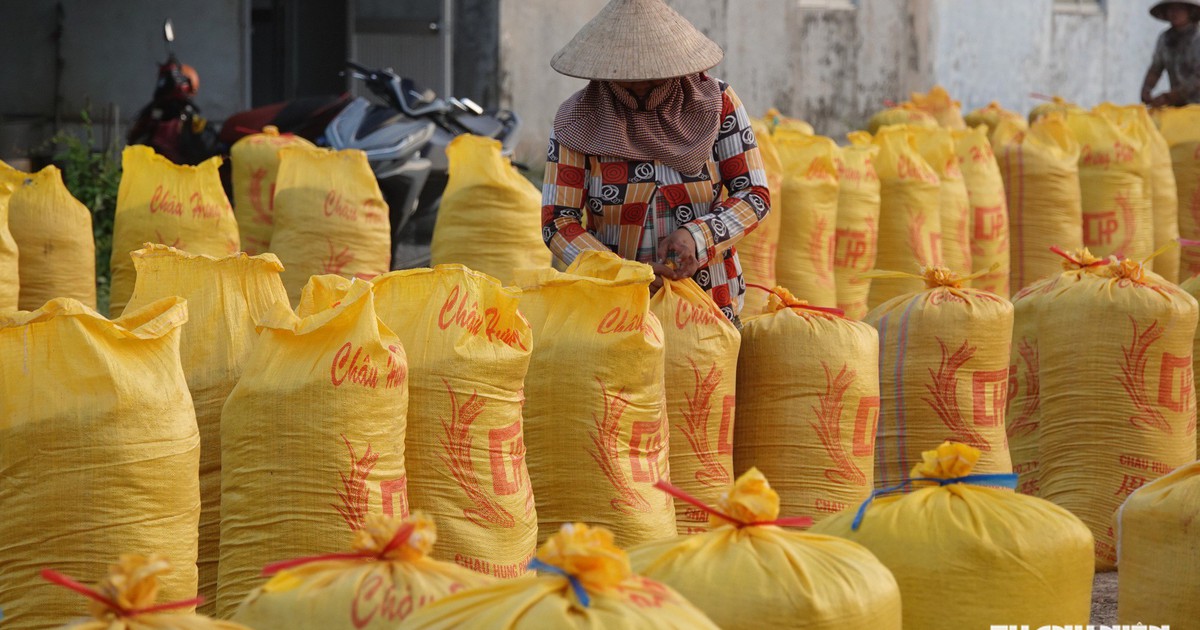
Farmers in Vietnam's Mekong Delta are harvesting the summer-autumn rice crop with prices up only slightly — by a few hundred dong per kilogram — compared with the winter-spring harvest, while production costs have risen sharply and yields have fallen, according to Thanh Nien. Duong Van Sieu, deputy director of the Thuan Thang cooperative in Can Tho, said his cooperative's land, harvested about 10 days ago, yielded 600 kilograms per cong (a local land unit of roughly 1,000 square meters), down 150-200 kilograms from a normal year. That was still considered a good result, he said, as some households in the area harvested only 400-450 kilograms per cong.
Sieu attributed the lower yields to seedlings sown during a period of severe heat that failed to develop properly, requiring repeated nutrient treatments. Fertilizer prices have risen by an average of 50-70% this season compared with previous years, he said. Many farmers who lost money on the winter-spring crop are now facing further losses on the summer-autumn crop, with renters' losses estimated at around 1 million Vietnamese dong (VND) per cong. As a result, a number of farmers have paused sowing for the next crop.
Planted Area Shrinks as Crop Disease Spreads
Vietnam's Ministry of Agriculture and Environment reported that as of the end of June, the country's summer-autumn rice planting area totaled 1.71 million hectares, down 4.3% from a year earlier. The ministry also recorded a sharp rise in several rice diseases compared with the same period last year:
- Leaf blast disease up 24%
- Neck blast disease up 50%
- Bacterial leaf blight up 40%
- Sheath blight up 18%
- Golden apple snail damage up 38%
No official production figures have been released yet, but the combination of a smaller planted area and higher disease incidence is expected to weigh on total yields.
Philippines' Policy Swings Whipsaw Export Prices
Vietnam's rice export prices have remained low since September 2025, Thanh Nien reported, with the Philippines — the country's key export market — repeatedly changing its import policy in ways that have driven large price swings. The Philippines suspended rice imports for the final three months of 2025, pushing Vietnamese export prices to their lowest point. It then ramped up imports in early 2026, bringing in more than 2.7 million tonnes over the first six months of the year, up 20% year-on-year.
In late June, the Philippines announced it would suspend import licensing for 5% broken rice — the main grade it imports — for the month of July. Earlier this week, Manila said it was considering raising import tariffs by at least 13% on rice from Vietnam, Thailand, Pakistan and Myanmar to protect domestic production. Pakistan's Ministry of Commerce and Investment has said the proposed safeguard measures could violate World Trade Organization rules. Pakistan was the Philippines' fifth-largest rice supplier in the first half of the year, shipping 3,866 tonnes.
China and Africa Cushion Volume, Not Price
As the world's largest rice importer, any policy shift by the Philippines moves the wider market, according to Vietnamese exporters. When Manila pulls back, traditional markets in China and Africa absorb some of the volume, but without lifting prices, leaving both farmers and exporters without margin, industry representatives said. Nguyen Van Thanh, director of Phuoc Thanh IV Production-Trade Co. in Vinh Long, said Philippine rice demand is expected to stay high for the rest of 2026, with the US Department of Agriculture forecasting imports of up to 5.6 million tonnes for the year. Vietnam exported more than 5 million tonnes of rice in the first half of the year, he said, leaving no pressure to clear inventory by year-end — but low farm-gate prices remain a burden for growers.
Pham Thai Binh, chairman of Trung An High-Tech Agriculture in Can Tho, called for a long-term policy linking rice production to consumption markets, including support for farmers and companies to build raw-material zones and develop higher-quality, lower-emission rice for premium markets. Dang Kim Son, former director of the Institute of Policy and Strategy for Agriculture and Rural Development, said weather and geopolitical factors are already pressuring fertilizer prices and supply, and that import demand could rise sharply in the medium to long term as countries rebuild food reserves. He called for state-backed reserve purchasing and government-to-government arrangements to support both farmers, who lack storage infrastructure, and thinly capitalized domestic rice companies.