Vietnam Rice Exports: 6.03 Million Tonnes in Eight Months, but Value Down 10.7%
Vietnam shipped about 6.03 million tonnes of rice worth nearly $2.91 billion in the first eight months of 2026, with volume down 5% and value down 10.7% year-on-year. Exporters say the binding constraints are now brand control in the United States, a European residue list expanded from about 14 substances to roughly 285, and logistics costs.
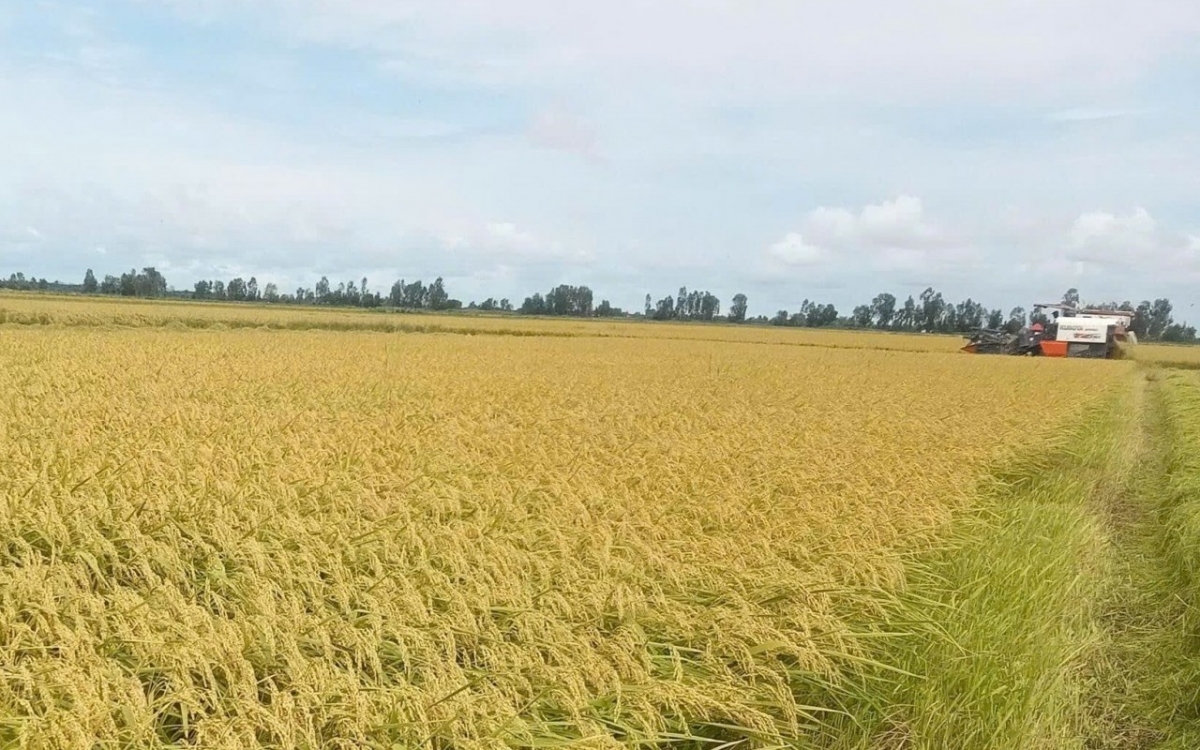
Vietnam's rice exports are running into a widening gap between tonnage and revenue. In the first eight months of 2026 the country shipped about 6.03 million tonnes of rice worth nearly $2.91 billion, a 5% fall in volume and a 10.7% fall in value against the same period a year earlier, according to Thoi Bao Tai Chinh Viet Nam (Vietnam Financial Times). The average export price came to roughly $481.5 per tonne, down 5.9%.
The publication frames the figures as evidence that the industry's traditional advantages — large supply and low price — are reaching their limit in markets where quality, branding and the ability to meet standards increasingly determine position. Vietnamese rice has expanded from traditional buyers into demanding destinations such as the United States and Europe, and it is in those markets that the constraints are clearest.
Premium rice, generic pricing
The sharpest illustration is ST25, the aromatic variety Vietnam has positioned at the top of its export range. Nguyen Luu Tuong, director of Gao Ngon Nhat Co. Ltd, told the newspaper that the main difficulty for ST25 abroad, and in the United States in particular, is competition from products carrying the same ST25 name but of uneven quality.
“Some products are sold at prices significantly below the general market level while the actual quality does not match, which affects consumer confidence in the Vietnamese rice brand,” Tuong said.
The price comparison he cites is striking: standard-compliant ST25 sells on Vietnam's domestic market from about 35,000 dong per kilogram, yet rice at equivalent or lower prices appears in the United States — before logistics, transport and export costs are counted. For companies investing in dedicated growing areas, processing discipline and quality control, that gap erodes the premium the variety was created to command.
In the US market Vietnamese rice also competes directly with Thailand's Hom Mali fragrant rice, a brand with a long-established international position. Tuong sees an opening in shifting American consumer attention toward product quality, which plays to ST25's aroma and taste. Cost works the other way: he points to geopolitical volatility lifting fuel prices and international freight rates, raising the delivered cost of Vietnamese rice in a market where consumers are already under pressure from higher imported food prices.
Europe widens the residue list from 14 to 285
Phan Van Co, director of Vrice Group Co. Ltd, which exports mainly to the Middle East and Europe, said shipments to both regions have trended lower, with higher transport costs among the main reasons.
The heavier constraint in Europe is chemical compliance. Where the market previously monitored roughly 14 residues in rice, the list has expanded to about 285 substances, according to Co. That shifts scrutiny from the finished cargo to the entire production process — water, land, cultivation method and traceability all become conditions of market access. Co notes that water affected by domestic and industrial waste can leave heavy metals in the crop, against very strict European limits.
His conclusion is that an export model built on volume and low prices is increasingly hard to sustain: average-quality rice is pushed toward less demanding markets, capping the value returned to both companies and farmers. “The biggest barrier for Vietnamese rice today is quality, particularly pesticide residues,” he said.
Ports, roads and the three-crop question
Logistics remains a second bottleneck. Co describes seaport and road infrastructure as poorly synchronised, producing congestion and late deliveries that raise transport costs and cut competitiveness.
On the production side, he proposes revisiting the three-crop-a-year rice calendar used in some areas:
- flexible conversion of selected zones from three crops to two, giving the soil time to recover;
- balanced admission of natural floodwater into fields during the flood season to wash out acidity and salinity, reduce pests and improve the land;
- restoration of the production ecosystem as the basis for higher-quality grain able to meet international requirements.
The trade-off is explicit. Fewer crops mean fewer tonnes from the same land at a time when export volume is already down 5%. The argument set out in the report is that the competition Vietnamese rice now faces is no longer about supplying more, but about producing grain that holds its value by the time it reaches the buyer.