Vietnam rice exports reach record first-half volume as prices recover
Vietnam exported more than 5 million tonnes of rice in the first half of 2026, the highest volume recorded for the period. Prices recovered in June and July on demand from the Philippines and China, but abundant global supply and possible Philippine trade barriers are intensifying competition.
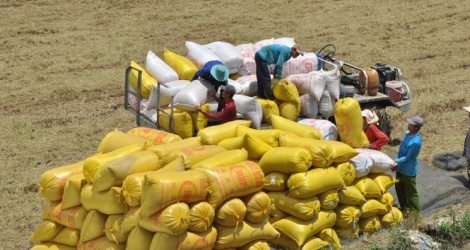
Record volume contrasts with weaker revenue
Vietnam exported more than 5 million tonnes of rice in the first half of 2026, setting a record for the January-June period. Preliminary data through July 15 put shipments at 5.3 million tonnes, worth $2.52 billion, according to Bao Dau Tu.
The publications reported different first-half growth and price figures. Bao Dau Tu, citing the Statistics Office, said volume rose 6.9% year on year and revenue fell 2.5% to $2.4 billion. Vietnambiz reported growth of 6.5% and the same revenue decline. VnEconomy, using Customs Department data, put shipments at 5.02 million tonnes, up 2.5%, with revenue of $2.38 billion, down 9.2%.
June exports were reported at between 755,900 and 769,000 tonnes, generating about $376 million. Bao Dau Tu and Vietnambiz said the average June price reached $497 per tonne, up 4.3% from May and its highest level since late 2025. First-half average-price estimates ranged from $459.6 to $474 per tonne, but all three publications reported a year-on-year decline.
Philippines and China drive demand
The Philippines remained Vietnam's largest rice market, buying nearly 2.4 million tonnes worth $1.06 billion to $1.1 billion during the first half. Vietnambiz calculated that it accounted for 47.6% of Vietnamese export volume, while VnEconomy cited a 45% share. The Philippines imported 2.75 million tonnes from all suppliers during the period, 20% more than a year earlier, with Vietnam retaining its position as the largest source.
China ranked second, purchasing 915,466 tonnes worth about $454 million. Vietnambiz said Vietnamese shipments to China increased 104.8% by volume and 100.6% by value. Ghana was third with 445,534 tonnes and revenue of about $230 million. Other destinations included Côte d'Ivoire, Malaysia and Singapore.
The US Department of Agriculture raised its forecast for Vietnam's 2026 rice exports by 200,000 tonnes to 8.1 million tonnes, citing demand from the Philippines and China. It projected Chinese imports at 3.9 million tonnes. Its forecast for Philippine imports was 5.7 million tonnes in one source, while VnEconomy reported 5.2 million tonnes for the 2026/27 season.
Export quotations regain ground
Vietnam Food Association data cited by VnEconomy showed Vietnamese Jasmine rice offered at $513-$517 per tonne on July 22, up about $8 from June 22. Five-percent broken fragrant rice reached $510-$520, gaining $20-$30. Vietnambiz cited different July 22 quotations: $546-$550 for Jasmine rice, $500-$510 for five-percent broken fragrant rice and $424-$428 for five-percent broken white rice.
Vietnamese quotations remained above competing Indian and Thai offers in several categories. VnEconomy put Thai five-percent broken rice at $478-$482 per tonne and the Indian equivalent at $350-$354. Vietnambiz reported Thai five-percent broken white rice at $445-$449 and Indian rice at $354-$358. The differences underline the need to distinguish varieties and reporting methodologies when comparing prices.
Oversupply and policy changes limit the outlook
Global forecasts give mixed signals. The USDA expects 2026/27 production of 537.2 million tonnes and consumption of 542.8 million tonnes. The International Grains Council, however, forecasts output of about 545 million tonnes against consumption of around 543 million tonnes, with trade at a record 62 million tonnes and stocks near 199 million tonnes, supported by ample Indian supply.
Policy risk is also rising in the Philippines. Vietnambiz reported that the country stopped issuing permits for imports of five-percent broken rice from early July and was considering an import-tariff increase of at least 13% on rice from Vietnam, Thailand, Pakistan and Myanmar. VnEconomy said the government had also initiated a safeguard investigation while supporting domestic purchasing and subsidized retail sales. El Niño and a positive Indian Ocean Dipole could meanwhile increase drought risks in Southeast Asia during the second half of 2026, potentially tightening regional production despite the current abundance of global supply.