Vietnam’s rice export price reaches 19-month high as harvest delays tighten supply
Vietnamese export rice prices reached their highest level in 19 months in July as delays to the early summer-autumn harvest and lower production constrained supply. FAO data show gains for Vietnamese 5% and 25% broken rice, while India retained the region’s lowest current offers.
Vietnamese prices rise as supplies tighten
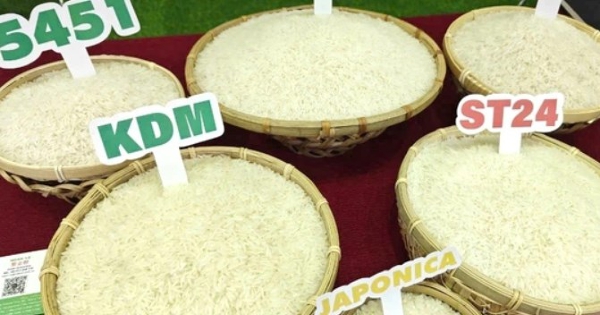
Vietnam’s rice export prices climbed to their highest level in 19 months in July, supported by weaker supply after delays to the early summer-autumn harvest and a decline in production. According to FAO data reported by Vietnambiz, Vietnamese 5% broken rice averaged $425.3 per tonne, up from $412.3 in June. The price of 5% broken fragrant rice increased to $507.1 per tonne from $494.1.
Vietnamese 25% broken rice also rose, reaching $389.1 per tonne in July compared with $384.5 in June. Uncertainty surrounding import licensing in the Philippines affected sentiment in Vietnam’s Indica and fragrant-rice markets. Philippine officials were encouraging traders to shift some purchases from 5% broken rice toward the 25% broken grade, Vietnambiz reported.
India retains the lowest offers
Current Vietnam Food Association quotations put Vietnamese 5% broken white rice at $434-$438 per tonne, Jasmine rice at $541-$545 and 5% broken fragrant rice at $500-$510. Comparable 5% broken white rice was quoted at $450-$454 in Thailand, the highest level among the listed Asian suppliers, and at $399-$403 in Pakistan. India remained the most competitive market, with 5% broken white rice at $361-$365 and 5% broken parboiled rice at $366-$370 per tonne.
FAO’s July averages show divergent movements across the region. Thailand’s 100% parboiled rice fell to $478.4 per tonne from $506.7 in June. Thai A1 Super declined to $408 from $426.7, while 25% broken Thai rice dropped to $452.8 from $479. Low demand and a weaker baht partly reversed Thailand’s June gains.
Indian prices moved higher in several non-Basmati categories as strong sales to African buyers, particularly for parboiled rice, supported the market despite a weaker rupee. India’s 25% broken non-Basmati rice rose to $340.8 per tonne from $329.6, while 5% broken non-Basmati increased to $357.9 from $347.1. The 5% broken parboiled grade advanced to $356.9 from $338.6. Pusa Basmati remained at $1,050 per tonne for a fourth consecutive month.
Global index stable but higher year on year
The FAO global rice price index averaged 108.4 points in July, virtually unchanged from June but 4.7% above the same month a year earlier. The Indica index, covering the world’s most widely traded rice category, increased by 0.6%. Japonica and glutinous-rice indices fell by 1.4% and 4.4%, respectively, while the fragrant-rice index declined by 0.6%.
Elsewhere, Pakistan’s 5% broken rice rose to $409.3 per tonne from $393.5, while its Basmati price slipped to $1,132.4 from $1,140. FAO surveys also confirmed that US long-grain rice plantings had fallen to their lowest level in decades, shifting market attention to yields and crop quality in the 2026-2027 harvest. In South America, Brazilian prices edged higher and Uruguayan prices eased, contributing to an increase in Argentine rice prices. In Vietnam’s Mekong Delta, domestic movements remained modest: IR 50404 raw rice gained 50 dong to 9,800-9,850 dong per kilogram, while bran lost 50 dong to 7,450-7,600 dong.