Vietnam’s Pork Import Price Falls 38.4% as Volumes Rise
Vietnam imported 112,090 tonnes of pork in the first seven months of 2026, up 27% year on year, while the average import price fell 38.4% to $1,638 per tonne. Lower-priced supply, led by Brazil, Russia and Spain, gives processors more sourcing options but is not expected to displace consumer demand for fresh domestic pork.
Import volume rises as spending declines
Vietnam’s average pork import price fell sharply in the first seven months of 2026 even as the country brought in substantially more product, creating a more favorable purchasing environment for processors and other industrial buyers.
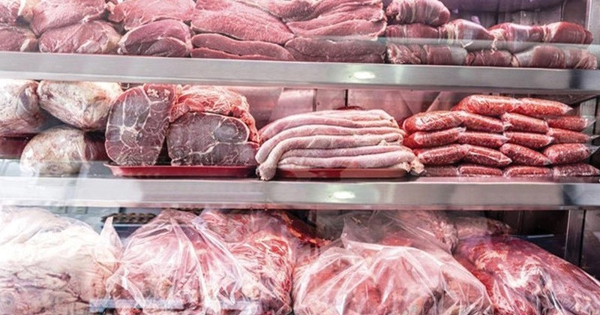
Vietnam imported 112,090 tonnes of fresh, chilled or frozen pork during the period, according to figures from the Ministry of Industry and Trade’s Agency of Foreign Trade reported by Vietnambiz. Import volume increased 27% from the same period of 2025, but the value of those purchases declined 21% to $185.54 million.
The average import price was $1,638 per tonne, down 38.4% year on year. The divergence between rising volume and falling value indicates that lower unit prices, rather than higher expenditure, drove the expansion in inbound supply. For meat processors, food manufacturers and institutional buyers able to use imported cuts, the decline potentially reduces raw-material costs and broadens procurement options.
Brazil leads a concentrated supplier base
Vietnam sourced pork from 19 markets during the seven-month period, but imports were concentrated among three suppliers. Brazil accounted for 44.5% of total volume, making it the country’s largest external source. Russia supplied 21.41% and Spain contributed 20.54%, while Germany held a 4.58% share. All other origins together represented 8.97%.
The figures mean Brazil, Russia and Spain collectively supplied more than four-fifths of Vietnam’s imported pork. That concentration gives buyers access to scale from established exporters, although it also leaves sourcing patterns sensitive to production conditions, prices and market-access rules in a relatively small group of countries.
Brazil’s leading share is particularly significant for importers seeking competitively priced frozen material. European suppliers remain important through Spain and Germany, while Russia’s position gives Vietnam another large source outside the European Union and South America.
Domestic fresh-meat demand limits direct pressure
Despite the 27% increase in imported volume, the head of a major livestock industry group said the effect on Vietnam’s domestic pork market remained limited. Nguyen Tri Cong, chairman of the Dong Nai Livestock Association, told Vietnambiz that imports were not large enough to exert substantial pressure because consumer demand is focused mainly on chilled and hot fresh meat.
This distinction matters for domestic producers. Imported pork can compete strongly in processing and other price-sensitive channels, but it is not necessarily a direct substitute for freshly slaughtered pork sold through Vietnam’s traditional retail network. The immediate competitive impact therefore depends on the cut, product form and end market rather than import volume alone.
Domestic live hog prices were stable at VND57,000-VND59,000 per kilogram on September 1. Vietnambiz reported that this range was VND5,000-VND10,000 per kilogram below levels at the beginning of the year and VND17,000-VND20,000 below the peak recorded in early February. While rising imports add to available supply, the source did not establish them as the primary cause of the domestic price decline.
Pork exports retreat
Vietnam’s outbound pork trade moved in the opposite direction. Exports of fresh, chilled or frozen pork totaled 3,700 tonnes worth $31.77 million in the first seven months of 2026. Volume fell 23.6% from a year earlier, while value declined 15.1%.
Hong Kong remained Vietnam’s main export destination. Shipments to that market decreased 26.1% by volume and 19% by value compared with the same period of 2025. The steeper fall in export volume than value contrasts with the import trend, but reduced shipments also mean exporters remain heavily exposed to demand conditions in their principal market.