Vietnam’s online dried buffalo meat sales reach VND117.4 billion
Dried and smoked buffalo meat generated VND117.4 billion across four Vietnamese e-commerce platforms from 1 January 2025 to 31 July 2026. TikTok Shop captured more than 86% of sales, while the category drew scrutiny over the marketing of products made with frozen buffalo meat imported from India.
TikTok Shop dominates a VND117.4 billion category
Online sales of smoked, dried and dehydrated buffalo meat in Vietnam reached VND117.4 billion between 1 January 2025 and 31 July 2026, according to e-commerce data platform Metric cited by Tien Phong and CafeBiz. About 476,100 sales were recorded across 594 stores on Shopee, TikTok Shop, Lazada and Tiki. Metric said it excluded artificial orders and products offered as gifts.
TikTok Shop accounted for about VND101.1 billion, or more than 86% of the category’s revenue. Shopee ranked second with VND15.9 billion, followed by Lazada at approximately VND431.1 million. Tiki generated only about VND420,000, showing that the market depended overwhelmingly on short-video commerce and livestream-led selling.
The figures cover products listed under Vietnamese keywords for smoked buffalo meat, dried buffalo and dehydrated buffalo. The category has developed from a specialty associated with Vietnam’s northwestern region into a widely marketed online food product, supported by videos, livestreams and branded marketplace stores.
Premium price bands and Tet demand lead sales
Buyers accepted relatively high transaction values. The VND750,000-VND1 million price band produced the largest reported revenue at about VND21.9 billion. Products priced at VND500,000-VND750,000 generated VND17.4 billion. Tien Phong put revenue in the VND350,000-VND500,000 band at VND15.4 billion, while CafeBiz reported VND16.4 billion for the same range. Tien Phong also recorded VND14.1 billion in the VND200,000-VND350,000 segment.
Demand was strongly seasonal rather than evenly distributed. Purchases increased from late December through approximately February, coinciding with the Tet holiday season. During one week in January 2025, category revenue approached VND10 billion. Metric’s data also showed another notable increase in early 2026, followed by lower sales in subsequent months, CafeBiz reported.
Market leadership was concentrated, although hundreds of sellers remained active. The 20 leading stores and businesses represented about 49.9% of total revenue. Lâm A Tuyến ranked first with VND18 billion, followed by Tân Loan Foods with VND15.2 billion and Trinhbepkhoi with VND10.7 billion.
Other top-10 brands reported by CafeBiz included Huho with VND3.5 billion, Tru with VND1.9 billion, and Huyền Tây and Mường Then with about VND1.1 billion each. Trinh recorded VND873.4 million and Lan Nùng VND841.9 million. Sapa TV ranked tenth with VND809.7 million, equivalent to about 4.5% of the leading seller’s revenue.
Imported raw material brings greater scrutiny
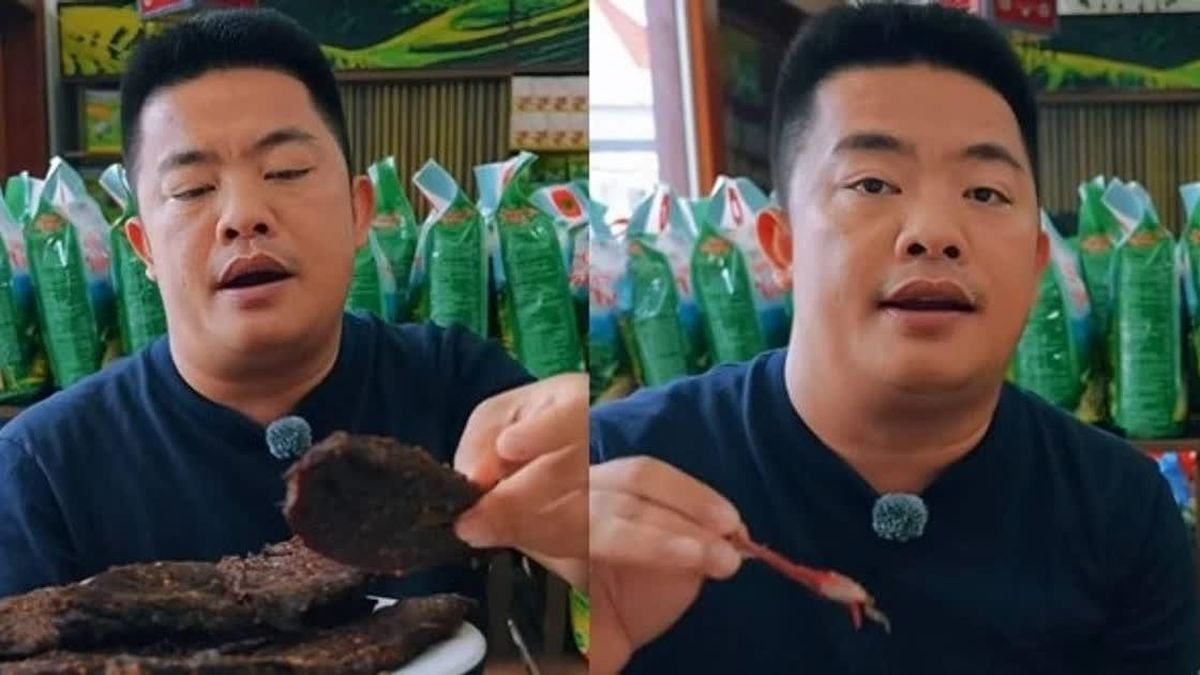
Sapa TV’s position attracted attention after a criminal investigation involving Vũ Hoàng Hải, also known as Hải Sapa TV. CafeBiz reported that Sapa TV removed smoked buffalo meat from its TikTok sales basket in June 2025, while Tien Phong, citing Znews, said the product was removed from marketplace stores around the middle of 2025. Its reported revenue nevertheless covers Metric’s full measurement period.
According to information released by investigators and reported by the publications, Hải directed his wife, Bùi Thị Kim Tuyên, to sign a contract to distribute spicy dried buffalo meat produced by Hoàng Nam General Production and Trading Joint Stock Company. The manufacturer used frozen buffalo meat imported from India, while the finished product was advertised on social media as a northwestern Vietnamese dried-buffalo specialty and carried the Hải Sapa TV logo. Tien Phong reported that Tuyên bought about VND30 billion of the product from Hoàng Nam between 2022 and 2025 for resale.
On 24 August, Lào Cai provincial police announced proceedings and the detention of three defendants, according to CafeBiz. The publication said Hải was charged over deceiving customers, while Phạm Văn Hà, director of Hoàng Nam, and Tuyên faced allegations related to serious accounting violations. Tien Phong described Hải as facing allegations involving both customer deception and accounting rules. The case puts origin claims, raw-material disclosure and seller controls at the center of risk management for Vietnam’s rapidly expanding social-commerce food market.