Vietnam’s illegal cigarette trade could cost budget nearly VND20 trillion a year by 2031
Vietnam’s annual revenue loss from smuggled cigarettes could approach VND20 trillion by 2031, according to the Vietnam Tobacco Association. The warning comes before a new mixed excise-tax system takes effect in 2027, progressively adding a fixed levy of up to VND10,000 per pack.
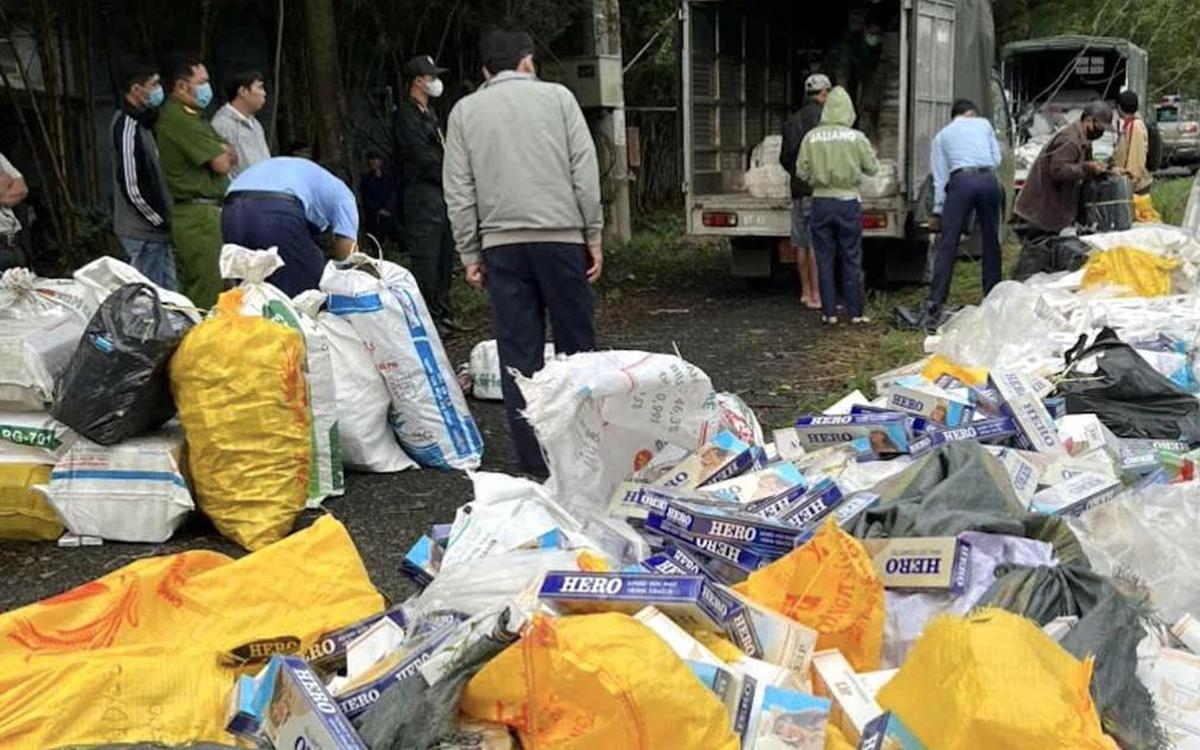
Illegal products hold more than 10% of the market
Smuggled cigarettes account for more than 10% of Vietnam’s tobacco market and currently deprive the state budget of an estimated VND4 trillion to VND5 trillion each year, Cafebiz reported, citing Vietnam Tobacco Association chairman Ho Le Nghia. Incomplete statistics indicate that accumulated revenue losses over the past several decades may already be close to VND100 trillion.
Nghia said the annual loss could approach VND20 trillion by 2031. The projection was presented at an August 6 conference convened by the standing office of Vietnam’s national steering committee against smuggling, commercial fraud and counterfeit goods. The meeting focused on implementing Directive No. 25/CT-TTg, issued by the prime minister on June 9, 2026, to strengthen action against the smuggling, transportation, production, sale, storage and illegal use of tobacco.
The issue also affects legal manufacturers. Nghia is chairman of state-owned Vietnam National Tobacco Corporation, or Vinataba, which represents 70% of the association’s market. In 2025, Vinataba ranked sixth among state-owned enterprises for contributions to the national budget and twelfth when private groups were included. Nghia said reducing the illegal segment by 1-2% would allow Vinataba and other association members to make larger budget payments.
New excise system raises the price-risk equation
Vietnam’s revised special consumption tax law will take effect on January 1, 2027. Cigarettes will become subject to a mixed system comprising the existing 75% rate and a fixed tax that rises from VND2,000 per pack in 2027 to VND10,000 per pack in 2031. The domestic industry previously experienced increases in proportional tax rates from 60% to 75%, but not a fixed-tax escalation of this scale, Nghia said.
The association expects higher legal retail prices to increase demand for untaxed products and attract more smuggled cigarettes from 2027. Nghia pointed to Australia and Kazakhstan as markets that had faced similar circumstances. The projection reflects the industry association’s assessment; the source material does not provide an independent government forecast or specify the methodology used to calculate the potential VND20 trillion loss.
China was cited as a contrasting example. According to figures presented by Nghia, China’s tobacco industry paid USD251 billion into the state budget in 2025. He attributed that result partly to effective action against cigarette smuggling, which supported higher domestic prices and tax receipts.
Industry seeks more enforcement funding
The Vietnam Tobacco Association is preparing proposals to expand financial support for enforcement agencies. One proposal asks the Ministry of Finance to establish additional funding through a VND4,500-per-pack destruction fee and a VND200-per-pack allocation for steering committees. A second would allow part of the tobacco industry’s annual after-tax profit to finance equipment and tools used by authorities fighting illegal cigarette trade.
Part of that funding could also support economically vulnerable communities in border regions, where authorities aim to prevent participation in smuggling. Enforcement remains dangerous: Nghia recalled that an association delegation attended the funeral of a market-management officer in Tien Giang who died during an anti-smuggling operation seven or eight years ago. Research by the Tobacco Economic and Technical Institute also found that illegal cigarettes contained certain toxic and prohibited substances capable of seriously affecting users’ health, particularly the nervous system and brain.