Vietnam’s 9.7-million-ton graphite reserve faces battery-grade processing gap
Vietnam holds an estimated 9.7 million tonnes of natural graphite, ranking seventh globally, according to USGS figures cited by Soha. Its opportunity in battery materials depends on moving beyond basic concentration and developing the capacity to produce high-purity graphite.
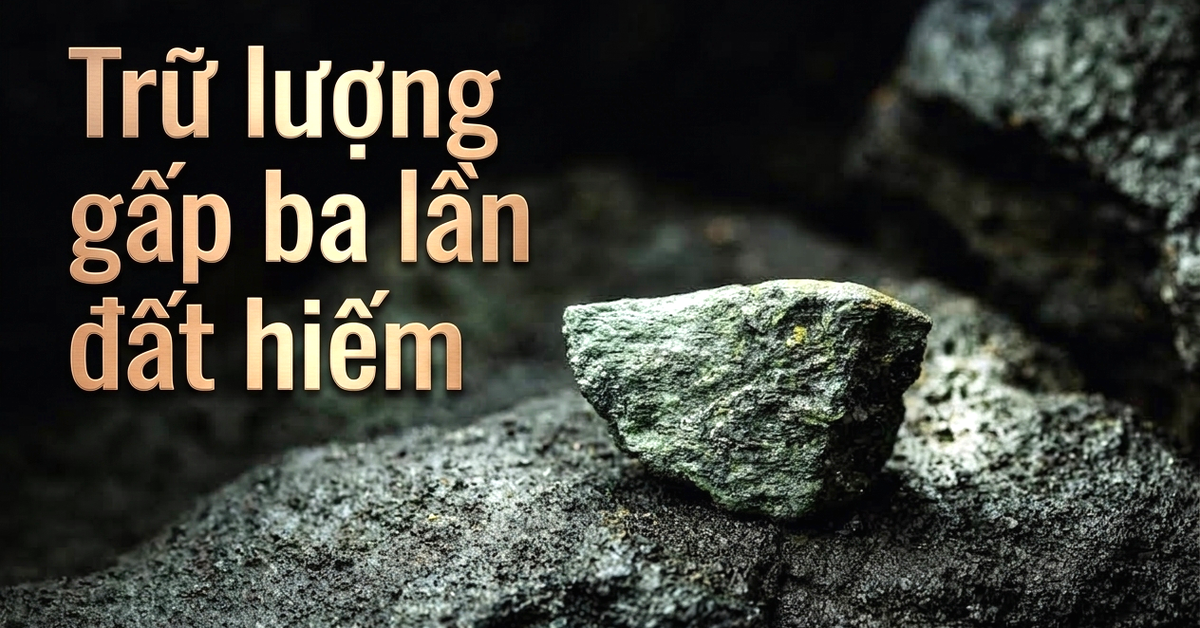
Vietnam ranks seventh in natural graphite reserves
Vietnam has an estimated 9.7 million tonnes of natural graphite reserves, placing it seventh worldwide and giving it about 3.1% of the global total, according to US Geological Survey figures cited by Vietnamese publication Soha. The resource is concentrated mainly in the mountainous northwest and the Central Highlands.
Global natural graphite reserves are estimated at about 310 million tonnes. China leads with 100 million tonnes, followed by Brazil with 74 million tonnes, Madagascar with 27 million tonnes, Mozambique with 25 million tonnes, Tanzania with 18 million tonnes and Russia with 14 million tonnes. Vietnam’s reserve base is substantially smaller than those of China and Brazil but still places the country among the world’s 10 largest holders.
Purity is the central commercial constraint
Graphite conducts electricity and heat and can withstand extreme temperatures, with a melting point of about 3,600 degrees Celsius. It has long been used in steelmaking, refractory linings, electrodes and industrial lubricants. Its strategic importance is now rising because natural graphite competes with synthetic graphite as an anode material in lithium-ion batteries used in electric vehicles, electronics and energy-storage systems.
Vietnam has yet to translate the scale of its geological resource into battery-grade output. Soha reports that domestic processing has generally relied on crushing and mechanical separation, raising graphite content from an initial 10-12% to about 80-90%. That purity is insufficient for the high-technology applications driving the strongest new demand. Commercial value therefore depends not only on mining volumes but also on beneficiation, purification and downstream conversion into material that meets battery specifications.
The market outlook provides an incentive to close that gap. Grand View Research figures cited by Soha value the global graphite market at $13.3 billion in 2025 and project an increase from $14.1 billion in 2026 to $23.9 billion by 2033, representing a compound annual growth rate of 7.8% between 2026 and 2033. Asia-Pacific accounted for 44.4% of the market in 2025, while the electrode segment represented the largest revenue share at 36.2%.
Mining targets require downstream investment
Vietnam’s government placed graphite among the minerals targeted for expanded exploration, mining and deeper processing under Decision No. 866/QD-TTg, issued in 2023 for the 2021-2030 planning period with a vision to 2050. The plan calls for two exploration projects during 2021-2030, seeking about 5.5 million tonnes of additional reserves in the newly configured Lao Cai province, which includes the former Lao Cai and Yen Bai areas. A further project planned for 2031-2050 targets another 1.3 million tonnes.
The government aims for total graphite mining capacity of approximately 1.151 million tonnes per year by 2030 and about 1.15 million tonnes annually during 2031-2050. Meeting those targets would expand feedstock availability, but it would not by itself establish Vietnam as a major battery-material supplier. That outcome requires investment in purification and deep processing, consistent product quality and customers able to qualify the material. Without those capabilities, the country’s large reserve may remain tied mainly to lower-value concentrate and traditional industrial uses rather than higher-value battery supply chains.