Vietnam readies first oil from Lac Da Vang as PTSC launches 500,000-barrel storage vessel
Vietnam is due to take first commercial oil from the Lac Da Vang field in the Cuu Long Basin in October 2026, with recoverable resources estimated at 100-113 million barrels of oil equivalent. The crude will be handled by FSO PTSC LDV, a floating storage and offloading unit built in Vietnam from high-strength steel with capacity for more than 500,000 barrels.
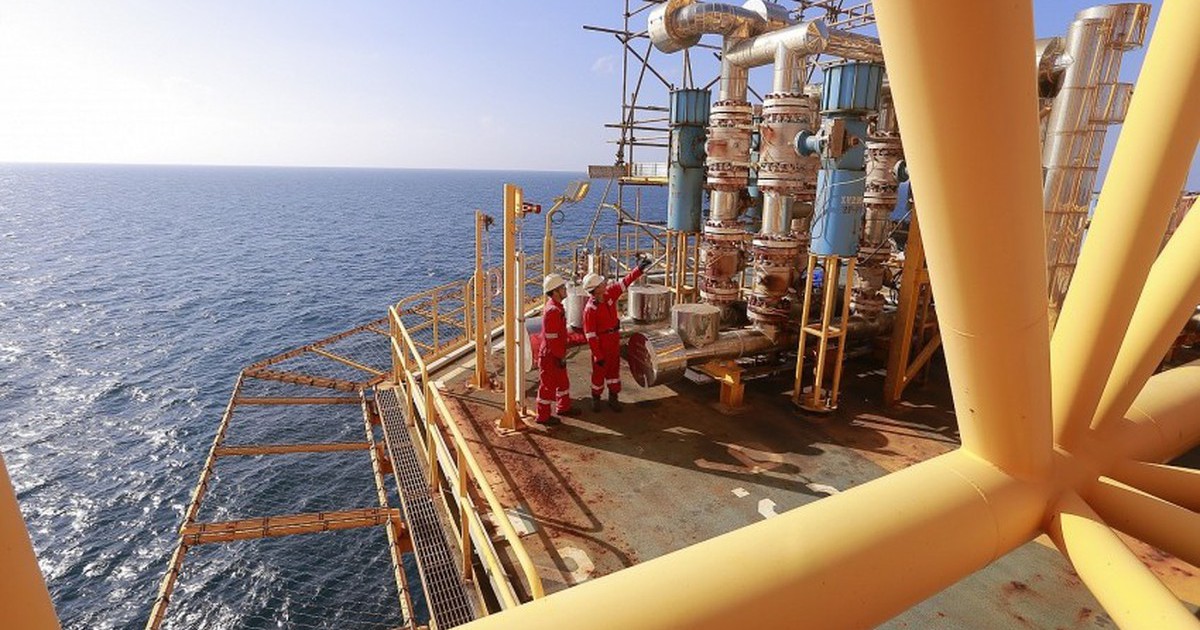
Vietnam is preparing to take first commercial oil from the Lac Da Vang field in October 2026, with the crude to be stored and exported through FSO PTSC LDV, a floating storage and offloading unit built in Vietnam from specialised high-strength steel, according to kenh14.vn.
A field 120 kilometres off Vung Tau
Lac Da Vang lies in Block 15-1/05 in the Cuu Long Basin, about 120 kilometres from the coast of Vung Tau. Analysts cited by kenh14.vn put total recoverable resources at roughly 100 million to 113 million barrels of oil equivalent, with production peaking at 20,000 to 25,000 barrels per day once the field runs at a stable rate.
At that plateau the field would account for about 10 to 12 percent of Vietnam's current crude oil output. First oil arrives after years of waiting, and the report said the first barrels would flow into the storage vessel within days.
Light, sweet crude for Dung Quat and Nghi Son
Petrovietnam describes the Lac Da Vang crude as a light, high-quality grade with a gravity of 37 to 40 degrees API and low sulphur content, placing it in the sweet category.
Those specifications carry direct value for refiners. Low-sulphur feedstock reduces the load on desulphurisation units, which consume large volumes of energy and generate emissions during processing, and the resulting gasoline and diesel leave the refinery with less residual sulphur. Crude from the Cuu Long Basin has long been regarded as one of the highest-quality streams available and is used as a pricing benchmark. It is also a natural input for Vietnam's domestic refineries at Dung Quat and Nghi Son, which would otherwise rely more heavily on imported barrels.
A hull designed for 20 years without drydocking
The export link is FSO PTSC LDV, built by Petrovietnam Technical Services Corporation (PTSC), a company within the Petrovietnam group. PTSC describes the unit as a newbuild double-hull vessel able to resist collision, prevent oil escaping into the environment and withstand heavy wave and wind loads in the South China Sea. Its main parameters, as published by the contractor:
- Storage capacity of more than 500,000 barrels of crude oil
- Design processing capacity of 20,000 barrels per day
- External turret mooring system
- Integrated dual-fuel system intended to raise operating efficiency and cut emissions
- Designed, built and classed under the supervision of the American Bureau of Shipping (ABS)
Because the hull is fabricated from specialised high-strength steel, the unit carries a design life of 20 years of continuous offshore service without being taken to a dock for maintenance. That single specification defines the commercial case for the vessel: it is expected to cover storage and offloading for the entire Lac Da Vang field without a scheduled interruption.
A reference project for Vietnamese contractors
The oil itself needs somewhere to be accumulated before it is transferred to international tankers, and that function anchors the field to the export market. Every barrel produced at Lac Da Vang will pass through the FSO before it reaches a buyer, whether that is a domestic refinery or a seaborne cargo.
For Vietnam's oil and gas service sector, the project is as much an engineering credential as a production asset. The vessel was designed and fabricated by Vietnamese engineers and classed to international standards, giving PTSC a completed newbuild FSO to point to in future tenders. Offshore storage units of this type are usually supplied by a small group of international contractors, and domestic fabrication keeps the capital spending and the operating work inside the country. kenh14.vn frames Lac Da Vang as a launchpad for Vietnamese oil service companies rather than simply an addition to national output.