Vietnam’s fruit and vegetable exports to China reach $2 billion in first half of 2026
Vietnam exported $2.0 billion of fruit and vegetables to China in the first half of 2026, up 24.7% year on year. China accounted for 55.0% of the sector’s total export value, supported by tropical-fruit demand, the harvest season and improved border clearance.
China takes 55% of Vietnam’s produce exports
Vietnam’s fruit and vegetable exports reached $3.7 billion in the first six months of 2026, an increase of 19.4% from the same period in 2025, according to An Ninh Thu Do. China remained by far the largest destination, buying $2.0 billion of Vietnamese produce during the period.
Sales to China increased 24.7% year on year and represented 55.0% of Vietnam’s total fruit and vegetable export value. China’s growth therefore exceeded the sector-wide rate, further concentrating the industry’s revenue in its principal market.
The gap between China and other destinations was substantial. The United States, Vietnam’s second-largest market, purchased $292.1 million, up 11.7%, and accounted for 7.9% of total exports. South Korea ranked third at $170.4 million, an increase of 8.1%, with a 4.6% share.
June shipments accelerate during tropical-fruit harvest
Vietnam’s exports to China reached $621.2 million in June alone. That was 56.1% more than in May and 18.1% above the level recorded in June 2025. The monthly acceleration coincided with Vietnam’s harvest season for several tropical fruits.
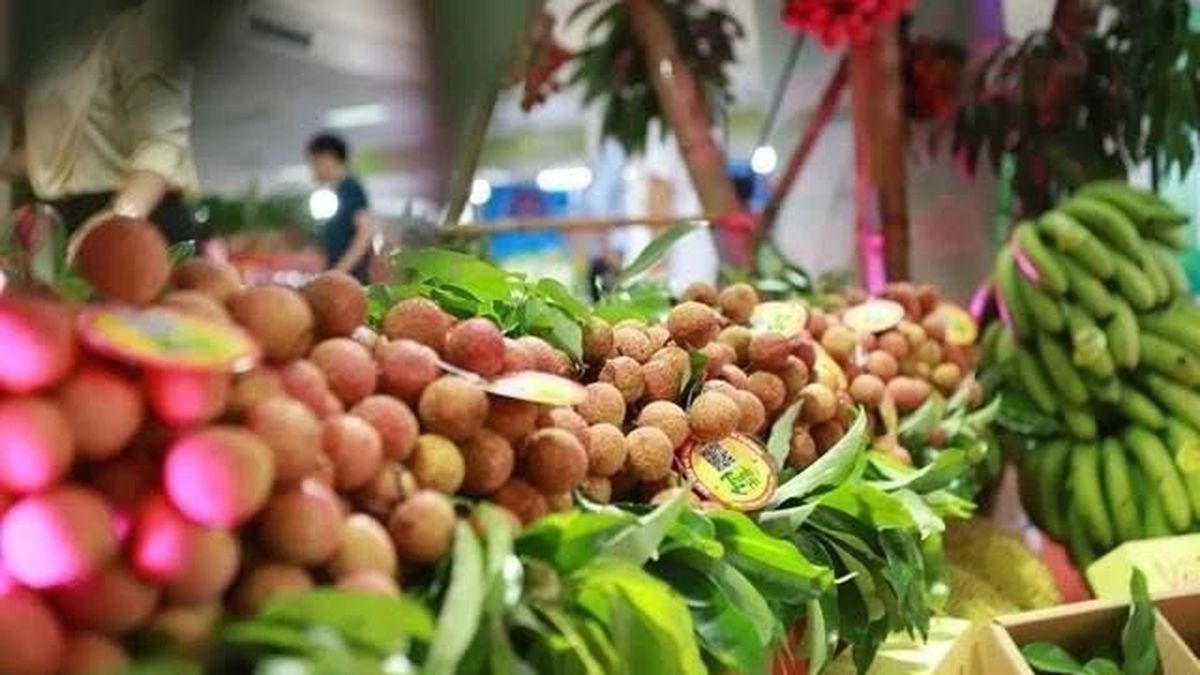
Chinese import demand was particularly strong for durian, dragon fruit, banana, fresh coconut and mango, An Ninh Thu Do reported. These products were the main demand-side drivers behind the first-half increase, while the seasonal expansion in available fruit supported the sharp rise in June shipments.
Operating conditions at border crossings also improved. Faster customs clearance, together with exporters’ increasing compliance with requirements covering registered growing-area codes, packing facilities and traceability, helped more produce reach the Chinese market. These controls remain commercially significant because access depends not only on demand and supply, but also on farms and packers meeting the required protocols.
Alternative markets grow from smaller bases
The European Union remained another positive market for Vietnamese fruit and vegetable exporters, with An Ninh Thu Do linking the performance partly to the EU-Vietnam Free Trade Agreement. However, the United States, the EU and South Korea still represent much smaller shares than China, despite maintaining positive growth.
The Ministry of Industry and Trade’s Industry and Trade Information Center said China’s 55.0% share demonstrates Vietnam’s high dependence on a single export market. For growers, packing businesses and traders, the concentration offers access to strong demand and a large nearby buyer, but it also increases exposure to changes in Chinese consumption, border operations and market-access rules.
The first-half results indicate that China will remain central to the sector’s near-term sales, particularly during major harvest windows. At the same time, the growth recorded in the United States, South Korea and the EU points to room for expansion in higher-value markets. Increasing their contribution would give Vietnamese suppliers a broader customer base while reducing the commercial impact of disruptions in any one destination.