Vietnam's fertilizer exporters gain ground as Middle East tension lifts energy and urea prices
Escalating Middle East conflict has pushed Brent to $107.6 a barrel and European TTF gas to about €82.8/MWh, roughly ten times US Henry Hub, eroding the competitiveness of European ammonia and urea plants. With 34% of global urea trade and 49% of sulphur moving through the Strait of Hormuz, Mirae Asset sees a short-term urea shortfall. Vietnam, holding about 0.8 million tonnes of theoretical urea surplus, exported 2.05 million tonnes of fertilizer worth $1.11 billion in eight months.
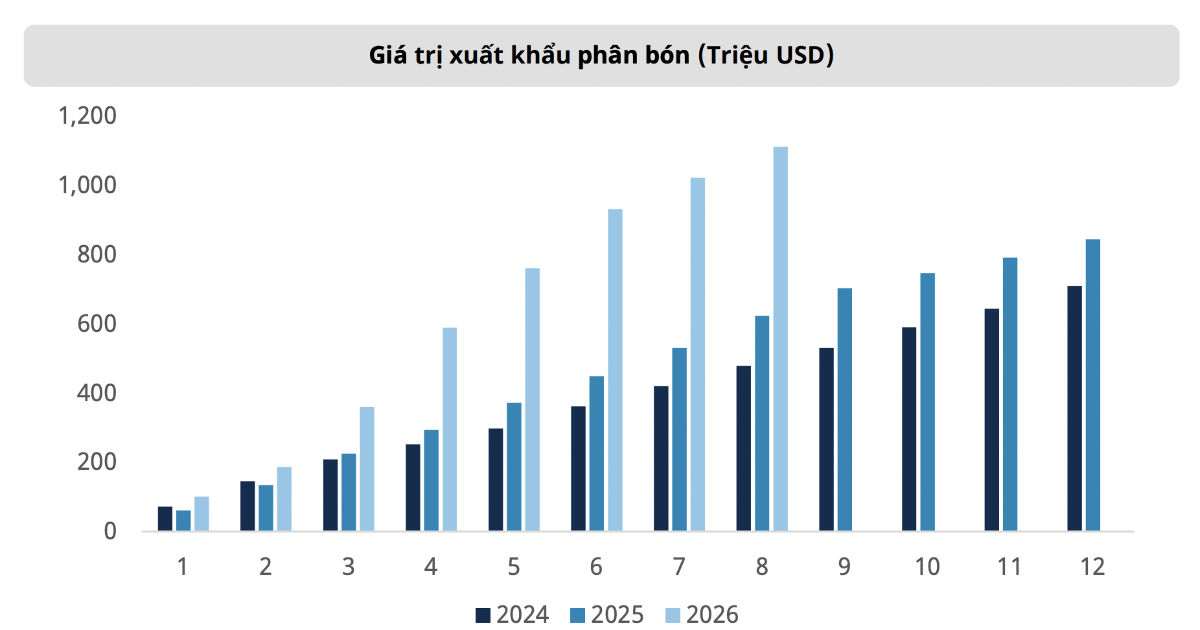
Escalating tension in the Middle East is keeping global energy markets under pressure and splitting the cost curve for nitrogen fertilizer producers, creating export room for manufacturers in Vietnam, according to a Mirae Asset assessment published by VnEconomy.
In its September 2026 report, the US Energy Information Administration raised its forecast for average Brent crude in the second half of the year to about $90 per barrel, $8 per barrel above the previous month's estimate. Actual pricing has run well ahead of that: Brent reached $107.6 per barrel on 15 September after a disruption to Saudi Arabia's East-West pipeline and a sharp drop in tanker traffic through the Strait of Hormuz. The EIA does not expect regional oil output and exports to normalise before the second quarter of 2027.
Gas prices split the global cost curve
European TTF gas rose to about €82.8 per MWh on 15 September 2026, up 34% in a month and more than 156% year on year. At current exchange rates that is roughly $28 per MMBtu, close to ten times the US Henry Hub benchmark. VnEconomy attributes the move to disrupted Middle Eastern LNG supply, shipping risk through Hormuz, outages in Norwegian supply and pre-winter storage buying. US gas prices have remained comparatively stable on ample domestic supply, while European and Asian buyers absorb the LNG risk premium.
Gas is the dominant variable cost in ammonia and urea production. At these levels European plants lose competitiveness and face growing pressure to curtail output, which supports nitrogen import demand. That effect is reinforced by a one-year suspension of import duties on certain nitrogen, ammonia and urea products, intended to lower input costs for farmers and diversify supply sources.
A third of urea trade moves through Hormuz
The Middle East occupies a structurally important position in fertilizer supply. Volumes passing through the Strait of Hormuz account for roughly:
- 34% of global urea trade
- 23% of ammonia
- 18% of MAP and DAP
- 49% of sulphur
Shipping risk rose sharply again in September after a partial mid-year recovery. Reuters reported that only four cargo vessels transited the Strait of Hormuz on 14 September, against roughly 125 transits a day before the war. Sulphur, a key input for phosphate processing, has eased from its June peak but remains elevated: about $1,038 per tonne in China, up 216% year on year, with Middle Eastern material at $1,000 per tonne and Canadian material at $1,025 per tonne, up 251% and 269% respectively. Mirae Asset argues that these pressures are combining to create a short-term urea shortage that favours exporting producers worldwide.
Vietnam's surplus capacity meets a tighter market
Vietnam's supply-demand structure is unusual: urea output exceeds domestic requirements while the country still relies on imports for several other fertilizers and raw materials. Domestic urea demand runs at about 1.8 million tonnes a year against roughly 2.6 million tonnes of design capacity across four large plants, a theoretical surplus of about 0.8 million tonnes.
Export data already reflect the tighter market. In the first eight months of 2026 Vietnam shipped about 2.05 million tonnes of fertilizer worth more than $1.11 billion, up 36.6% by volume and 78.2% by value year on year. The average export price reached about $542 per tonne, an increase of around 30.5%.
Mirae Asset names upstream producers with export capability, DCM and DPM, as the main beneficiaries. Both continue to gain from sustained high urea prices and stable domestic gas supply, which preserve a cost advantage over European and Asian rivals. DCM is more directly exposed to export demand, while DPM holds a stronger domestic position and a broader product mix. The short-term outlook is positive, but rising oil prices and expanding urea supply from China could narrow margins.