Vietnam expands cigarette smuggling crackdown from borders to online markets
Vietnam has ordered stronger action against illicit tobacco networks operating at borders, in domestic markets and online. Authorities will increase inspections, information sharing and digital tracing as smugglers move sales to social media, e-commerce and delivery services.
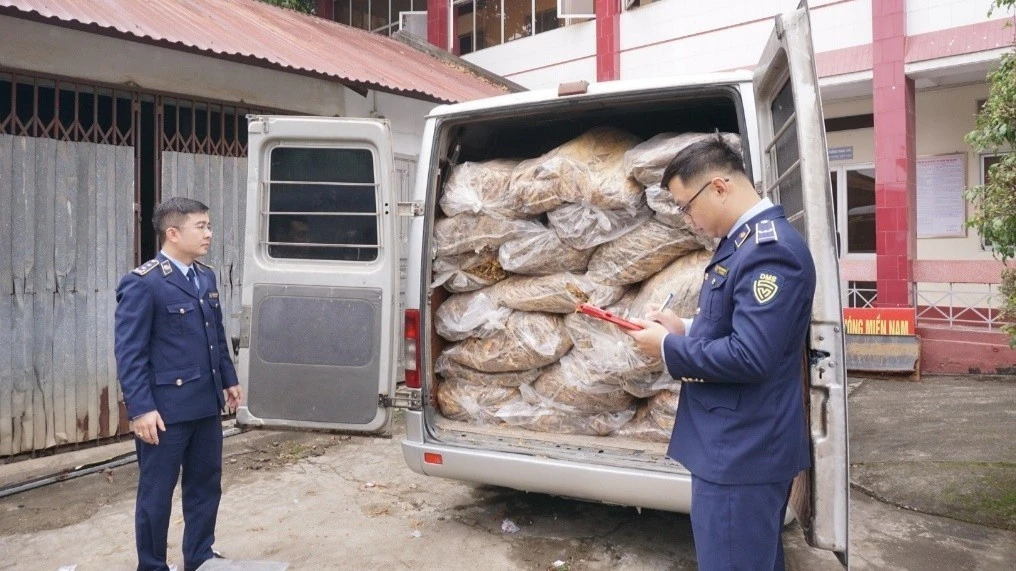
Government widens enforcement campaign
Vietnam is intensifying its campaign against cigarette smuggling as illicit networks increasingly combine traditional border routes with social media, e-commerce, delivery services and electronic payments. The standing office of the National Steering Committee 389 has asked the ministries of Public Security, National Defence, Finance and Industry and Trade, along with provincial authorities, to strengthen surveillance at borders, checkpoints, domestic markets and online.
According to Bao Dau Tu, the order follows Government Office document 8979/VPCP-V.I dated September 3, 2026, and calls for effective implementation of Prime Ministerial Directive 25/CT-TTg, issued on June 9, 2026. Enforcement agencies are to increase patrols, inspections and intelligence sharing, focusing on networks involved in smuggling, transporting, manufacturing, selling, storing or illegally using imported cigarettes, counterfeit tobacco, tobacco materials, e-cigarettes and heated tobacco products.
Seizures reveal the scale of the illicit market
Nhan Dan reported that Vietnamese authorities detected and handled 79,459 cases involving 59,257 people between 2014 and 2025. They seized more than 110.18 million packs of cigarettes, 388,196 kilograms of tobacco leaf and 2.37 million units of new-generation tobacco products. The enforcement drive followed Directive 30/CT-TTg of September 30, 2014, which Directive 25 has now replaced.
The Vietnam Tobacco Association, or VTA, estimates that seized cigarettes represent only about 1-2% of the illicit tobacco traded and consumed in Vietnam. From 2017 to 2020, agencies recorded an average of about 13,800 cases a year, while confiscated cigarettes rose from 7.8 million to 14 million packs. Between 2021 and 2024, annual cases fell to around 10,000 and seizures declined from 6.3 million to 4.1 million packs. VTA calculates that a smuggled pack of Jet or Hero can generate a profit of about 10,000-12,000 dong on a retail price of 25,000-30,000 dong, three to four times the profit on legal products in the same segment because illicit supplies avoid taxes and fees.
Digital distribution complicates enforcement
Authorities say sellers increasingly advertise and trade through social networks and closed online groups, using multiple virtual accounts, bank accounts held in other names, cryptocurrency and delivery companies. Accounts can be deleted quickly, while sellers and customers may be located in different jurisdictions. Bao Dau Tu cited difficulties investigating e-cigarette cases in An Giang and Tay Ninh, including problems with testing products and determining quantities and narcotic content. Ho Chi Minh City authorities expect illegal tobacco trading to make greater use of e-commerce, social media, delivery services and electronic payments.
The new approach includes proposals for a shared database connecting information on sellers, warehouses, delivery addresses, vehicles and transactions. Border Guard representatives have proposed a three-layer system covering areas beyond the border, the border zone and the domestic market. Authorities also want common procedures for digital tracing and risk alerts, tighter rules for e-cigarettes, heated tobacco, components and liquids, and clearer procedures for seized goods. Vietnam has prohibited the sale and use of e-cigarettes and heated tobacco in all forms since January 1, 2025. For legal manufacturers and distributors, broader enforcement could reduce competition from untaxed products, but its impact will depend on whether agencies can identify organizers and distribution networks rather than only intercept individual shipments.