Vietnam expands export traceability system to 9,546 growing-area codes
Vietnam had issued 9,546 growing-area codes and 1,525 packing-facility codes by May 2026, supporting agricultural exports to major markets. China has approved 4,323 growing areas and 1,332 packing facilities, but compliance warnings and suspensions show that market access increasingly depends on continuous technical controls.
Traceability network expands with agricultural exports
Vietnam had established 9,546 growing-area codes and 1,525 packing-facility codes for exports by May 2026, according to the Ministry of Agriculture and Environment, as reported by Dan Viet. The identifiers allow authorities and importing countries to monitor production, packing and product origin. For some destinations and commodities, they are a mandatory condition for market access rather than a voluntary certification.
The system supports an agricultural sector whose exports continue to grow. Vietnam’s agricultural, forestry and fishery exports were estimated at $6.34 billion in June 2026, up 3% from the previous month and 10.1% from June 2025. First-half exports reached an estimated $35.88 billion, an increase of 6% year on year. Agricultural products accounted for $18.59 billion, fisheries for $5.7 billion and forestry products for $9.2 billion.
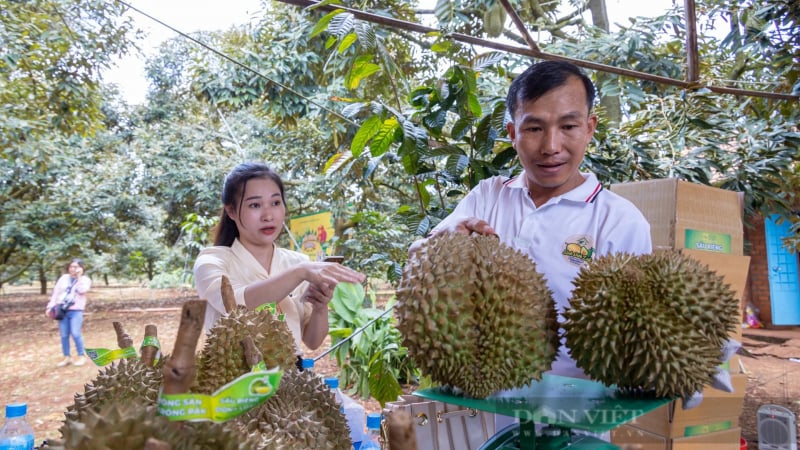
Codes have been developed for export crops including durian, pomelo, passion fruit and jackfruit. China represents the largest specifically documented part of the network, with 4,323 Vietnamese growing-area codes and 1,332 packing facilities approved. Vietnam and China have signed more than 20 agreements and protocols covering agricultural, forestry and fishery trade, while about 10 fruit categories can now enter China through official export channels.
Access brings stricter operating requirements
Since 2024, China has opened its market to additional Vietnamese products including frozen durian, fresh coconut, chilli, jackfruit, fresh pomelo and fresh lemon. The expansion creates opportunities for growers and exporters, but it also requires more standardized production areas, packing operations and records. Growing areas and packing facilities for pomelo and fresh lemon must register with Vietnam’s Ministry of Agriculture and Environment and receive approval from China’s General Administration of Customs before shipments begin.
Approved growing areas must apply good agricultural practices and integrated pest management, monitor pests specified by China and maintain complete records. Pomelo fruit must be bagged for at least 60 days before harvest. Other major markets, including the United States, Japan, South Korea and Australia, also require continued compliance with plant-health, pesticide-residue, packing and monitoring rules.
Compliance has become a material commercial risk. Since 2025, China has issued non-compliance warnings involving 403 Vietnamese growing-area codes and 240 packing facilities. Of those, 167 growing-area codes and 99 packing facilities were suspended or revoked. A limited number of violations can therefore interrupt shipments beyond an individual farm or packer and damage confidence in a wider product category.
Rules define when codes can be withdrawn
Vietnam regulates the identifiers under the amended Article 64 of the Law on Crop Production and Decree No. 38 dated January 24, 2026. A growing area is defined as a location producing one crop under a common process and consistent natural conditions. A packing facility is a site used to grade, conduct preliminary processing, pack and preserve crop products.
Decree No. 38 permits authorities to withdraw a code for the use of banned chemicals or unauthorized plant-protection products, false application documents, termination of production, an unregistered change of land use or crop, or a request from the code holder. Withdrawal can also follow when an operator fails to submit an adequate corrective report within 60 days of a suspension notice.
Deputy Minister Nguyen Hoang Hiep told a July 13, 2026 meeting that Decree No. 38 contained shortcomings and that the ministry was seeking comments on a proposed government resolution to simplify administrative procedures. The policy challenge is to reduce unnecessary processing without weakening controls demanded by importing markets. For producers and exporters, the practical value of a code will depend on maintaining verifiable farm records, compliant chemical use and disciplined packing operations throughout the export cycle.