Vietnam’s EPR Rules Drive Demand for Recycled Materials
Vietnam’s extended producer responsibility rules are increasing corporate demand for recycled materials. Stronger interest in greener inputs and expanding green credit could support investment across the recycling supply chain.
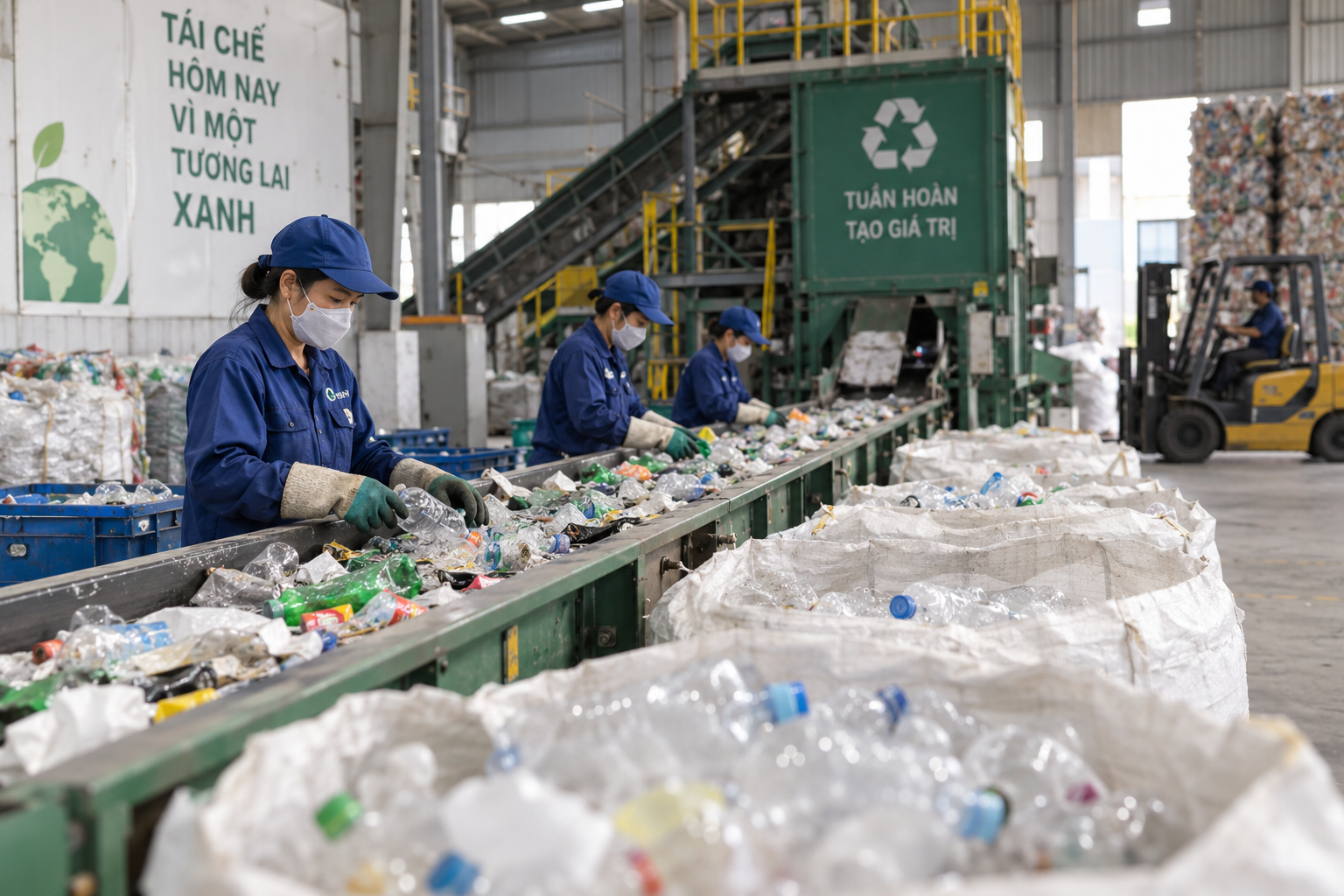
Recycling obligations reshape procurement
Vietnam’s recycled-materials market is gaining momentum as extended producer responsibility, or EPR, places greater recycling obligations on companies. Thuong Truong reports that tighter producer responsibility, rising corporate demand for greener inputs and expanding green credit are providing a new push for the market.
EPR changes the commercial role of recycling. Materials recovered from waste are no longer relevant only to waste-management companies: they become inputs that producers need to secure as they address recycling responsibilities. This gives manufacturers a stronger reason to review packaging and product design, identify suitable secondary raw materials and build relationships with recyclers capable of supplying consistent volumes and quality.
Quality and traceability become commercial priorities
Growing demand does not automatically create a functioning market. Industrial users need recycled materials that meet their production requirements, while recyclers need reliable access to recoverable waste. Sorting, collection, processing and quality control therefore become central to market development. Suppliers able to document the origin, composition and treatment of material may be better positioned to serve companies that must demonstrate compliance with EPR requirements.
The shift also raises the importance of contracts between producers, waste collectors and processors. Manufacturers need predictable supplies, but recycled feedstock can vary in condition and composition. Better coordination can reduce that uncertainty and help processors plan capacity. For producers, dependable procurement can make recycled inputs part of regular manufacturing rather than a limited sustainability initiative.
Green credit may support additional capacity
The expansion of green credit adds a financing channel for companies seeking to invest in recycling operations or cleaner inputs. Recycling projects often require spending on collection systems, sorting equipment, processing technology and quality assurance before they can deliver material at an industrial scale. Greater access to suitable credit could help processors expand and improve the consistency of their output.
Financing alone will not resolve gaps in feedstock supply or product standards. Lenders will still need projects with credible operating plans, while recyclers will need customers prepared to purchase their output. The combination of EPR obligations and corporate demand can strengthen that business case by creating identifiable buyers for recycled materials.
Implications for market participants
For producers, the immediate task is to connect compliance planning with procurement and product development. Using recycled material may require technical testing, changes to specifications and closer scrutiny of suppliers. Companies that begin this work early can gain a clearer view of costs and material availability.
Recyclers and waste processors face an opportunity to move further into industrial supply chains, but they will be judged on quality, reliability and documentation. Investors and lenders will need to distinguish between projects supported by durable demand and those relying mainly on policy expectations. Vietnam’s EPR framework, greener corporate purchasing and expanding green credit are moving in the same direction, but the market’s growth will depend on whether collection and processing capacity can deliver materials that manufacturers can use consistently.