Vietnam Looks to Domestic Suppliers for 2.3 Quadrillion Dong Railway Market
Vietnam’s railway industrial market could reach 2.3 quadrillion dong by 2050 as the country develops high-speed and urban rail networks. Hòa Phát, THACO and Vingroup are positioning themselves to supply rails, rolling stock and other equipment, while policymakers debate how to secure meaningful technology transfer.
A 2.3 quadrillion dong industrial opportunity
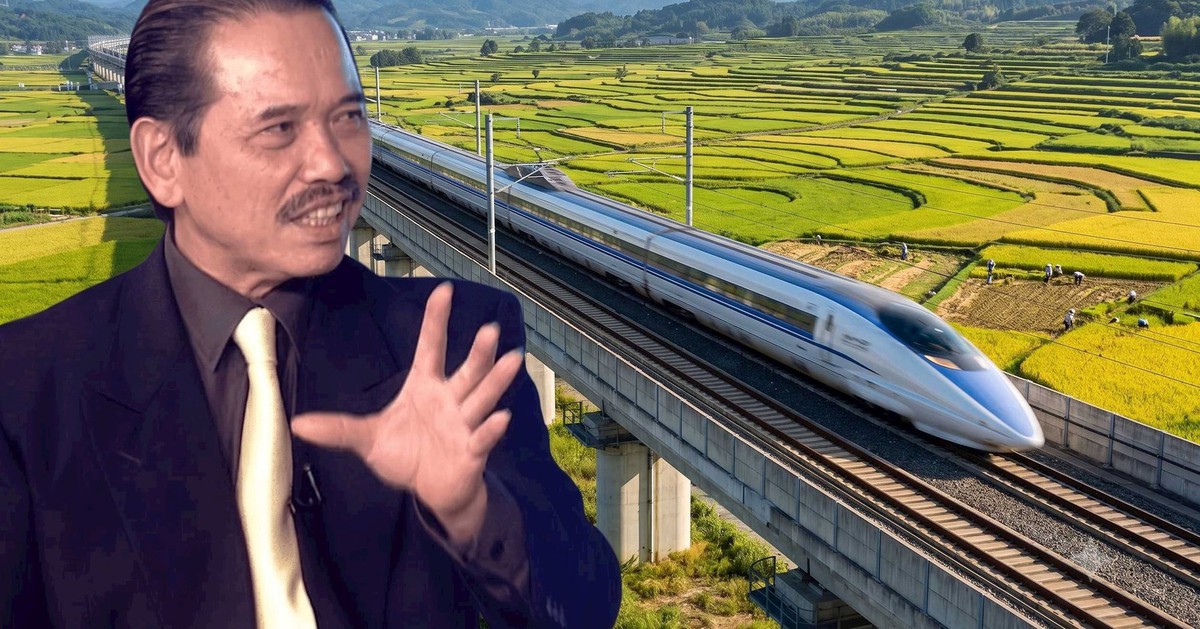
Vietnam’s planned railway modernization could create an industrial market worth as much as 2.3 quadrillion dong by 2050, according to calculations by the Ministry of Industry and Trade cited by Soha. The program covers the North–South high-speed railway, regional high-speed lines and urban rail systems, opening demand across steelmaking, mechanical engineering, automation, construction materials, electronics and rolling stock.
The North–South high-speed railway alone has an estimated total investment of $67.34 billion. One calculation puts the construction market associated with the project at about $33.5 billion. The work would require concrete and steel as well as bridges, culverts, tunnels and other infrastructure components, creating opportunities for both major industrial groups and specialist suppliers.
The Ministry of Construction estimates that the North–South project will require 28.7 million metres of rail, equivalent to about 4 million tonnes of steel. Demand would be considerably higher when steel for other applications and urban railway projects is included. Vietnam Railways expects the high-speed line to need 1,100 electric multiple-unit cars.
Vietnamese conglomerates move into rail manufacturing
Several large private groups have already entered parts of the supply chain. Vingroup and Hòa Phát are developing rail supply projects, while THACO is involved in rolling-stock production and aims eventually to manufacture locomotives for high-speed rail. Their participation could give Vietnam an industrial base extending beyond construction into materials, vehicles and equipment.
The central question is how much technology Vietnamese companies will control. Economist Bùi Ngọc Sơn said businesses could import materials and process rails domestically or limit their role in rolling stock to stamping frames and installing basic equipment. That route could generate contract-manufacturing profits but would leave critical technologies—such as locomotives, electronics, communications and signalling—under foreign control.
A higher-localization model would require companies to master metallurgy, material science, motors and electronic systems through technology transfer. Sơn said this approach needs trained personnel, long-term capital, industrial infrastructure and stable policies that allow investors enough time to recover their spending.
South Korea offers a technology-transfer model
Sơn argued that Vietnam needs a detailed national railway-industry strategy centered on private companies. Supporting measures would include access to finance, workforce training, land and research infrastructure. Authorities would also need transparent supplier-selection standards, product requirements and reward and penalty mechanisms.
Rail localization also requires coordination between industries. High-speed tracks need specialized concrete and continuous sleepers, while construction, materials, metallurgy and electronics companies must ensure that their products work together under high-speed operating conditions. No single conglomerate can build the entire supplier ecosystem alone.
For technology transfer, Sơn pointed to South Korea’s agreements with German companies. Those contracts required personnel training, technology transfer and the establishment of factories in South Korea; German suppliers also had to provide original designs and source code so local recipients could operate their own plants. Vietnam’s challenge is to obtain similarly enforceable commitments, enabling domestic factories and workers to compete in the global railway supply chain after the initial construction program is completed.
Full market analysis