Vietnam’s crude steel output rises 26.9% to 15.18 million tonnes in H1 2026
Vietnam produced 15.18 million tonnes of crude steel in the first half of 2026, up 26.9% year on year, as public investment, infrastructure construction and a recovering property market supported domestic demand. Finished-steel exports remained broadly flat, while imports exceeded exports by about 1.2 million tonnes.
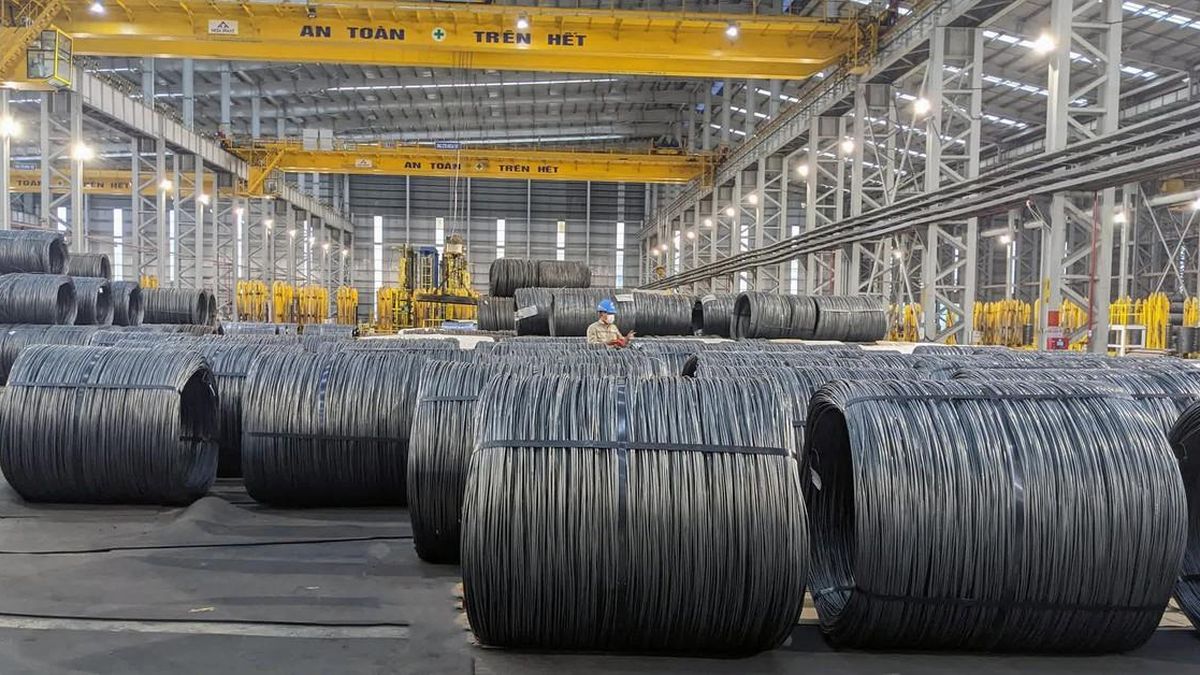
Domestic demand lifts crude steel production
Vietnam’s crude steel production reached 15.18 million tonnes in the first half of 2026, an increase of 26.9% from the same period a year earlier, according to the Vietnam Steel Association (VSA). Xây Dựng reported that public investment, infrastructure construction and a gradual recovery in the domestic property market supported demand.
The production increase was substantially faster than growth in the wider economy’s industrial segments. Manufacturing and processing expanded by about 11.4%, total industrial activity by 10.8% and construction by 9.51% during the period.
Crude steel consumption rose 25.5% to 14.81 million tonnes. Of that total, crude steel exports reached 1.696 million tonnes, 5.3% more than in the first half of 2025. The figures indicate that domestic buyers absorbed most of the additional output.
Finished-steel segments show uneven performance
Production of finished steel products increased 15.1% to 18.21 million tonnes, while sales rose 14.2% to 17.954 million tonnes. Construction steel and hot-rolled steel were the main sources of growth, reflecting stronger requirements from projects and industrial users in Vietnam.
Performance was weaker in coated sheet and cold-rolled steel. Coated-sheet production declined 14.4% and sales fell 9.5%. Cold-rolled steel production decreased 6.2%, while sales were down 3.6%. This divergence suggests that the recovery was concentrated in products linked directly to construction and domestic capital spending.
Vietnam imported approximately 7.8 million tonnes of iron and steel in the first six months, up 2.84% year on year. Import value increased 4.6% to more than $5.6 billion, meaning growth in spending outpaced the increase in physical volume.
Trade deficit persists as barriers increase
Finished-steel exports were estimated at 5.5 million tonnes, broadly unchanged from the corresponding period of 2025. Their value edged up 0.3% to an estimated $3.7 billion. Vietnam consequently recorded a steel trade deficit of about 1.2 million tonnes and $1.9 billion by value. Total two-way steel trade was valued at $9.4 billion.
VSA said Vietnam’s principal export markets, including ASEAN, the European Union, the United States and India, continued to grow. Shipments to Taiwan, Australia and South Korea, however, were under pressure. The country had concluded 19 free trade agreements as of June 30, providing a framework for continued steel trade.
Market access is becoming more difficult despite that network of agreements. VSA expects trade-remedy measures worldwide to increase sharply in 2026 and become more complex. Vietnam is applying protective measures to imported steel while simultaneously responding to investigations in countries buying Vietnamese products. For producers, the combination of strong domestic consumption and greater export friction makes the composition of demand increasingly important for production planning.