Vietnam targets higher coffee quality to sustain export growth
Vietnam is strengthening coffee quality from the harvesting stage as it seeks more sustainable export growth. The initiative coincides with the country’s coffee export performance in July 2026, although the supplied source excerpt does not provide shipment volumes or values.
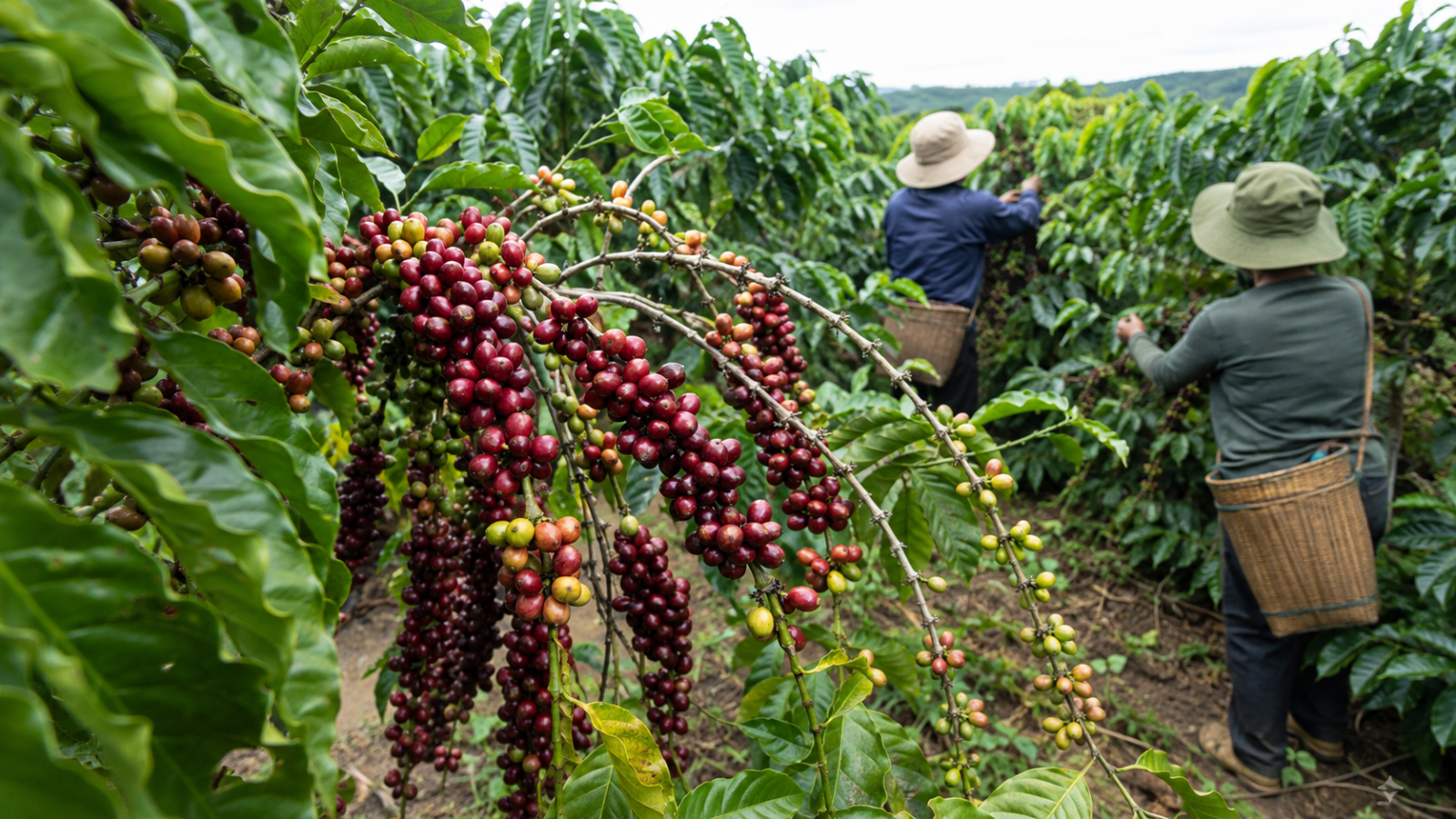
Quality begins in coffee-growing areas
Vietnam is putting greater emphasis on coffee quality as it seeks to sustain export growth. The approach begins at the farm and collection stages, where the condition and maturity of harvested cherries influence the quality of the final product. According to Báo Tin tức, workers are harvesting ripe coffee cherries in production areas, helping to protect product quality from the point at which raw material enters the supply chain.
The focus on ripe cherries matters because harvesting practices affect the consistency of the beans delivered to processors. Separating mature fruit from unripe or defective cherries gives processors a more reliable raw material base. For producers, that makes field management and harvesting discipline part of the commercial value of the crop rather than merely an operational issue.
Export performance raises the quality question
The quality drive is being presented alongside Vietnam’s coffee export performance in July 2026. Báo Tin tức cited the Ministry of Agriculture and Environment in connection with exports during the month, but the source text supplied for this article does not contain the corresponding volume, value or price figures. Those numbers therefore cannot be assessed here.
Even without the missing trade data, the policy direction is clear: Vietnam wants export growth to rest on better and more consistent coffee rather than shipment expansion alone. This is relevant to exporters selling into markets where buyers specify bean quality, processing standards and product consistency. It also affects processors, whose ability to meet a contract depends partly on the raw coffee collected from production areas.
Implications across the supply chain
Improving quality at the initial stage distributes responsibility across the sector. Farmers and harvesting teams must deliver ripe fruit; collectors must preserve quality when aggregating crops; processors must control sorting and handling; and exporters must translate those improvements into dependable specifications for overseas customers. Weakness at any point can reduce the value created earlier in the chain.
For industry participants, the central issue is whether higher field-level quality becomes consistent commercial practice. Buyers need predictable lots, while producers need market incentives that reward the additional care involved in selective harvesting. Vietnam’s July 2026 export activity provides the immediate market context, but the longer-term test will be whether quality improvements can support stable buyer relationships and sustainable export growth. More complete ministry data will be required to measure the scale, destination mix and unit value of the latest shipments.