Vietnam’s coconut exports reach $530 million as fresh shipments and processing expand
Vietnam’s coconut exports were estimated at $530 million in the first half of 2026, including more than $300 million from fresh coconuts. Stronger Chinese demand and new processing capacity are supporting an industry built around roughly 200,000 hectares of plantations.
Fresh coconut exports lead first-half growth
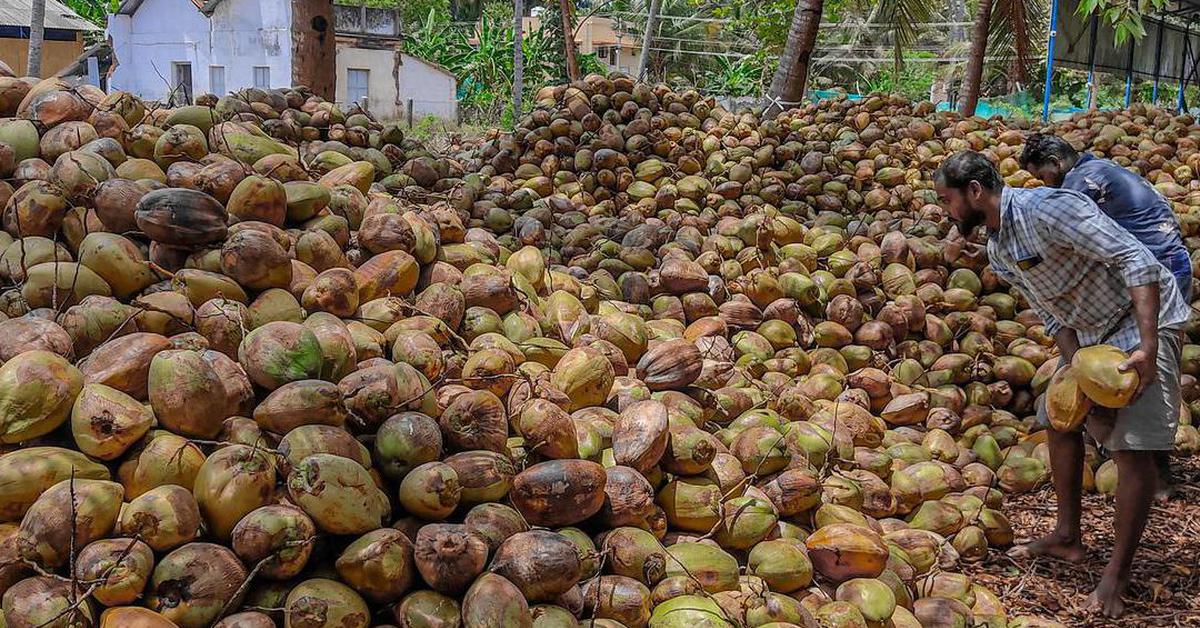
Vietnam’s coconut export revenue was estimated at $530 million in the first six months of 2026, an increase of 5% from the same period a year earlier, according to data from the Vietnam Coconut Association reported by Soha. Fresh coconut exports exceeded $300 million, rising 7.5%, and became the main source of momentum for the sector.
Soha reported that the fresh coconut segment recorded strong gains in both volume and value, with the combined result nearly double the level of the previous year. Demand from Europe, the Americas and especially China pushed farm-gate prices for raw coconuts as high as 10,000-12,000 dong per fruit at certain points, considerably above levels seen in earlier years.
Fresh and dried coconuts are primarily sold to China, Thailand and the United States. China and Thailand benefit from their proximity to Vietnam, which reduces logistics costs for a bulky product with a relatively short storage life. That advantage is particularly important as producers and traders seek to move larger fresh volumes without sacrificing quality.
China opening reshapes regional supply
A major turning point came in August 2024, when Vietnamese fresh coconuts gained official access to the Chinese market. China consumes about 4 billion coconuts annually, including approximately 2.6 billion fresh coconuts. Tattawin Saruno, an independent scholar and Thai agricultural management specialist, said China had previously relied heavily on Thai supply but was now shifting strongly toward imports from Vietnam.
Vietnam is currently among the world’s four largest coconut-producing and exporting countries. The country has around 200,000 hectares under coconut cultivation, concentrated mainly in the Mekong Delta. Vinh Long has the largest planted area, at nearly 120,000 hectares. Local statistics show that almost 270,000 households derive stable income from coconut farming, averaging about 100-150 million dong per hectare annually.
Processed products give the industry access to a wider group of markets. Coconut oil has significant demand in the United States, Singapore, Canada, China and the Netherlands, with the United States the largest buyer. Higher-value canned coconut water is shipped mainly to the United States, Singapore, Australia, China and Poland. Other potential products include coconut milk, virgin coconut oil, desiccated coconut, coconut flower sugar, shell-based activated carbon and coir products.
Processors add capacity for higher-value products
Vietnamese companies are investing in processing to meet increasingly demanding standards in the United States, Europe and Australia. Asian Coconut Processing Joint Stock Company, part of Asia Ingredients Group, recently began construction of its second Asian Coconut Processing plant in Vinh Long, with total investment of nearly 630 billion dong.
The plant will use European technology and a Tetra Pak UHT sterilisation system from Sweden. It is designed to produce 48,000 tonnes of products annually, alongside a frozen coconut cream line with capacity of 16,000 tonnes per year and two desiccated coconut lines with combined annual capacity of 2,400 tonnes. Vietnamese suppliers are also expanding their international retail presence: in early May 2026, a Vietnamese company’s toasted coconut crackers entered every Costco store in Australia after almost a year of work on quality, traceability and social-responsibility requirements. Coconut’s status as one of Vietnam’s six priority industrial crops under the development programme through 2030 provides a policy framework for further investment in plantations, quality control and processing.