Vietnam’s chemical import bill reaches $11.2 billion as reliance on China deepens
Vietnam imported about $11.2 billion of chemicals and chemical products in the first seven months, leaving a trade deficit of roughly $7 billion in the category. China supplied 45.31% of the total and increased its market share as domestic production continued to fall short of industrial demand.
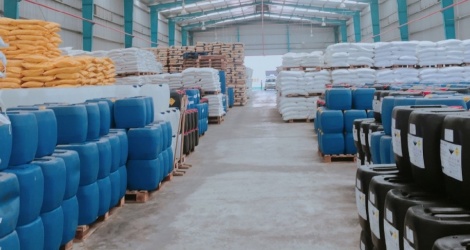
Imports rise across both chemical categories
Vietnam’s spending on imported chemicals and chemical products reached approximately $11.2 billion in the first seven months, according to Customs Department data cited by Báo Đầu tư. The increase indicates that domestic capacity remains insufficient to meet demand from industries that depend on chemical feedstocks and processed chemical materials.
Imports of chemicals totaled $5.95 billion, up 28.8% from the same period in 2025. Imports of chemical products reached about $5.28 billion, an increase of 17.1%. Together, the two categories account for a substantial flow of inputs into processing, electronics, plastics, textiles and other manufacturing sectors.
China expands its dominant supplier position
China remained Vietnam’s largest source of chemicals and chemical products. Shipments were valued at $5.06 billion, up 28.53% year on year, and represented 45.31% of total imports. China’s share rose from 43.22% in the corresponding period of 2025, showing that its position strengthened as Vietnam’s overall purchases increased.
Imports from ASEAN reached $1.51 billion, rising 13.03%, but the region’s share declined to 13.5% from 14.64%. Supplies from ASEAN therefore continued to grow in absolute terms while losing relative ground because purchases from China expanded more quickly.
South Korea supplied $977.08 million, an increase of 29.91%, while imports from Japan rose 22.84% to $808.38 million. Taiwan supplied $798.53 million, up 21.65%. The three markets accounted for 8.75%, 7.24% and 7.15% of the total respectively and remain important sources of higher-quality materials for industrial users.
Imports from the European Union increased only 1.19% to $597.74 million. Its share fell to 5.35% from 6.49% in the same period of 2025, another indication that the supplier mix is shifting toward Asian markets.
Exports grow but the deficit remains wide
Vietnam’s exports of chemicals and chemical products also increased, reaching about $4.2 billion, up 29.68% year on year. Foreign-invested enterprises generated $2.21 billion of those exports, an increase of 35.26%, and accounted for 52.45% of the category’s export revenue. ASEAN, China, Japan, South Korea and India remained the main destinations.
Combined trade in chemicals and chemical products totaled approximately $15.4 billion during the seven months. With imports of $11.2 billion and exports of $4.2 billion, the category recorded a trade deficit of about $7 billion. Báo Đầu tư reported that this contributed to Vietnam’s overall trade deficit of more than $20 billion during the period.
Domestic industry has yet to close the supply gap
Vietnam exported $5.64 billion and imported $16.2 billion of chemicals and chemical products in the previous year, producing a deficit of $10.5 billion. The Chemical Department under the Ministry of Industry and Trade says the country has about 2,000 chemical companies operating across 10 subsectors and all three regions: north, central and south.
That industrial base has not eliminated dependence on imported materials. For producers and processors, the concentration of supply in China creates exposure to pricing, logistics and availability in one dominant market. For alternative suppliers in ASEAN, South Korea, Japan, Taiwan and the EU, Vietnam’s expanding demand offers opportunities, although recent growth rates show that China is capturing a larger portion of that market.