Vietnam’s banana exports rise to second place among fruit shipments
Vietnamese banana exports reached $121.5 million in the second quarter, overtaking dragon fruit to rank behind only durian. Demand from China and Japan is encouraging major producers to expand plantations and invest in export-oriented production.
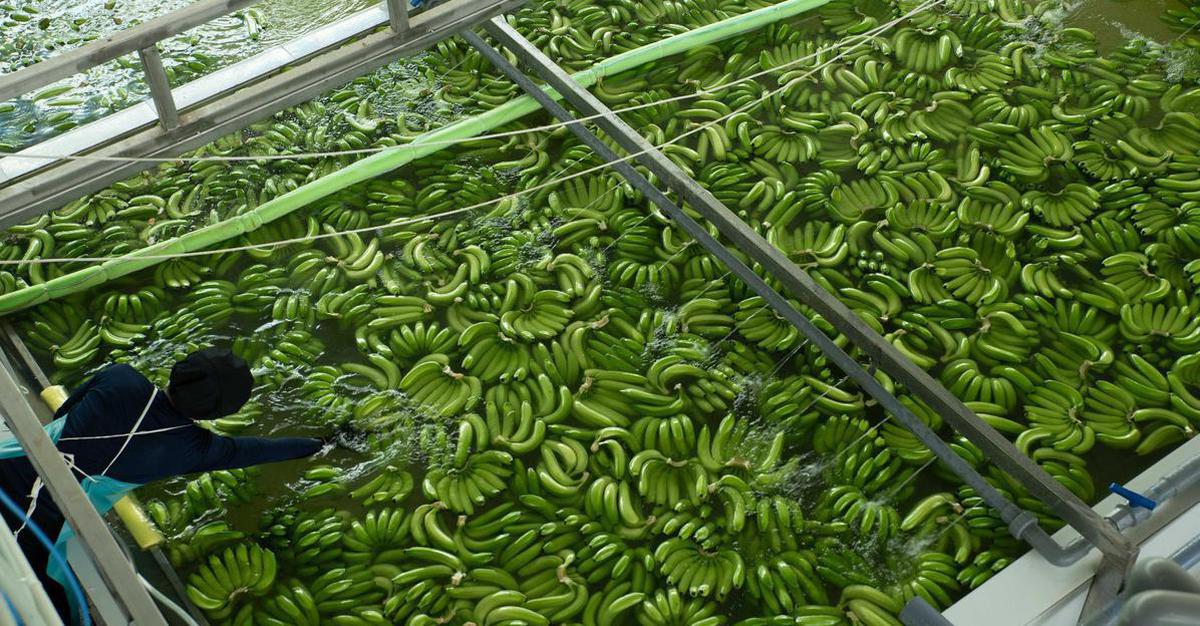
Bananas overtake dragon fruit
Bananas have become Vietnam’s second-largest fruit and vegetable export by value, behind only durian, according to Soha. Shipments generated $121.5 million in the second quarter, an increase of 18.5% from the first quarter and 15% from the same period a year earlier. Bananas accounted for 8% of Vietnam’s total fruit and vegetable export revenue, up from 5.4% in 2025, allowing the category to move ahead of dragon fruit.
The expansion is being supported by strong demand in China and Japan. Vietnam is now among the world’s 10 largest banana-exporting countries, with export revenue of about $418.7 million. The global banana trade was valued at approximately $16.7 billion in 2025, while China alone imports nearly $1 billion of bananas annually.
Price, logistics and disease resistance
The Vietnam Fruit and Vegetable Association, VINAFRUIT, identifies three principal competitive advantages for the country’s bananas. It says Vietnamese fruit combines good quality with prices that are more competitive than those offered by several regional suppliers, including the Philippines, historically one of Asia’s leading banana exporters.
Vietnam’s proximity to major Asian consumer markets also reduces logistics costs and shortens delivery times. This is particularly important for fresh bananas, where transport speed and cold-chain management affect quality and saleable volumes. In addition, several Vietnamese banana varieties are resistant to Panama disease, which is affecting plantations in multiple producing countries and creating supply difficulties for major exporters.
In China, Vietnamese bananas have overtaken Philippine fruit to become the largest source within the country’s banana imports, Soha reported. Chinese consumption includes fresh dessert bananas as well as fruit used in cakes, preserves and snacks. Japan is another important growth market, where competitive pricing, quality and shorter shipping routes strengthen Vietnam’s position against other Asian suppliers.
Large producers expand plantations
Vietnam had more than 163,000 hectares planted with bananas in 2025 and produced approximately 2.75 million tonnes. The national development plan for key fruit crops targets 165,000-175,000 hectares and output of 2.6-3 million tonnes by 2030. Current production has therefore already reached the plan’s output range, while planted area is close to its lower boundary.
Corporate investment could add substantial capacity. Producer Út Huy controls more than 1,000 hectares across the Mekong Delta, southeastern Vietnam and the Lâm Đồng highlands. THACO Chairman Trần Bá Dương said at the 2026 Gia Lai investment promotion conference that the company manages about 95,000 hectares of agricultural land, including 14,500 hectares of bananas. THACO plans to increase its banana area to approximately 25,000 hectares by 2028. Hoàng Anh Gia Lai has about 7,000 hectares in Laos and Cambodia but does not plan further expansion in 2026. Vietnam Rubber Industry Group reported nearly 1,400 hectares of export bananas at its 2025 shareholder meeting; by the end of October, export bananas occupied 1,368 hectares at eight of the group’s units. These projects position bananas as an increasingly important source of agricultural revenue, but the growing production base will also require reliable market access, consistent quality and efficient logistics.