Vietnam Assesses Domestic Feedstocks and Technology for Sustainable Aviation Fuel
Vietnam is evaluating agricultural biomass, used cooking oil and waste as potential feedstocks for domestic sustainable aviation fuel production. The assessment will support a phased SAF roadmap as regulators examine supply, airport infrastructure, certification and airline readiness.
Regulator prepares a phased SAF roadmap
The Civil Aviation Authority of Vietnam is surveying domestic raw materials and conversion technologies that could support local production of sustainable aviation fuel, or SAF. According to the Government Electronic Newspaper, the work covers agricultural biomass, used cooking oil and waste, with the aim of identifying viable feedstocks and suitable production pathways.
The assessment forms part of an ICAO feasibility project under the ACT-SAF assistance, training and capacity-building programme. Its findings are expected to inform a proposed supply-chain model, management measures and a phased roadmap for introducing SAF into Vietnam. The project also includes specialist training and technology-transfer support for domestic aviation personnel.
Vietnam is incorporating SAF into draft regulations on greenhouse-gas reductions and environmental protection in civil aviation. The proposed schedule will consider the country’s climate commitments, the requirements of ICAO’s Carbon Offsetting and Reduction Scheme for International Aviation, known as CORSIA, domestic supply capacity and the need to preserve stability in the air transport market. The authority said the approach should avoid shocks for Vietnamese airlines.
Energy groups test feedstocks and blending
Vietnam already has experience in several parts of the SAF chain, although the regulator says these activities do not yet constitute a complete national supply system. Petrovietnam has assigned BSR and PVOIL to work on relevant projects. BSR has examined investment opportunities using HEFA technology, which converts suitable oils and fats into SAF, while PVOIL and the Vietnam Petroleum Institute have studied used cooking oil and other possible raw materials.
PVOILTrans has collected used cooking oil and gained experience with ISCC EU sustainability certification. BSR has also blended and sold a fuel batch containing 5% imported SAF and 95% Jet A-1 produced by the company. These initiatives provide practical experience, but the Government Electronic Newspaper reported that more analysis is needed before the feasibility of nationwide deployment can be established.
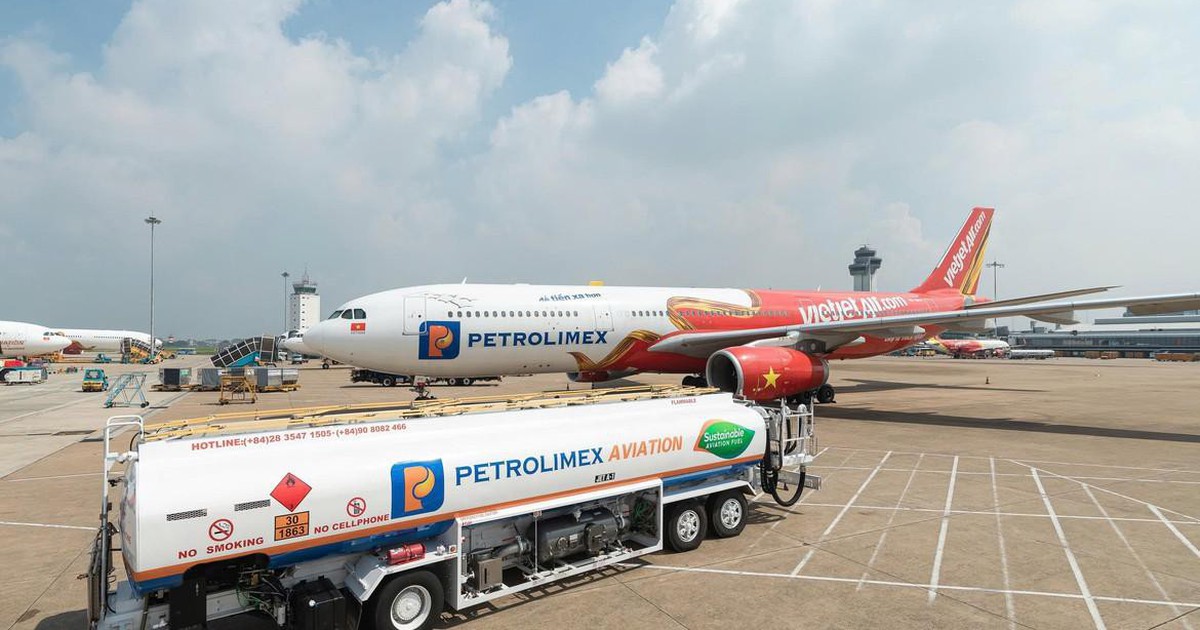
Vietnam has also tested the import, supply and operational use of SAF. Petrolimex Aviation imported and supplied the fuel for Vietjet flights at Tan Son Nhat International Airport in 2024 and participated in SAF blending activities in 2025. Vietjet has therefore accumulated flight experience with the fuel. Readiness remains uneven across the airline sector, however, as some carriers have no specific SAF plan or have provided insufficient information for an implementation assessment.
Airport systems and certification remain critical
Existing airport fuel infrastructure may offer a starting point for distribution. At Noi Bai International Airport, NAFSC has made an initial assessment that current facilities could potentially handle SAF or SAF-blended Jet A-1. Deployment would still require detailed checks of storage tanks, pipelines, equipment and refuelling systems, as well as clear rules for quality, testing, certification and traceability.
Certification is also being addressed internationally. At an ASEAN-EU aviation agreement meeting in Bangkok on September 18, 2025, ASEAN countries asked the EU to examine whether SAF could be certified simultaneously under ReFuelEU and CORSIA standards. The EU said it was working with sustainability certification schemes on dual recognition. Vietnam’s aviation authority plans to continue supporting alignment between EU and ICAO systems, which could reduce compliance friction for Vietnamese airlines and future domestic SAF suppliers.