Vietnam Advances Low-Emission Rice Strategy for the Mekong Delta
Vietnam is directing its rice sector toward lower-emission cultivation after rising from single-crop production in parts of the west to become a leading exporter. The shift could reshape production standards, export positioning and the Mekong Delta supply base.
A new direction for Vietnam’s rice sector
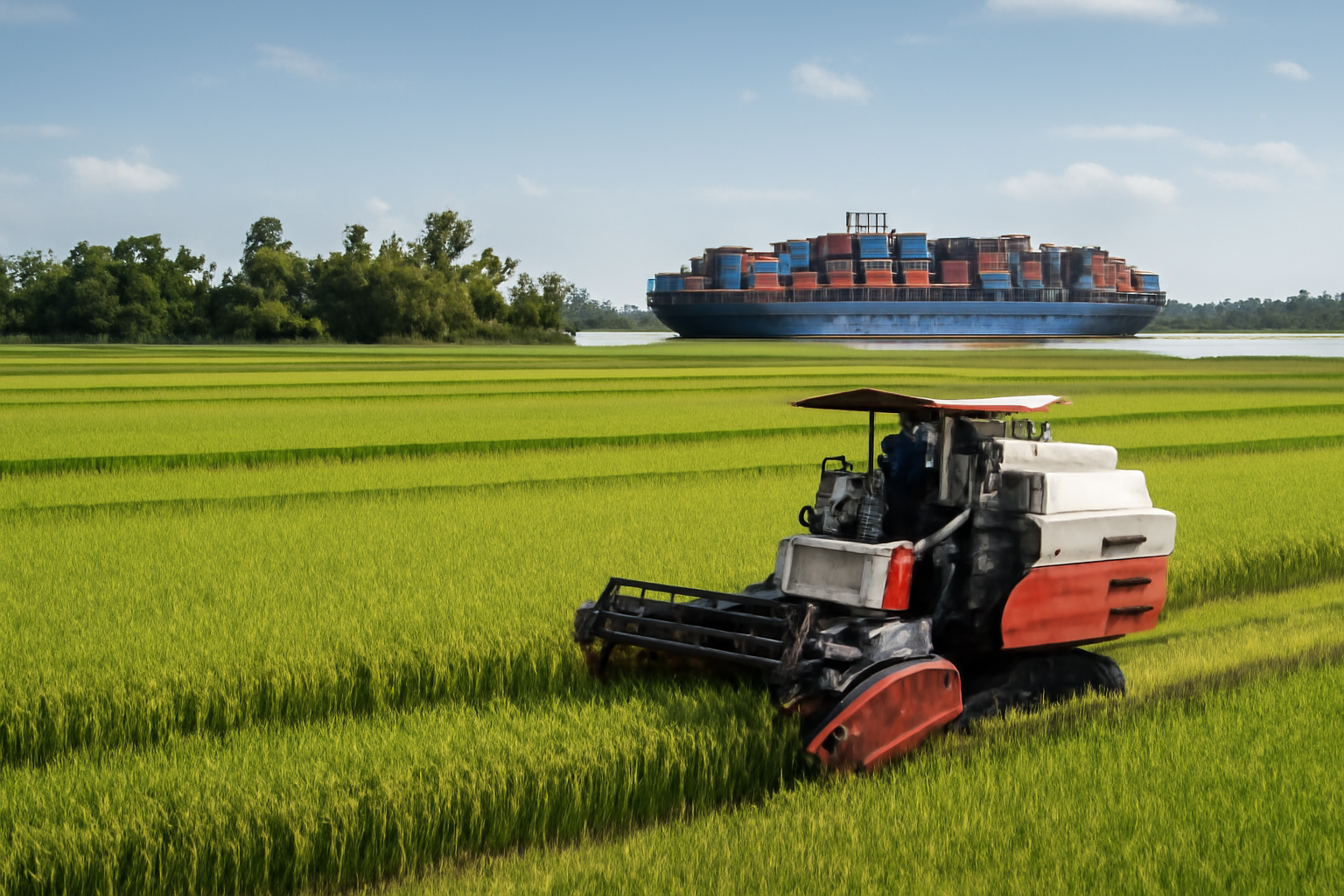
Vietnam is seeking to move its rice industry toward lower-emission cultivation, opening a new phase for a sector that has already undergone a major production transformation. Areas in the country’s west that once harvested only one rice crop now form part of a supply base supporting Vietnam’s position among the world’s leading rice exporters. The latest direction shifts attention from increasing output alone to changing how rice is grown.
The policy focus matters because rice cultivation connects farmers, processors, exporters and rural communities across the Mekong Delta. Lower-emission production will require these participants to treat environmental performance as part of the commercial value of the crop. The change could influence decisions in fields as well as purchasing, processing and marketing practices farther along the supply chain.
Production standards become a market issue
A lower-emission strategy can affect the standards used to organize and assess rice production. For growers, the central issue is whether new cultivation practices can be introduced while maintaining dependable harvests and commercially viable operations. For processors and traders, the challenge is to preserve consistent quality and traceability as rice moves from farms through mills and into export channels.
The source material does not specify emissions targets, implementation dates, eligible production areas or financial support. Those details will determine how quickly cultivation methods change and how widely the strategy is adopted. Clear measurement rules will also be important. Without a credible way to document production practices, exporters may find it difficult to distinguish lower-emission rice from conventional supplies or demonstrate its attributes to overseas buyers.
Implications for exports and the Mekong Delta
Vietnam’s existing status as a leading exporter gives the initiative commercial relevance beyond the domestic market. If lower-emission methods become consistent and verifiable, exporters could use them to strengthen the position of Vietnamese rice in markets where buyers consider production standards alongside price and quality. The strategy may therefore affect competition not only between farmers, but also between processors and exporters able to document how their rice was produced.
The Mekong Delta remains central to this transition because it is the supply base connecting cultivation with processing and export activity. Changes introduced there can influence the reliability, identity and marketability of Vietnamese rice. They can also create adjustment costs for producers and other operators, particularly if requirements advance faster than field-level capacity, infrastructure or commercial incentives.
Execution will determine the outcome
Vietnam’s earlier move from single-crop farming in parts of the west to leading-exporter status shows how policy and production choices can alter the scale of the rice economy. The lower-emission agenda sets a different test. Success will depend less on expanding acreage or maximizing volume and more on aligning farm practices, verification, processing and buyer requirements.
For industry participants, the key questions now concern implementation: which practices will qualify, how compliance will be measured and who will bear the cost. Producers will need workable standards; processors will need reliable segregation and records; exporters will need claims that buyers can trust. Until those mechanisms are defined, the strategic direction is clear, but its effect on costs, output and export competitiveness remains uncertain.