Veneto Sugar-Beet Area Falls 42% as Growers and Coprob Look to the 2027 Sowing
Sugar-beet plantings in Veneto have dropped by 42%, according to PadovaOggi. The contraction prompted a meeting in Borgo Veneto promoted by Coldiretti Padova and sugar producer Coprob Italia Zuccheri to discuss production strategies and a relaunch plan. The 2027 sowing campaign has been set as the reference point for any recovery in area.
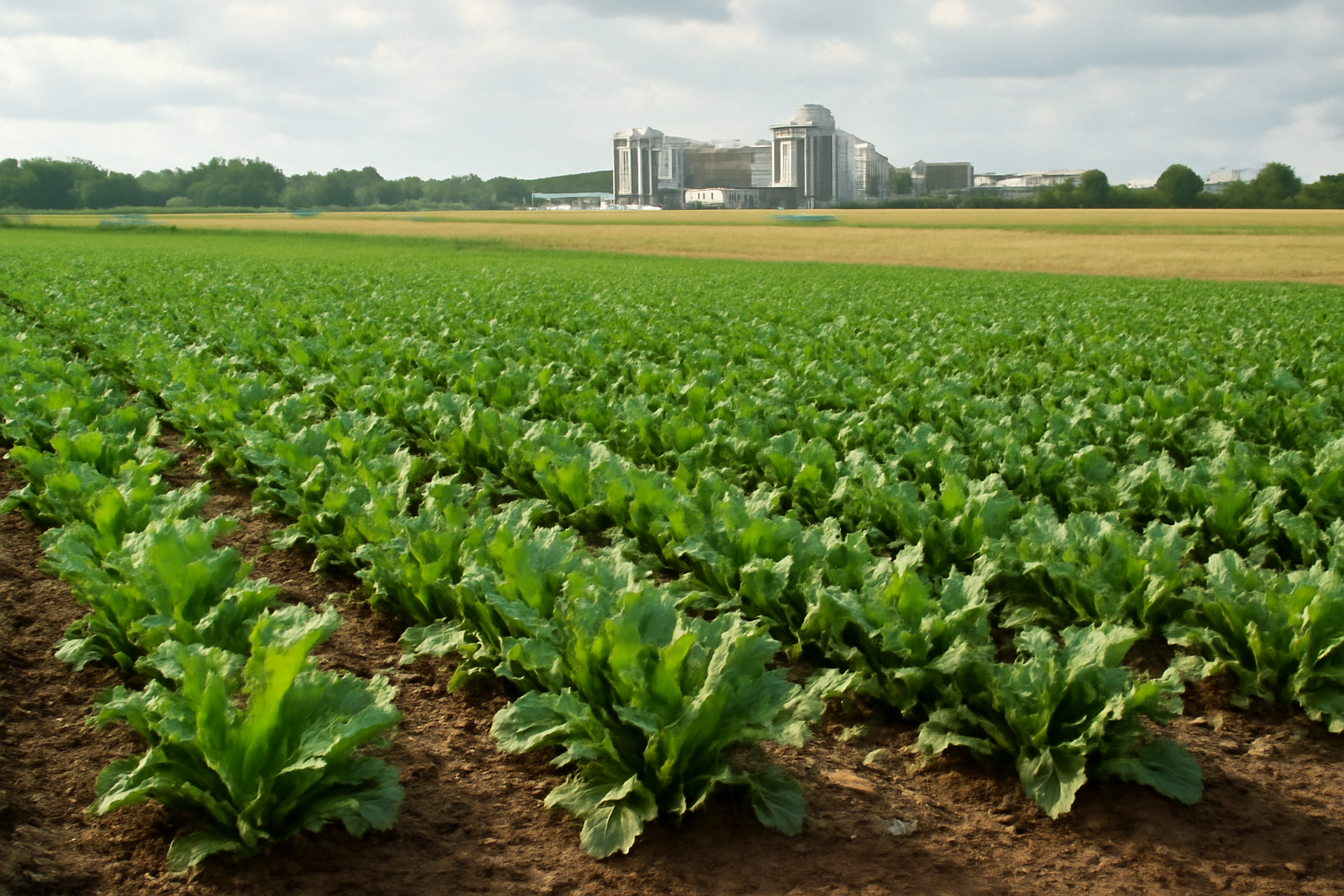
Plantings down 42% in a single cycle
Sugar-beet area in Veneto has fallen by 42%, according to PadovaOggi, putting one of northern Italy's beet districts at the centre of the debate over the future of the national sugar chain. More than four hectares in every ten have left the crop. A shift of that size in a single planning cycle cannot be absorbed by higher yields or by better factory performance: it passes straight through to the volume of beet available for processing, and from there to every downstream step of the chain.
The figure was the backdrop to a meeting held in Borgo Veneto, promoted by the farmers' organisation Coldiretti Padova together with sugar producer Coprob Italia Zuccheri. PadovaOggi reported that the session was convened to discuss the future of the sector, production strategies and a relaunch plan, with the 2027 sowing campaign identified as the horizon for any recovery in area.
Borgo Veneto meeting sets the agenda
According to the account published by PadovaOggi, the discussion covered three connected questions rather than a single emergency measure:
- the future of the beet and sugar sector in the province and the wider region;
- production strategies capable of keeping beet in the rotation;
- a relaunch plan for the crop.
The choice of 2027 as the reference season is itself informative. Beet is a contract crop, and the decisions that determine how many hectares are drilled are taken months before the field work, when growers allocate land between competing arable options and processors set the terms they can offer. A relaunch plan that arrives after those decisions have been made changes nothing on the ground. Targeting the 2027 sowing means the organisers are working on the first campaign that can still be influenced.
Factory economics follow the hectares
Beet processing is a volume business. A sugar factory carries high fixed costs, draws its raw material from a limited haulage radius because beet is bulky and perishable once lifted, and needs a campaign of sufficient length to spread those costs over enough tonnes. When the area in the catchment shrinks, the campaign shortens and the processing cost per tonne rises. That in turn limits what a processor can pay for beet, which weakens the crop's position against alternatives in the next rotation. The loop is self-reinforcing, and it is the mechanism that has historically decided which sugar factories stay open and which do not.
What growers weigh before 2027
For the individual farm, beet competes for the same fields as other arable crops. The comparison turns on expected margin per hectare, input and machinery costs, labour requirements, and the agronomic risk attached to a root crop — pest and disease pressure, weather during lifting, and the cost of delivery to the plant. A 42% contraction indicates that on a large share of Veneto farms that comparison has recently gone against beet. Reversing it requires either a contract price that closes the gap or measures that lower the cost and risk of growing the crop.
For the rest of the chain, the questions now are practical ones. Whether the terms presented to growers ahead of the 2027 campaign are enough to bring area back; whether the decline stabilises or continues in the intervening season; and whether the relaunch plan discussed at Borgo Veneto is backed by agronomic support and contract certainty rather than intentions. A smaller domestic beet crop means a larger share of the sugar consumed in Italy has to be sourced elsewhere, and it leaves the remaining processing capacity working with a thinner supply base than it was designed for.