Uzbekistan exports 7,200 tonnes of potatoes in January-August 2026 as imports shrink
Uzbekistan shipped 7,200 tonnes of potatoes worth $1.5 million abroad in January-August 2026, up 5,700 tonnes year on year, according to Ministry of Agriculture data. Imports remain far larger at 419,900 tonnes over seven months but are falling, while the 2026 output target has been raised to 4.5 million tonnes.
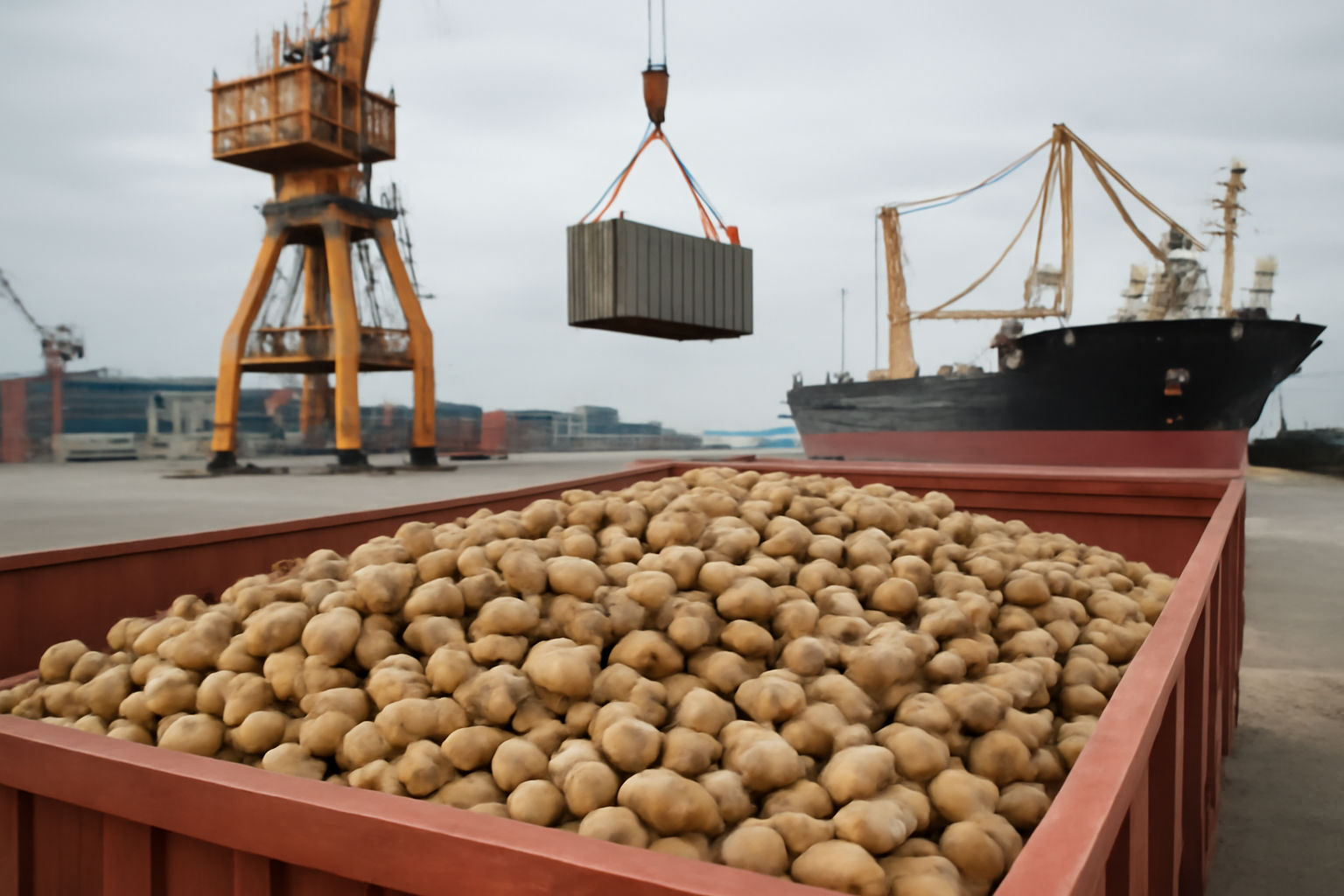
Uzbekistan shipped 7,200 tonnes of potatoes abroad in January-August 2026, generating $1.5 million in revenue, according to data from the information service of the Ministry of Agriculture reported by nuz.uz. Both indicators rose sharply against the same period of 2025: export volumes increased by 5,700 tonnes and export value by $1 million, meaning shipments more than tripled in tonnage terms.
The ministry did not specify which countries received the shipments, and no destination breakdown has been published. Without that data, traders cannot determine whether the additional volume moved into neighbouring Central Asian markets, where Uzbekistan competes with established suppliers, or to buyers further afield. On the reported figures, the average export value works out at roughly $208 per tonne.
Imports still dominate the domestic balance
Despite the export growth, Uzbekistan remains a heavy net importer of potatoes. The country brought in 419,900 tonnes in January-July 2026 alone, nuz.uz reported, citing the agriculture ministry. Imports are contracting: volumes fell by 53,600 tonnes and the import bill dropped by $21.5 million compared with January-July 2025. Kazakhstan has been the dominant supplier, accounting for roughly 80% of all potato imports into Uzbekistan, according to National Statistics Committee data previously cited by nuz.uz.
The scale of the two flows remains very different. The reduction in imports over seven months is several times larger than total potato exports over eight months, indicating that the change in Uzbekistan's potato trade balance is driven primarily by import substitution rather than by export expansion. For suppliers in the region, the contraction in Uzbek purchasing is the more consequential figure.
Planted area expands as output target rises to 4.5 million tonnes
Uzbekistan produced 4.1 million tonnes of potatoes in 2025, according to ministry figures, and the target for 2026 has been set at 4.5 million tonnes. To reach it, 238,000 hectares were placed under the crop this year: 74,400 hectares on farms and agricultural enterprises, and 164,200 hectares on household plots and dekhkan holdings. Total planted area is 46,000 hectares larger than a year earlier.
Early results are running ahead of last season. Growers harvested 2,254,000 tonnes from the main areas in the first half of the year, equivalent to 119% of the volume produced in the same period of 2025. After the grain and early crop harvests, potatoes were planted again on land that had been freed up across farms and household plots, covering 71,000 hectares in total, of which 50,000 hectares are on farms and 21,000 hectares on household plots. Authorities expect these fields to deliver a further 1.2 million tonnes in November.
Stockbuilding and falling prices
The state is simultaneously building reserves intended to supply the domestic market between seasons and smooth out possible shortages. Current stocks stand at 400,000 tonnes, distributed as follows:
- 216,000 tonnes held in cold storage facilities;
- 184,000 tonnes held on farms;
- a further 262,000 tonnes planned for the 2026-2027 winter-spring season.
The ministry expects the combination of expanded planted area, higher output and reserve formation to keep the domestic market supplied and restrain price growth. Prices have already moved. The average potato price on dekhkan markets fell to 4,169 soums per kilogram in 2026 from 5,717 soums a year earlier, a decline of 1,548 soums or 27.1%. Wholesale prices on farms and dekhkan holdings average 2,500-2,800 soums per kilogram. For exporters, that farmgate level sets the cost base for shipments in the closing months of the season, when the November crop from repeat plantings reaches the market.