Uzbekistan expands critical minerals sector with €2.4 billion investment pipeline
Uzbekistan is advancing 76 investment projects worth about €2.4 billion after identifying more than 30 types of critical minerals. The government wants to develop domestic processing capacity rather than rely on raw-material exports.
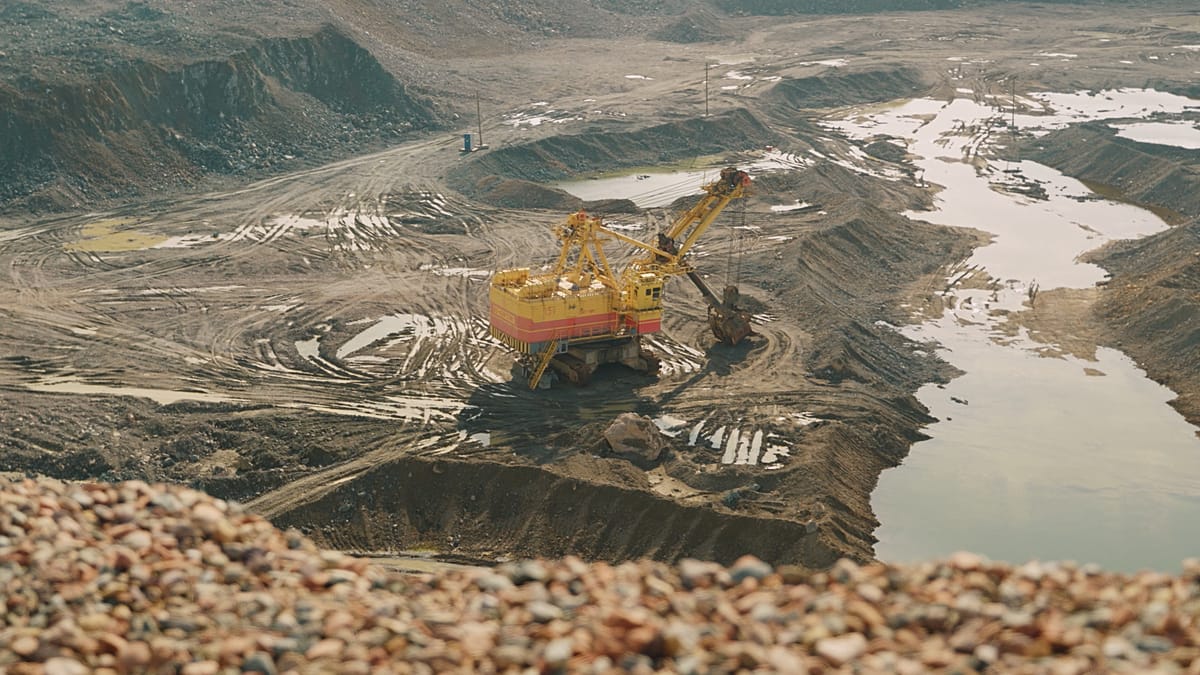
Investment spreads across major mining regions
Uzbekistan is accelerating development of its critical-minerals industry as global demand rises for materials used in electric vehicles, semiconductors and renewable-energy systems. Official data cited by Euronews show that more than 30 types of critical minerals have been identified in the country. There are 76 active investment projects involving 28 rare elements, with a combined value of about €2.4 billion.
Almalyk, Navoi and Surkhandarya contain deposits of copper, molybdenum, tungsten, lithium, niobium, tantalum, rhenium and other rare metals. The investment programme covers extraction and processing, reflecting the government’s intention to retain more industrial value inside Uzbekistan.
Almalyk and Yoshlik-1 underpin production growth
The Almalyk Mining and Metallurgical Complex is one of Central Asia’s largest industrial enterprises and a major copper producer. It combines mining, beneficiation and smelting in one production system, employs more than 35,000 people and produces copper, zinc, gold and silver, as well as molybdenum, tungsten and rhenium.
Kalmakyr, part of the Almalyk system, has operated continuously since 1959 after construction began in 1954. Feruz Tursunov, head of the production and technical department at the Kalmakyr mining division, told Euronews that more than 1 billion tonnes of ore had been sent for processing since operations started. The division currently produces more than 38 million tonnes of ore annually.
Yoshlik-1, under active development since 2017, is another large project within the Almalyk system. Chief geologist Vyacheslav Aminov said further exploration and work with international companies led to reserves being revised to about 2.5 times the initial estimates. Current projections indicate that the deposit can support production for more than 50 years, yielding copper, gold, silver, molybdenum, rhenium, selenium and tellurium.
Engineers have removed more than 248 million cubic metres of overburden at Yoshlik-1. Around 45 kilometres of railway infrastructure have been constructed for ore transportation, while more than 400 units of heavy mining machinery are operating at the site.
Government targets processing and refined products
Uzbekistan established the Uzbekistan Technological Metals Complex in 2024 to coordinate the critical-minerals chain from geological exploration to processing. Deputy Minister Urol Yusupov said the objective was not limited to extraction and included producing higher-value goods domestically.
The institution is developing tungsten and molybdenum processing hubs and projects involving lithium, graphite, tantalum, niobium and magnesium. It is also examining the recovery of materials from waste generated by earlier mining. Planned industrial sites include tungsten production in the Samarkand region and molybdenum processing in the Tashkent region.
By 2030, the government expects to add about 12 elements to the group of critical minerals under active development. Graphite deposits entered development this year, while tantalum, niobium and magnesium are planned for later stages. Citing official estimates, Yusupov said Uzbekistan ranks among the world’s five largest holders of tungsten reserves.
Foreign partnerships support new technology
Uzbekistan has signed cooperation agreements covering critical minerals and advanced technologies with the European Union, the United States, Canada, South Korea and China. Joint work includes rhenium extraction research with Belgium’s KU Leuven and lithium technology projects with Canada’s SGS.
Yusupov said Uzbekistan has been able to produce rhenium at 99.99% purity since 2025 and has begun exporting the refined metal. At Almalyk’s zinc plant, sulphur dioxide emissions are captured and converted into sulphuric acid. Annual acid output reaches 180,000 tonnes, primarily serving Uzbekistan’s chemical and fertiliser industries, while the plant also produces cadmium, zinc sulphate and powdered zinc oxide.