Uttar Pradesh Introduces Potato Price and Cold-Storage Support
Uttar Pradesh has launched the Bhamashah Price Stabilization Fund to protect eligible potato growers from sharp market declines. The program also subsidizes private cold-storage charges at ₹100 per quintal, with total storage assistance capped at ₹20,000 per farmer.
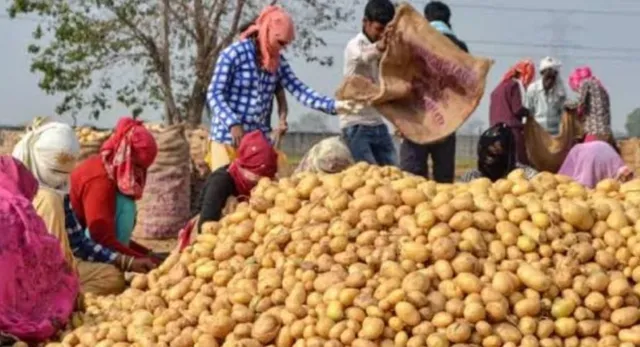
Fund targets losses from falling potato prices
The Uttar Pradesh government has introduced the Bhamashah Price Stabilization Fund to provide financial protection to potato growers when market prices fall sharply. According to Jagran, the district horticulture department in Azamgarh has begun online registration so that eligible farmers can apply for the program. The initiative implements a commitment made in the chief minister’s public welfare manifesto and is intended to reduce growers’ exposure to market volatility.
Under the price-support component, the state will reimburse the lower of two amounts: 25% of the officially determined production cost, or the difference between production cost and the farmer’s sale price. This design means compensation will depend on both the cost benchmark and the price actually obtained in the market. The source did not specify a trigger price, a total budget for the fund or a timetable for payments.
Coverage capped by area and output
The benefit is limited to a maximum of two hectares for each farmer and eligible production of no more than 240 quintals per hectare. At the maximum covered area and yield, the price-loss calculation could therefore apply to as much as 480 quintals per farmer. The cap concentrates the program on a defined volume of production rather than offering unrestricted compensation for every tonne sold.
Payments will be transferred directly to beneficiaries’ bank accounts through India’s direct benefit transfer system. Jai Karan Singh, the district horticulture officer in charge, said interested potato growers can register through the official portal of the state’s horticulture and food processing department. Jagran reported that registration is already open in Azamgarh, although the supplied material does not state how many farmers are expected to qualify.
Cold-storage subsidy may influence selling schedules
The program separately offers assistance to farmers who place potatoes in private cold-storage facilities. Eligible growers in the district can receive a storage-charge subsidy of ₹100 per quintal, subject to maximum financial assistance of ₹20,000 per farmer. At that rate, the ceiling corresponds to storage support for 200 quintals. The storage allowance is smaller than the maximum volume covered by the price-loss mechanism, so farmers using both measures will still need to finance storage costs for any additional eligible crop themselves.
For growers, the subsidy can reduce the pressure to sell immediately during periods of concentrated arrivals and weak prices. It may also shift some inventories from spot markets into private cold stores, depending on available capacity and the remaining commercial storage charge after the subsidy. For cold-storage operators and potato traders, enrollment and subsequent stock movements will be important indicators of how much supply is deferred. The program provides a buffer against losses, but its market effect will depend on participation, prevailing potato prices and the timing at which stored stocks return to sale.