Uttar Pradesh excise exports rise 45%, widening demand across the alcohol supply chain
Excise exports from Uttar Pradesh have increased by 45%, extending the impact of the state’s alcohol industry from distilleries to agricultural inputs, packaging, storage and transport. The expansion could support demand for sugarcane, molasses and grain, although the available report does not specify the period, export value, volume or destination markets.
Export growth reaches beyond distilleries
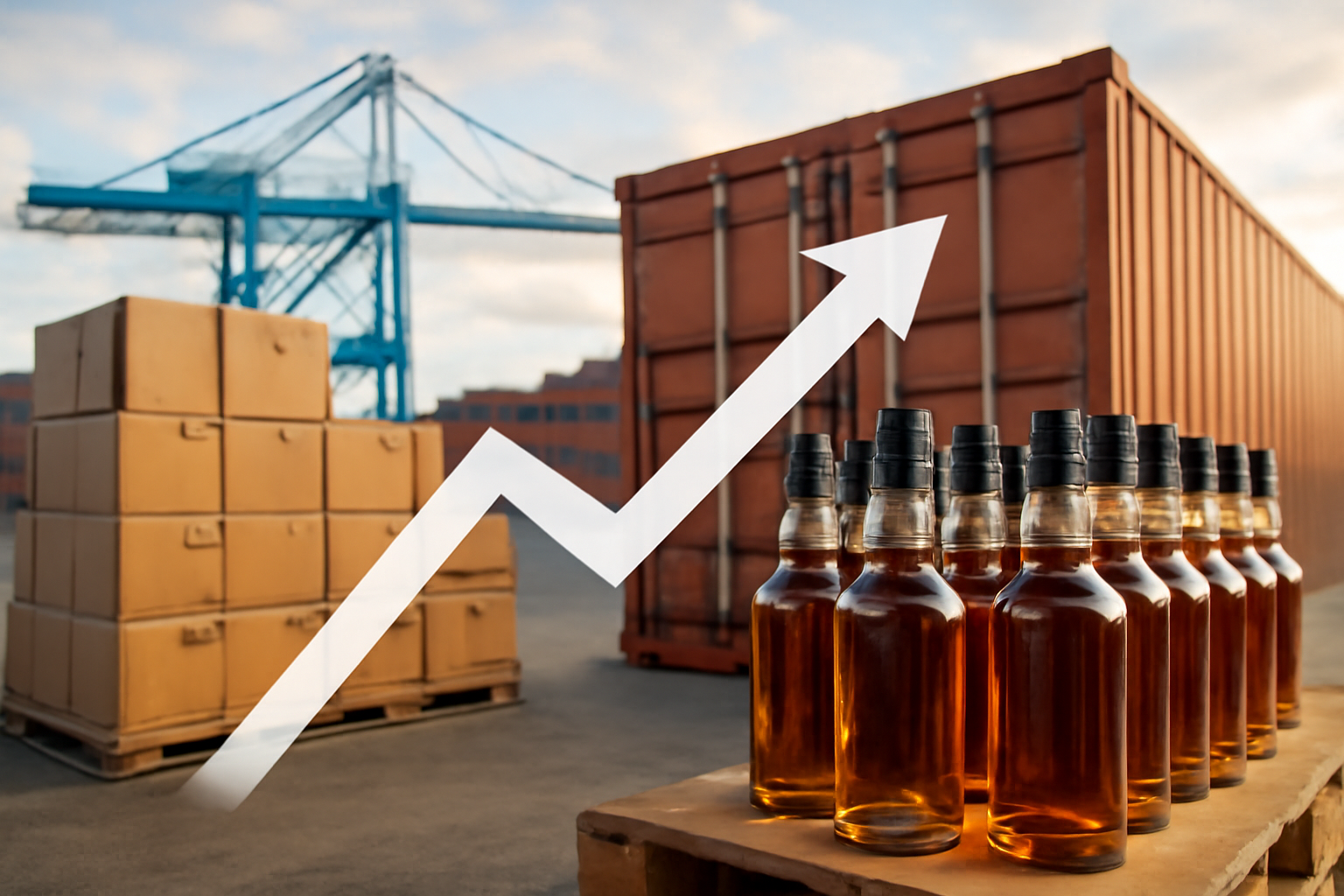
Excise exports from Uttar Pradesh have risen by 45%, according to the available report, marking an expansion of the state’s alcohol business into foreign markets. The report presents the increase as part of a value chain that begins with sugarcane and other agricultural raw materials and continues through alcohol production, bottling, packaging, storage and transport.
The available material does not identify the period covered by the 45% increase, nor does it provide the value or physical volume of exports. It also does not name the principal products, producers or destination countries. Those omissions limit direct comparisons with previous seasons and make it impossible to determine whether the increase was driven mainly by higher shipment volumes, changes in product mix or prices.
Even so, a 45% rise points to greater activity across the supporting industries needed to prepare excise products for overseas delivery. Export orders require bottles, closures, labels, cartons and other packing materials, alongside warehousing and transport services. Companies operating in these segments may therefore see additional business when shipments increase, although the scale of the benefit will depend on the composition and continuity of export demand.
Agricultural inputs gain a larger market
The expansion also matters for suppliers of sugarcane, molasses and grain. These inputs connect Uttar Pradesh’s agricultural economy with distilling and beverage production. Stronger overseas sales can broaden the market available to processors and create additional demand for raw materials, provided exporters maintain production and secure repeat orders.
For producers and processors, the commercial effect will depend on how the export growth is distributed across the alcohol value chain. Molasses-based production can transmit demand toward sugar mills and sugarcane suppliers, while grain-based production affects procurement from grain markets. Without a product breakdown, the relative impact on these two supply channels cannot yet be measured.
Export growth also raises operational requirements. Distillers and bottlers must coordinate raw-material procurement with packaging availability, storage capacity and transport schedules. For logistics providers, more foreign-bound cargo can increase handling requirements from the production site to the point of dispatch. Investors and market participants will need further data on export revenue, shipment volume, products and destinations to assess whether the reported 45% rise represents a durable expansion or a short-term increase from a lower base.