USDA: rapeseed and sunflower oil to lead growth in global vegetable oil trade in 2026/27
A United States Department of Agriculture outlook reported by Agence Ecofin places rapeseed oil and sunflower oil at the front of global vegetable oil trade growth in the 2026/27 marketing year. The two oils together account for about 25% of world vegetable oil consumption. Supply and demand conditions in the coming season are seen favouring them against competing oils.
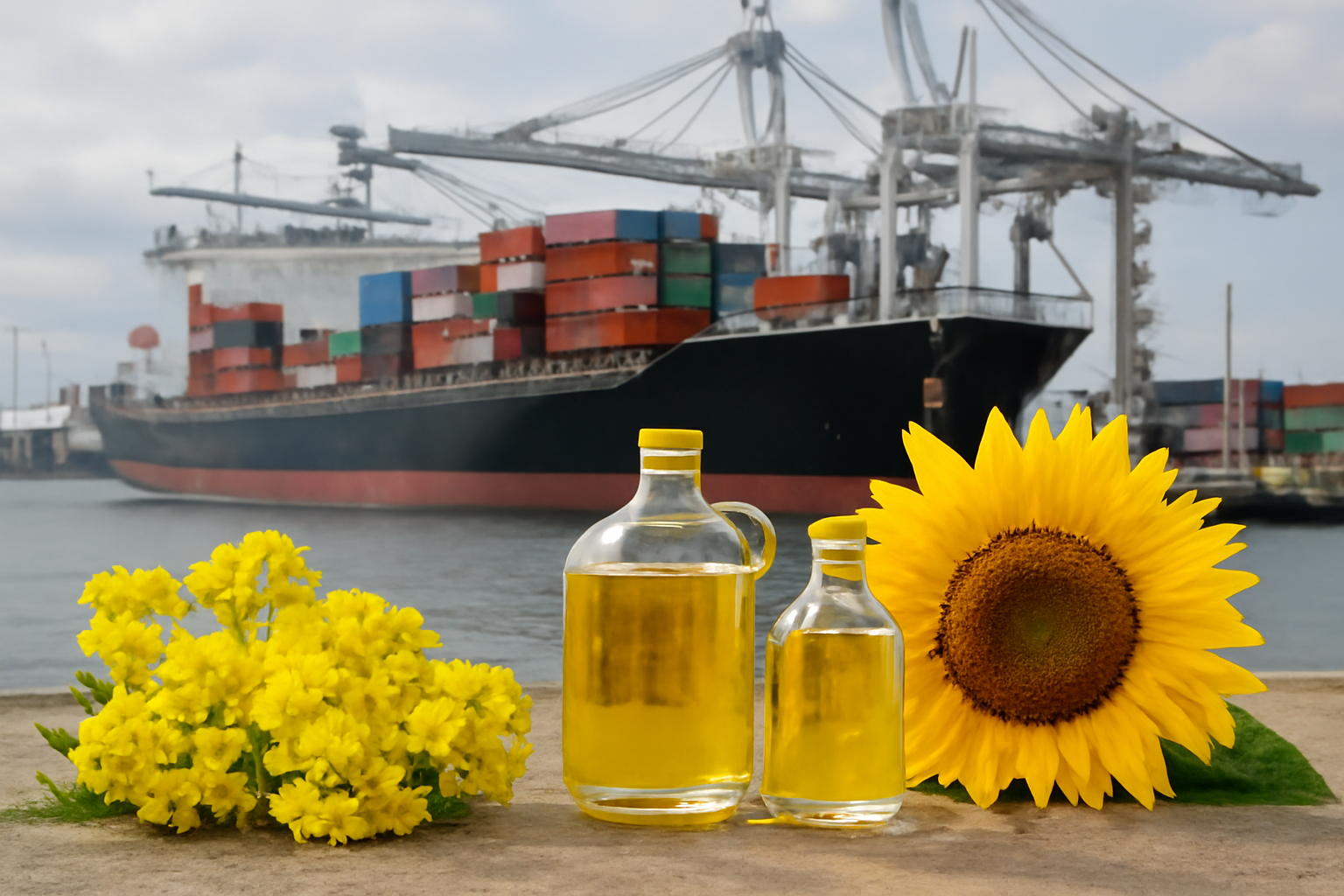
Rapeseed oil and sunflower oil will lead the growth of global vegetable oil trade in the 2026/27 marketing year, according to a United States Department of Agriculture outlook reported by Agence Ecofin. The two oils together account for about 25% of world vegetable oil consumption, and the supply and demand balance in the coming season is seen favouring them over competing oils.
A quarter of global consumption
The share cited by Agence Ecofin puts rapeseed and sunflower oil behind palm oil and soybean oil, the two largest vegetable oils by volume, but well ahead of the rest of the complex. Both move through the same end markets: bottled cooking oil for retail, food manufacturing, oleochemicals and biofuel feedstock. That quarter of demand is contestable in either direction, because refiners switch between oils when price spreads move far enough.
The supply geography differs sharply from palm oil. Rapeseed and sunflower are temperate-zone annual crops, grown in the European Union, Canada, Ukraine, Russia, Australia, Argentina and China, and harvested once a year. Palm oil is produced continuously in the tropics. That difference makes rapeseed and sunflower supply more sensitive to a single season of weather and to planting decisions, and it makes exportable volumes more variable from year to year.
Seasonality also shapes how the trade is financed and hedged. Export availability is concentrated in the months after harvest rather than spread evenly across the calendar, and risk management is tied to the crop outcome of specific producing regions rather than to a steady year-round flow.
Where the traded volumes come from
Production is concentrated in a limited number of exporting regions while consumption is global, so a large part of output crosses a border, either as seed or as crude or refined oil. Sunflower oil trade is dominated by Black Sea suppliers; rapeseed oil and canola trade is anchored by Canada, the European Union and Australia. Import demand sits mainly in Asia, the Middle East, North Africa and the European Union itself, where crush capacity and consumption do not match domestic harvests.
Agence Ecofin frames the 2026/27 outlook around that supply and demand alignment rather than around a single crop shock. For buyers, the practical question in the coming season is the spread against palm and soybean oil. Refiners and food manufacturers reformulate when the price differential is wide enough to justify it, and that switching is what converts a production increase into traded volume.
What to watch
- Harvest outcomes in the main rapeseed and sunflower belts, which set exportable surpluses for the whole season.
- Crush margins in the European Union, Canada and the Black Sea, which determine whether trade moves as seed or as oil.
- Biofuel policy, which competes with the food channel for the same rapeseed oil volumes.
- Price spreads against palm and soybean oil, the main trigger for substitution by refiners and food manufacturers.
No tonnage forecast accompanied the consumption share in the report: the 25% figure is the anchor number placed on the weight of the two oils in the market. For producers, crushers and traders, the outlook points to a season in which rapeseed and sunflower oil take a larger part of incremental trade than their share of consumption alone would suggest, with the outcome resting on harvests in a handful of temperate exporting regions and on how far their prices sit from palm and soybean oil at destination.