USDA cuts India’s 2026-27 sugar output forecast by 14% to 29.5 million tonnes
USDA’s Foreign Agricultural Service has lowered its forecast for India’s 2026-27 sugar production to 29.5 million tonnes, citing adverse weather and pest damage. Consumption is projected at 30.83 million tonnes, increasing pressure on imports, stocks and domestic prices.
Weather and pests cut the production outlook
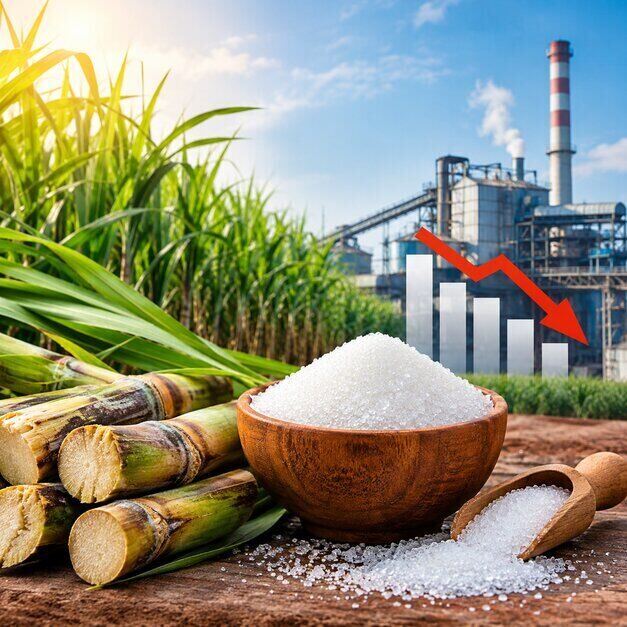
India’s sugar production is forecast to fall 14% to 29.5 million metric tonnes in 2026-27, according to a US Department of Agriculture Foreign Agricultural Service report cited by ChiniMandi. The October 5, 2026 report lowered the previous forecast of 33.6 million tonnes after irregular rainfall, prolonged dry periods, waterlogging and pest outbreaks damaged sugarcane yields and sugar recovery.
The forecast includes 27.6 million tonnes of crystal sugar and 62,000 tonnes of khandsari sugar. USDA expects the recovery rate to fall to 8.6%. Regional surveys conducted from March through September 2026 found that uneven rainfall and extended dry spells reduced cane weight and sucrose content. Maharashtra experienced waterlogging after unseasonal rain, while red borer infestations were reported in parts of Uttar Pradesh. Karnataka was also among the major producing states affected by unfavorable weather.
Sugarcane production is now forecast at 434 million tonnes, down from the earlier estimate of 455 million tonnes. Planted area is expected to decline from 5.95 million hectares to about 5.9 million hectares. USDA also warned that strengthening El Niño conditions could increase weather risks, while water shortages in early 2027 may disrupt mill crushing operations.
Consumption exceeds output as prices rise
Indian sugar consumption is projected at 30.83 million tonnes on a raw-sugar-equivalent basis, leaving an estimated gap of about 1.33 million tonnes against production. ChiniMandi said this could be the widest production-consumption deficit in three years. USDA reduced its forecast for ending stocks in 2026-27 from 6.5 million tonnes to 4 million tonnes, reflecting lower output, smaller opening inventories and the absence of additional duty-free imports after October 31, 2026.
Domestic prices have already risen sharply. The report put sugar at $515 per tonne on July 20, 2026 and $596 per tonne on August 20, an increase of about 16%. Average retail prices reached $685 per tonne, around 30% above the previous month and 39% higher than a year earlier. Wholesale prices increased to $637 per tonne. Ex-mill prices fell about 20% after duty-free imports were announced, but retail and wholesale prices continued to rise.
To ease supply concerns, the government approved 1 million tonnes of duty-free raw sugar imports under a tariff-rate quota for the 2025-26 marketing year, available through October 31, 2026. According to the report, this was the first such duty-free authorization in about a decade. Buyers purchasing more than 10 tonnes per month must also limit stocks to 15 days of consumption from September 1 to November 30, 2026.
Trade policy and ethanol demand shape the balance
USDA forecasts India’s total sugar imports at 2.43 million tonnes in 2026-27, comprising 2.4 million tonnes of raw sugar and 30,000 tonnes of refined sugar. Exports are projected at 3.1 million tonnes, including 800,000 tonnes of raw sugar and 2.3 million tonnes of refined sugar. Much of the raw sugar import flow is expected under the Advance Authorization Scheme, which requires coastal refiners to process imported sugar for re-export. India imposed a ban on raw sugar exports in May 2026 that was due to remain in force through September 30.
Cane availability is also being contested by the ethanol industry. India achieved its 20% ethanol blending target in the 2025-26 ethanol supply year, and about 3 million tonnes of sugar on a raw-sugar-equivalent basis was diverted to ethanol production. The government has raised the fair and remunerative price for cane by 3% to 3,650 rupees per tonne for the 2026-27 season. With production below consumption and ending stocks declining, actual cane yields, recovery rates and decisions on imports and ethanol diversion will determine how much pressure reaches mills, industrial buyers and consumers.