US tariffs raise concerns over domestic price pressure for Canadian honey
Saskatchewan honey producers are warning that newly imposed US tariffs on Canadian honey could affect businesses even if they do not export directly. Honey displaced from the US market could remain in Canada, increasing domestic supply and putting pressure on producer prices.
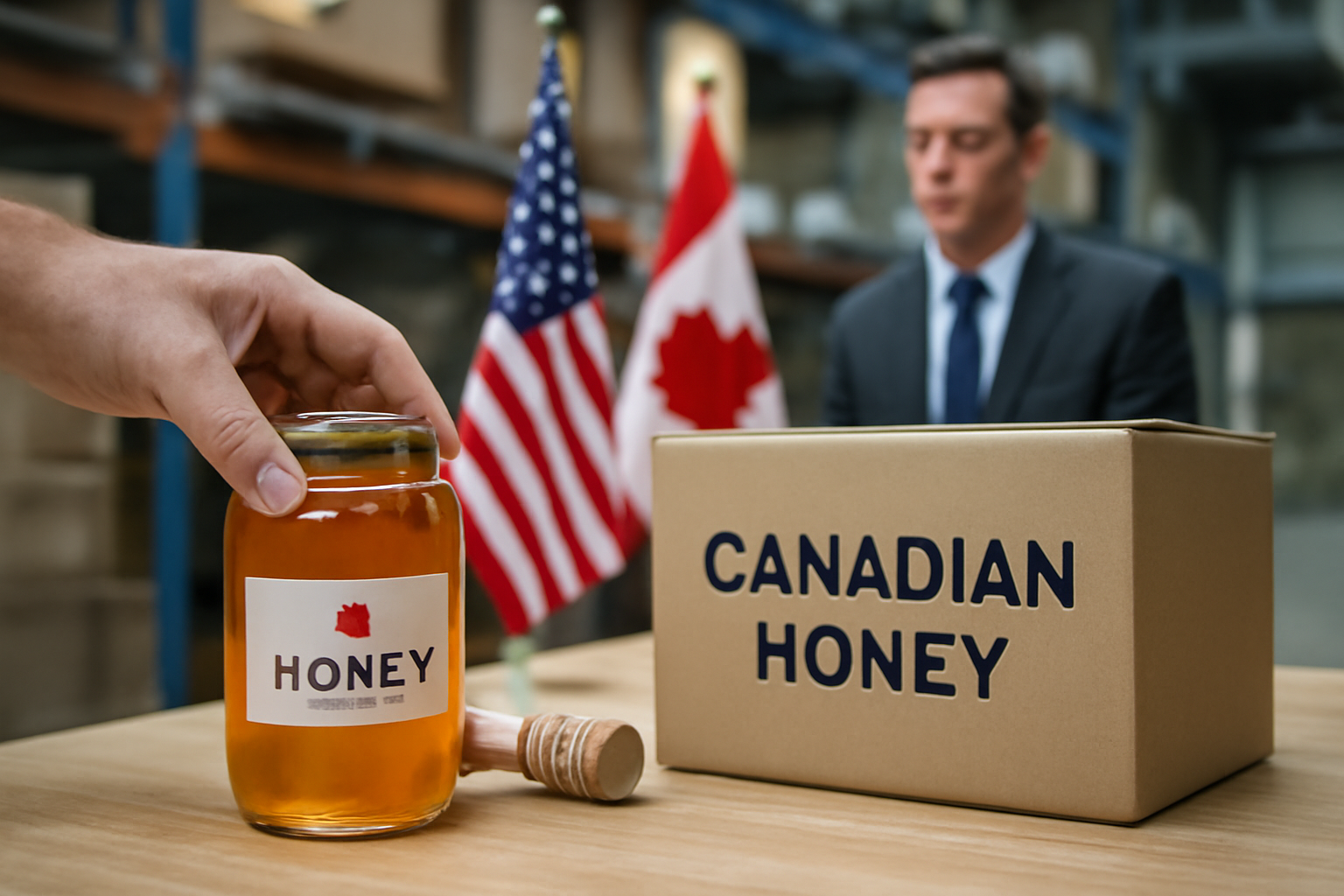
Tariff concerns spread beyond direct exporters
Saskatchewan honey producers are preparing for wider market pressure after the United States imposed new tariffs on Canadian honey. GX94 reported that businesses in the province are concerned about ripple effects across the industry, including operations that do not sell directly to US customers.
The immediate cost of a tariff falls on trade crossing the border, but the commercial impact can extend much further. If Canadian suppliers find it harder or less profitable to place honey in the United States, some of that product may be redirected into Canada. A larger volume competing for domestic buyers could weaken the prices offered to beekeepers and processors, affecting exporters and domestically focused businesses alike.
Displaced supply could reshape the Canadian market
The scale of any disruption will depend on how much honey is displaced, whether US buyers continue purchasing Canadian product despite the additional cost and whether Canadian sellers can find alternative customers. The available source material does not specify the tariff rate, its effective date or the volume of Saskatchewan honey exposed to the measure. It also does not identify individual companies facing direct losses.
Even without those details, the concern raised by producers reflects a clear market mechanism. Honey that would otherwise have crossed the border may be offered to Canadian packers, retailers or industrial users. More competition among sellers would strengthen buyers’ negotiating position. Producers with limited storage, financing or access to alternative markets could face the greatest pressure if they need to sell while additional supply is available.
Price effects may move through the supply chain
Lower producer prices would not necessarily translate immediately or fully into lower retail prices. The final price of packaged honey also reflects processing, testing, packaging, transport, distribution and retail costs. Contract timing and inventories can further delay changes. The first visible impact may therefore emerge in bulk-honey bids and purchasing terms rather than on store shelves.
For Saskatchewan businesses, the issue extends beyond whether they personally export. A producer selling entirely within Canada still competes with honey from exporters seeking replacement outlets. Packers may gain access to more domestic supply, but they also face uncertainty over inventories, customer demand and future purchasing conditions. Traders must assess whether alternative destinations can absorb product on commercially workable terms.
Industry awaits clearer evidence of the impact
GX94’s report signals concern at the producer level, but the source material provides no confirmed estimate of price losses, displaced volumes or business closures. Those outcomes should not be assumed. The most useful indicators will be changes in Canadian bulk prices, purchasing bids, inventories and the volume of honey that continues to enter the United States after the tariffs.
The tariff has therefore created exposure across a connected market rather than only at the border. Direct exporters face the clearest obstacle, while other producers may encounter the consequences through increased domestic competition. Until trade and price data show the size of the response, Saskatchewan’s honey industry is dealing primarily with uncertainty over where Canadian supply will be sold and at what price.