US tariffs cited as R1 billion South African fruit cannery shuts down
One of South Africa’s largest fruit canneries is closing amid weaker global demand, pricing pressure and rising input costs. BusinessTech reports that US tariffs imposed last year also contributed to the shutdown of the R1 billion factory.
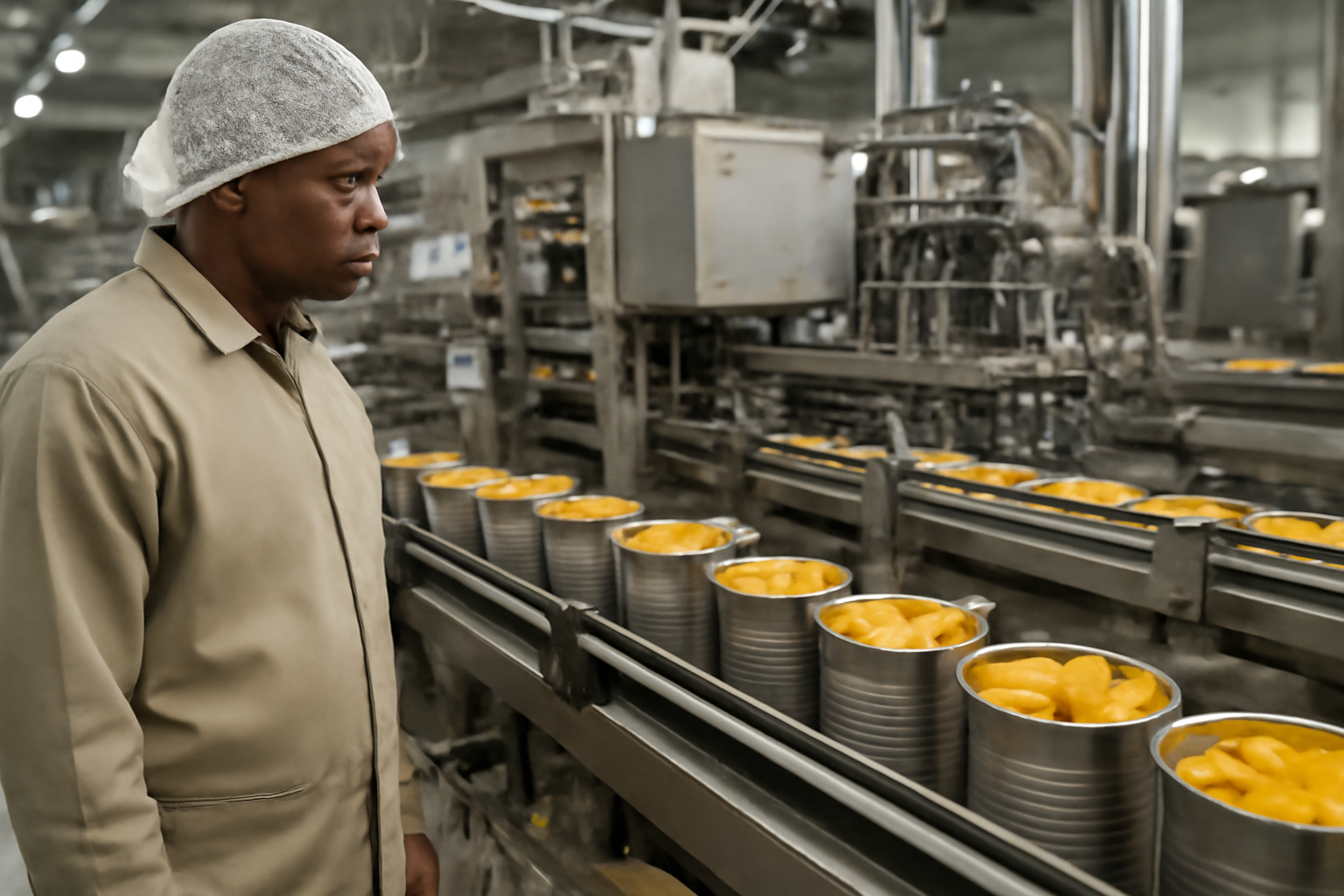
Major processing facility set to close
One of South Africa’s largest fruit canneries is closing after facing a combination of declining global demand, pressure on selling prices and rising input costs. BusinessTech described the operation as a R1 billion factory and reported that tariffs imposed by the United States last year were another factor behind the decision.
The closure removes a major processing operation from South Africa’s fruit industry. The available information does not identify the cannery, specify its production capacity or give a closure date. It also does not quantify how much of the facility’s output was sold in the United States or the tariff rate applied to those products.
Tariffs added to commercial pressure
The reported causes indicate that the factory was not affected by a single market shock. Falling international demand reduced the opportunity to place processed fruit, while pricing pressure limited the cannery’s ability to recover higher production costs from customers. US tariffs then created an additional obstacle in one of the foreign markets relevant to the business.
For a cannery, weaker demand can affect the entire operating model. Processing facilities must cover the cost of fruit, packaging, energy, labour and other inputs while competing for orders in domestic and international markets. BusinessTech reported that input costs were rising, but the source material provides no breakdown of those expenses and no financial results for the factory.
Consequences extend along the supply chain
The shutdown matters beyond the processing site because large canneries connect growers with buyers of shelf-stable fruit products. When processing capacity disappears, producers may have fewer outlets for fruit intended for canning. Suppliers of cans, packaging and other production inputs can also lose demand, while customers may need to seek alternative processors or origins.
The case shows how trade measures can amplify pressure that is already present in a processing business. The US tariffs were cited as a contributing factor rather than the sole reason for closure; weak global demand, constrained pricing and higher inputs were also central to the decision. Without figures for output, employment, sales or trade volumes, the full effect on South African growers and processed-fruit markets cannot yet be measured.