50% US tariff puts Canadian honey exporters under pressure
A 50% US tariff is disrupting Canadian honey producers that rely on American buyers. A Saskatchewan producer sends up to 40% of its honey to the United States, while Quebec-based Miel Labonté is seeking Canadian outlets for potential surplus production.
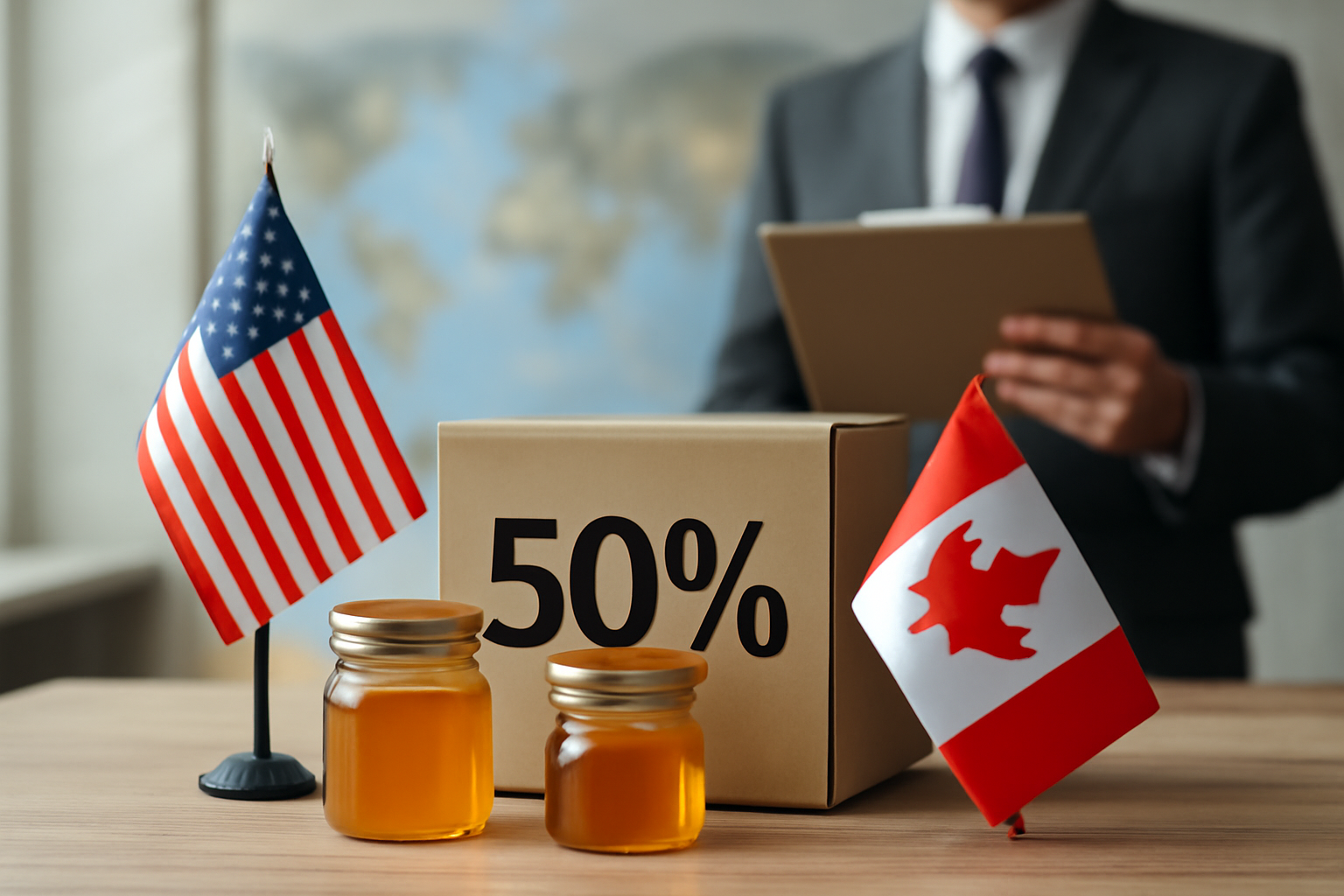
Tariff disrupts an established honey trade
A 50% US tariff is putting pressure on Canadian honey producers that have built a substantial part of their business around American demand. The measure is particularly significant for exporters whose production, packing and sales plans assume regular access to buyers south of the border.
One 84-year-old honey producer in Saskatchewan sends up to 40% of its product to the United States. Honey produced on the Saskatchewan prairie, including from canola and clover fields, has traditionally moved through the supply chain in drums and jars. The tariff now threatens that established route to market and leaves the producer exposed to a sharp deterioration in the commercial terms of US sales.
A 50% border charge creates an immediate problem for transactions in which neither the Canadian supplier nor the American buyer can absorb the additional cost. Exporters may have to accept lower returns, buyers may pay more, or orders may be reduced or cancelled. For a producer shipping up to 40% of its output to one foreign market, any interruption can affect inventory management as well as future production and packing decisions.
Producers search for Canadian buyers
The pressure is not limited to western Canada. Miel Labonté, based in Victoriaville, Quebec, fears losing its American market and is looking for new outlets in Canada to sell surplus production. Its search illustrates the central challenge created by the tariff: honey originally intended for US customers must either find another buyer, remain in storage or compete for space in the domestic market.
Redirecting sales within Canada is possible, but it does not automatically replace an established export channel. Producers must secure customers, packaging formats and commercial terms suited to Canadian demand. If several exporters pursue the same strategy at once, the additional supply could intensify competition among producers and packers.
The impact may also differ between bulk honey sold in drums and packaged honey sold in jars. Each format serves different buyers and distribution channels, making a rapid shift from US orders to Canadian sales more complicated than simply changing the destination of a shipment.
Surplus risk moves into the domestic market
The tariff does not reduce the amount of honey already produced. It changes where that honey can be sold and at what effective price. If US demand weakens before Canadian producers secure replacement outlets, inventories could rise and create a domestic surplus.
That prospect matters across the Canadian honey chain. Producers face greater uncertainty over sales volumes and returns. Packers may receive more offers of domestic honey, while Canadian buyers gain additional choice. Traders and market analysts will be watching whether displaced export volumes are absorbed locally or remain unsold.
The Saskatchewan producer’s exposure of up to 40% shows why the tariff is more than a marginal cost increase for export-oriented businesses. Miel Labonté’s effort to find buyers in Canada shows that adjustment has already begun. The next test is whether domestic demand can absorb honey diverted from the United States without placing further pressure on Canadian suppliers.