US tariff pressure cuts Thai smoked rubber sheet auction price by 1.25 baht/kg
Thailand’s grade 3 ribbed smoked rubber sheet auction price fell by 1.25 baht per kilogram to 87.55 baht per kilogram. Sri Trang secured rubber across all three auction markets as traders assessed US tariff pressure, the FOMC meeting and China’s PMI data.
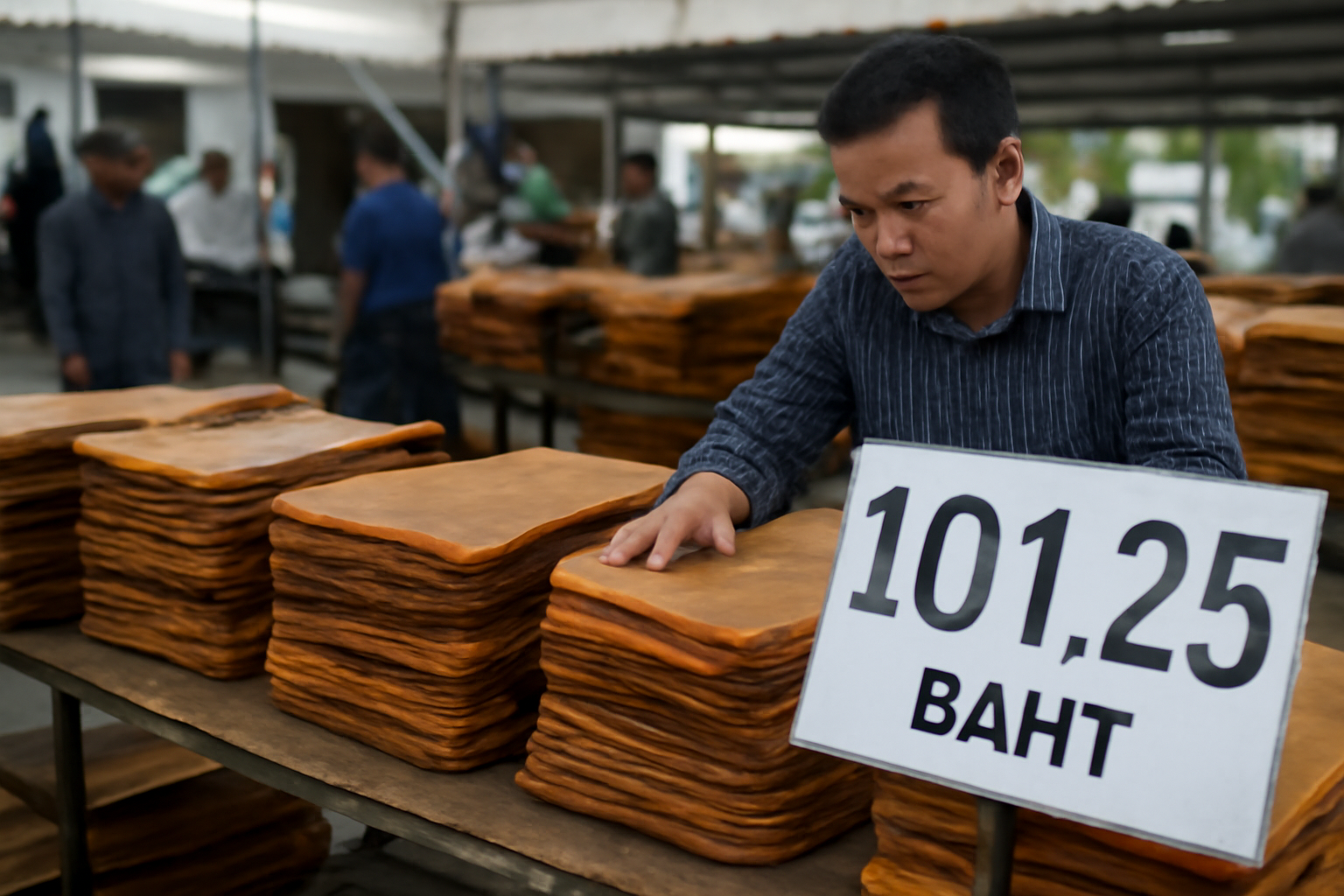
Smoked rubber sheet price falls to 87.55 baht
Thailand’s auction price for grade 3 ribbed smoked rubber sheet fell by 1.25 baht per kilogram to 87.55 baht per kilogram, according to results disclosed by the Rubber Authority of Thailand. Sri Trang secured the available rubber across all three auction markets at the same price.
The result indicates weaker near-term sentiment in Thailand’s physical rubber market. The authority expects prices to remain soft during the week as participants assess pressure associated with US import tariffs. The available report did not specify the tariff rate, implementation timetable or particular rubber products that could be affected.
The auction decline represents a reduction of about 1.4% from the implied previous price of 88.80 baht per kilogram. For producers and processors, the move narrows revenue on physical sales, although the commercial impact will depend on volumes, rubber grades and individual contract terms.
Traders monitor US policy and macroeconomic signals
US tariff pressure matters beyond direct shipments to the American market. Trade restrictions can alter purchasing decisions, redirect product toward other destinations and influence the prices that processors are willing to pay for feedstock. Without details on the measures under consideration, however, the scale and duration of any effect on Thai rubber cannot yet be determined.
Market participants are also watching the outcome of the Federal Open Market Committee meeting. Monetary-policy decisions can affect the US dollar, financing conditions and broader risk sentiment, all of which may influence commodity trading. The source material did not provide an interest-rate forecast or describe an expected decision.
China’s purchasing managers’ index is another focus. China is an important reference point for industrial commodity demand, and its PMI readings can shape expectations for manufacturing activity and downstream rubber consumption. The report supplied no PMI figure, so the market signal will depend on the published data rather than a stated forecast.
Sri Trang takes all three auction markets
Sri Trang’s success in all three markets concentrates the day’s auction purchases with one buyer. The common winning price of 87.55 baht per kilogram also provides a clear physical-market benchmark for sellers, processors and traders assessing subsequent transactions.
For rubber growers, the immediate issue is whether the 1.25-baht decline persists beyond a single auction. Processors will weigh the benefit of lower raw-material costs against uncertainty over export demand and selling prices. Traders, meanwhile, must assess whether tariff concerns produce only short-term caution or a broader redirection of rubber flows.
The next direction will depend on concrete US tariff details, the FOMC outcome and China’s PMI release. Until those signals become clearer, Thailand’s rubber market is likely to remain sensitive to policy headlines and changes in industrial-demand expectations.