US soybeans account for 70% of Japan’s imports as USSEC marks 70 years in the country
US-origin soybeans account for 70% of Japan’s soybean imports, according to an interview with the US Soybean Export Council’s deputy representative in Japan published by Shokuhin Sangyo Shimbunsha. The supply relationship supports Japanese producers of edible oil, soy sauce, miso, tofu and natto.
US supply holds a dominant position
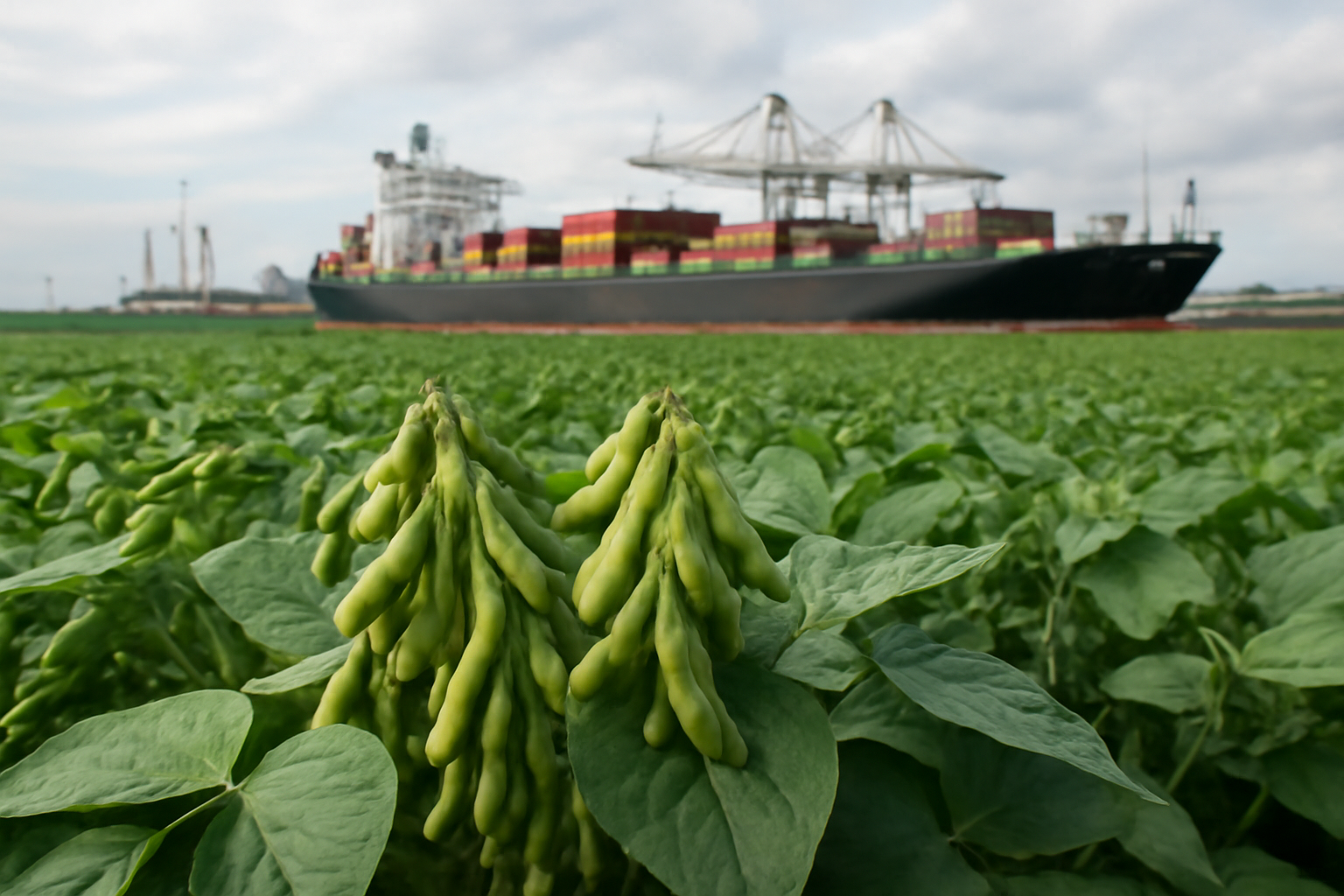
US-origin soybeans account for 70% of Japan’s soybean imports, highlighting the depth of the agricultural trade relationship between the two countries. The figure was reported by Shokuhin Sangyo Shimbunsha in an interview with the deputy representative of the US Soybean Export Council, or USSEC, in Japan.
The concentration makes the United States a central supplier to Japanese soybean processors. Rather than serving a single end market, imported US beans move into several established segments of Japan’s food industry, including edible oil and traditional fermented or processed soy foods.
For US exporters, Japan represents a market with multiple sources of demand. Oil crushers require soybeans as a raw material, while food manufacturers use suitable beans in soy sauce, miso, tofu and natto. The range of applications links the trade flow to both large-scale processing and products deeply embedded in Japanese consumption.
Imports support oil and food manufacturing
Shokuhin Sangyo Shimbunsha reported that many of the soybeans used in edible oil in Japan are of US origin. The supply therefore matters not only to importers but also to crushers, refiners and food companies whose production depends on reliable access to soybean raw material.
Food-grade soybeans form another important part of the relationship. US beans support the manufacture of soy sauce, miso, tofu and natto, four distinct categories with different processing requirements. Their presence across these industries shows that the US position in Japan extends beyond commodity oilseed demand into value-added food production.
A 70% import share also means that purchasing decisions by Japanese processors have direct significance for US soybean sellers. Changes in demand from oil manufacturers or traditional food producers can affect a trade channel built around several end uses. At the same time, Japanese buyers have a strong interest in the continuity and suitability of US supply because it feeds such a broad manufacturing base.
USSEC reaches a 70-year milestone in Japan
USSEC marked the 70th anniversary of opening its Japan office in May. That long-standing presence reflects sustained engagement with a market where imported soybeans are used in both industrial crushing and food processing.
The interview also referenced the SSAP certification mark and its presentation as the SUSS mark. In this context, certification offers the soybean sector a way to communicate supply attributes to Japanese commercial users and consumers. The supplied material did not provide further details about the certification criteria or adoption levels.
The central commercial fact remains Japan’s reliance on US origin for 70% of its soybean imports. For producers and exporters in the United States, the relationship provides access to a major destination serving several processing industries. For Japanese importers and manufacturers, it ties the availability of edible oil and familiar soy foods to a well-established trans-Pacific supply chain.