US Retains Tungsten Scrap as Critical-Minerals Supply Focus Shifts
The United States is retaining tungsten scrap domestically instead of exporting it, according to wallstreet-online.de. The change could give US recyclers and carbide processors greater access to secondary raw material, although no trade volumes, prices or effective date were provided.
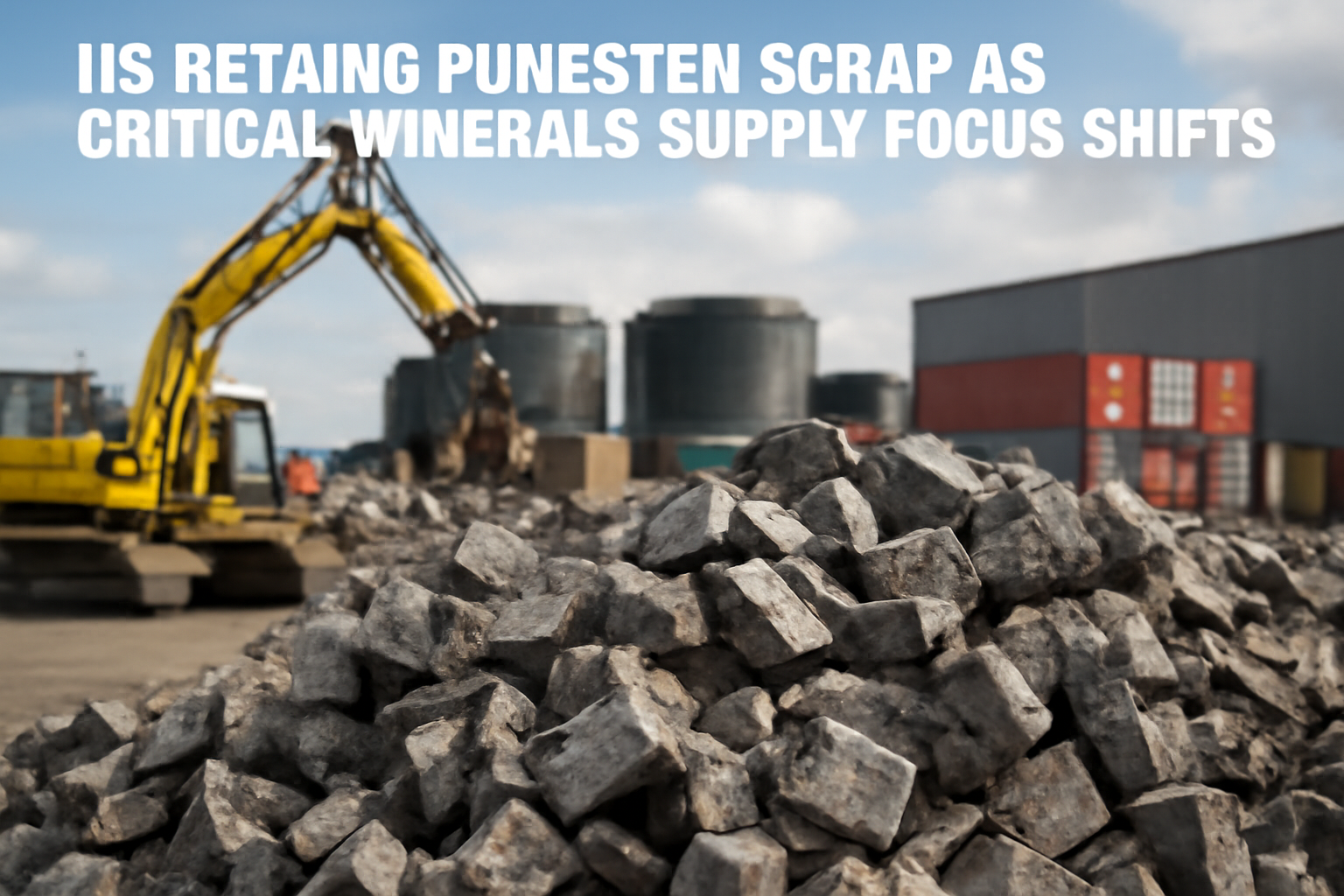
Tungsten scrap stays in the United States
The United States is no longer exporting tungsten scrap and is instead retaining the material for domestic use, according to wallstreet-online.de. The reported shift covers a secondary raw material that was previously treated largely as an ordinary recycling commodity and sold to markets offering the most attractive prices.
Tungsten-bearing scrap includes used drill bits, milling tools and cemented-carbide residues. These materials can be collected and processed to recover tungsten for further industrial use. Keeping them within the country could increase the volume available to US recyclers and downstream manufacturers without requiring an equivalent addition of newly mined material.
The available report does not specify when the change began, whether it reflects a formal government restriction or commercial decisions by market participants, or whether all categories of tungsten scrap are affected. It also provides no export volumes, domestic processing figures or prices. Those omissions make it impossible to quantify the immediate impact on either the US market or previous overseas buyers.
Recyclers gain a potentially tighter supply base
For US recycling companies, greater domestic retention could improve access to feedstock. For manufacturers using tungsten carbide, it may create another source of material from worn tools and industrial residues. The commercial effect will depend on collection rates, scrap quality and the capacity of domestic facilities to sort, process and return recovered tungsten to the market.
The change could also alter price competition for scrap. Tungsten residues have historically been sold to buyers offering the strongest returns, including processors outside the United States. If fewer US-origin cargoes reach international markets, foreign recyclers that previously competed for this material may need to seek alternative suppliers or offer higher prices. The source, however, gives no evidence of an export ban, price increase or supply shortage.
A signal for the critical-minerals market
The decision to keep even recyclable tungsten material at home is notable because it suggests that scrap is being viewed as a supply-chain resource rather than merely as industrial waste. Secondary supply can support domestic processors and reduce the amount of primary material they need to purchase, but it cannot be assessed in isolation from actual recovery yields and processing capacity.
Industry participants will need more trade data before treating the development as a lasting market break. The main indicators will be US tungsten-scrap export volumes, domestic scrap purchases, processing activity and price differences between US and overseas buyers. Until those figures emerge, the clearest conclusion is limited but relevant: material that once followed the best available export price is now being retained in the United States, increasing competition over who controls recyclable tungsten feedstock.