US Commerce Department proposes steep tariffs on solar panels and cells from India, Indonesia and Laos
The US Department of Commerce has proposed heavy tariffs on solar panels and solar cells imported from India, Indonesia and Laos, according to News18. The reporting does not specify duty rates, the exact product scope or an effective date. Washington first applied tariffs to Chinese solar products in 2012.
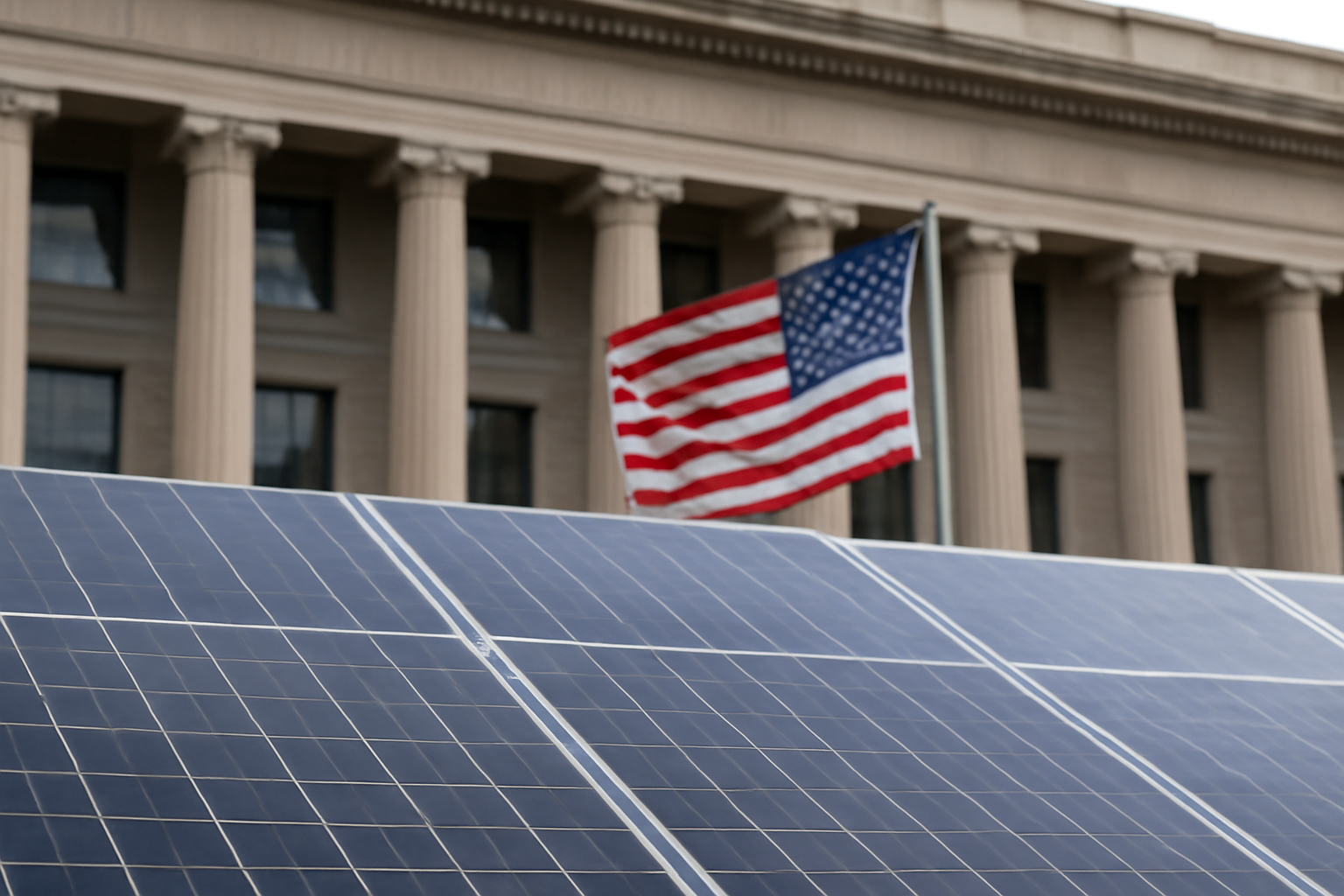
Commerce proposes duties on panels and cells
The United States Department of Commerce has proposed heavy tariffs on solar panels and solar cells imported from India, Indonesia and Laos, according to a report by News18. The proposal covers both finished modules and the cells used to assemble them, which places two separate stages of the photovoltaic value chain inside the same measure.
The reporting available does not state the duty levels under consideration, the precise product scope, or the date from which any tariff would apply. Nor has Commerce been reported as identifying the individual exporters and producers covered. Those details decide the commercial outcome. In United States trade-remedy proceedings, duty rates are normally assigned company by company, and a cooperating producer's rate can sit far below the rate applied to firms treated as non-cooperating or to the country as a whole.
A line of measures that began with China in 2012
News18 reported that the United States first imposed tariffs on Chinese solar products in 2012. The current proposal applies the same instrument — duties on cells and modules at the border — to a different set of origins. Grouping India, Indonesia and Laos into one proposal indicates that Commerce is treating them as parallel cases rather than as isolated national disputes. News18 placed the initiative in the context of BRICS, of which India is a member.
For buyers in the United States, the practical question is substitution. If cells and modules from all three origins carry additional duties at once, the alternatives narrow to domestic production, suppliers in countries outside the proceeding, and inventory already cleared through customs. The most exposed are utility-scale developers with fixed-price power contracts and equipment procured months in advance, where a rate landing mid-project has nowhere to go.
What Indian exporters have to work out
Indian manufacturers that have built module and cell shipments into the American market now enter a period in which pricing cannot be settled with confidence. A duty that is proposed but not final is difficult to pass through in a contract and equally difficult to absorb. Until Commerce publishes rates, exporters are negotiating against a number that does not yet exist.
Several points remain unresolved in the reporting:
- the duty rates proposed for each country and for individual producers;
- whether the measure covers cells, modules or both under a single scope definition;
- the effective date and whether duties would apply retroactively to entries already made;
- the schedule for a final determination and any subsequent injury decision;
- how exporters in the three countries intend to respond.
The commercial logic of the case is legible even without the numbers. Tariffs of this kind raise the delivered cost of imported equipment without changing the economics of the projects that depend on it. Where that gap is wide enough, procurement moves; where it is not, margins absorb it. The scale of both effects depends entirely on rates that Commerce has not yet published and that the News18 report does not carry.