US dairy industry presses Mexico over cheese-naming rules under USMCA
The US dairy industry is urging Mexico not to adopt geographic-indication rules that could restrict the names used for American cheese. The dispute matters because the United States supplied 87% of Mexico’s 232,000 tonnes of cheese imports in 2025.
US suppliers defend their largest share of the market
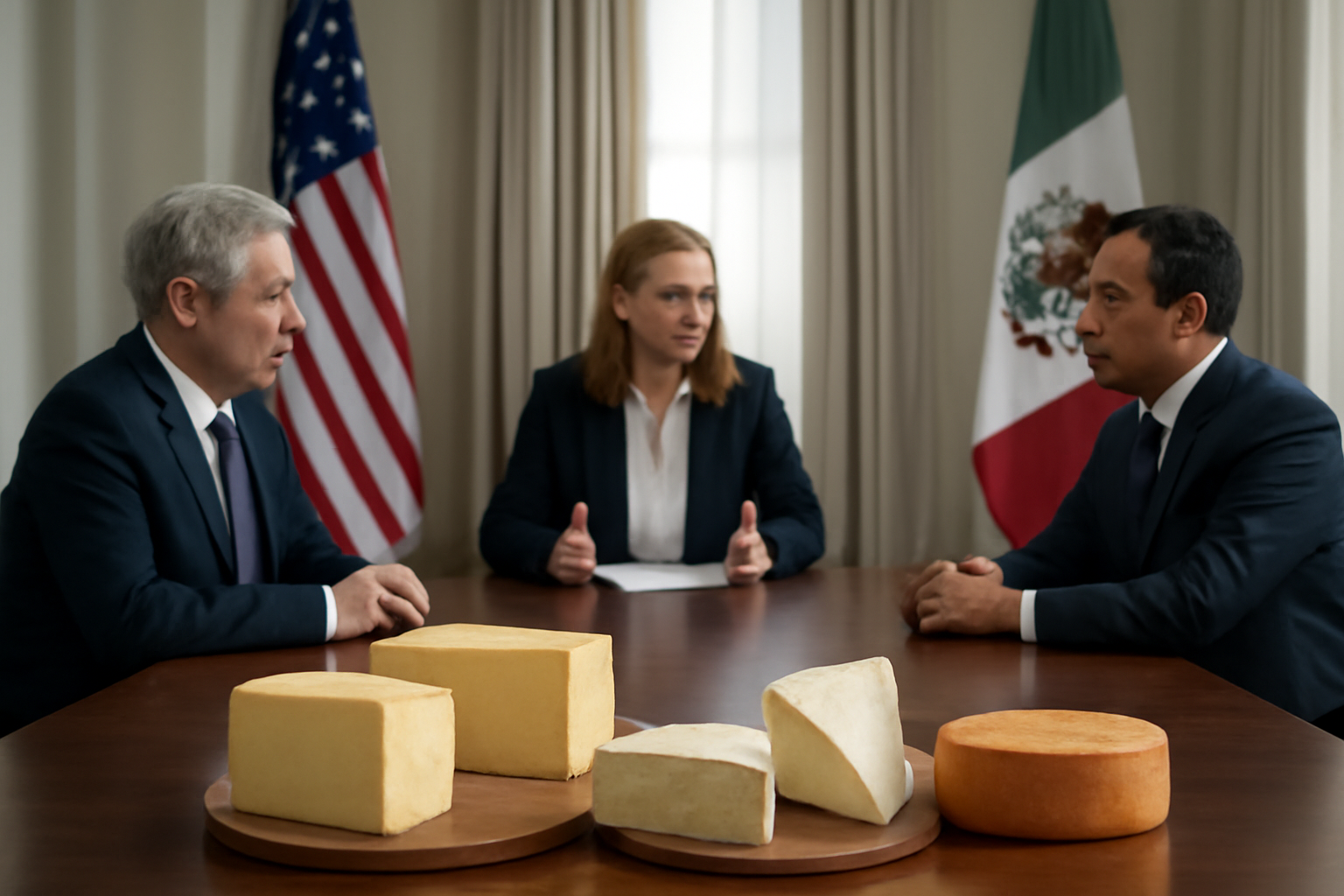
The US dairy industry is pressing Mexico through the United States-Mexico-Canada Agreement framework over proposed rules governing geographic indications and cheese names. American producers want to prevent new naming restrictions from disrupting sales in a market where they are the dominant foreign supplier.
Mexico imported 232,000 tonnes of cheese in 2025, with 87% of that volume originating in the United States. That concentration makes the regulatory question commercially significant for US cheesemakers, processors and exporters, as well as for Mexican importers and distributors whose product ranges depend heavily on American supply.
The concern is that stronger protection for geographic indications could limit the use of certain familiar cheese names on products made outside the region associated with those names. If Mexico adopts such restrictions, affected US suppliers could face changes to labels, product descriptions and marketing, or lose the ability to sell some cheeses under names already recognized by buyers.
Names have direct commercial value
For producers, a cheese name is more than a technical label. It helps buyers identify a product’s style, expected use and price category. Restrictions can therefore affect negotiations across the supply chain, from factory contracts and export documentation to supermarket listings and food-service menus.
The scale of US participation raises the potential cost of any disruption. With American cheese accounting for 87% of Mexican imports in 2025, even rules applying to only part of the assortment could affect meaningful volumes. The exposure is not limited to manufacturers: traders, logistics providers, wholesalers and Mexican customers may also have to adjust documentation or product portfolios.
The dispute also places Mexico’s treatment of geographic indications within the broader operation of USMCA. The US industry’s decision to raise the issue through the trade agreement shows that it views naming access as a market-access concern, not simply a branding disagreement.
Importers face uncertainty over implementation
The commercial impact will depend on the final scope of Mexico’s rules. A narrow approach could affect only specific protected terms, while broader restrictions could require more extensive changes across US cheese lines. The available information does not identify which individual cheese names may be covered or when any new requirements could take effect.
Mexican importers will need clarity on whether existing products can retain their names, whether alternative descriptions will be accepted and how compliance will be verified. Without that detail, companies cannot fully assess the cost of relabeling, renegotiating supply contracts or replacing products in their catalogues.
For US exporters, the priority is preserving access to a market that bought 232,000 tonnes of imported cheese in 2025 and sourced most of it from the United States. For Mexico, the issue is how to apply geographic-indication policy without creating avoidable disruption in a highly concentrated supply relationship. The outcome will determine whether the dispute remains a technical labeling matter or becomes a wider obstacle to bilateral dairy trade.