US beef prices hit record highs as packers capture margins and ranchers face rising costs
The US average retail price for all fresh beef reached a record $8.15 per pound in July 2024. Tight cattle supplies lifted prices, but high production costs, expensive replacement animals and lower packer bids limited the benefit for ranchers.
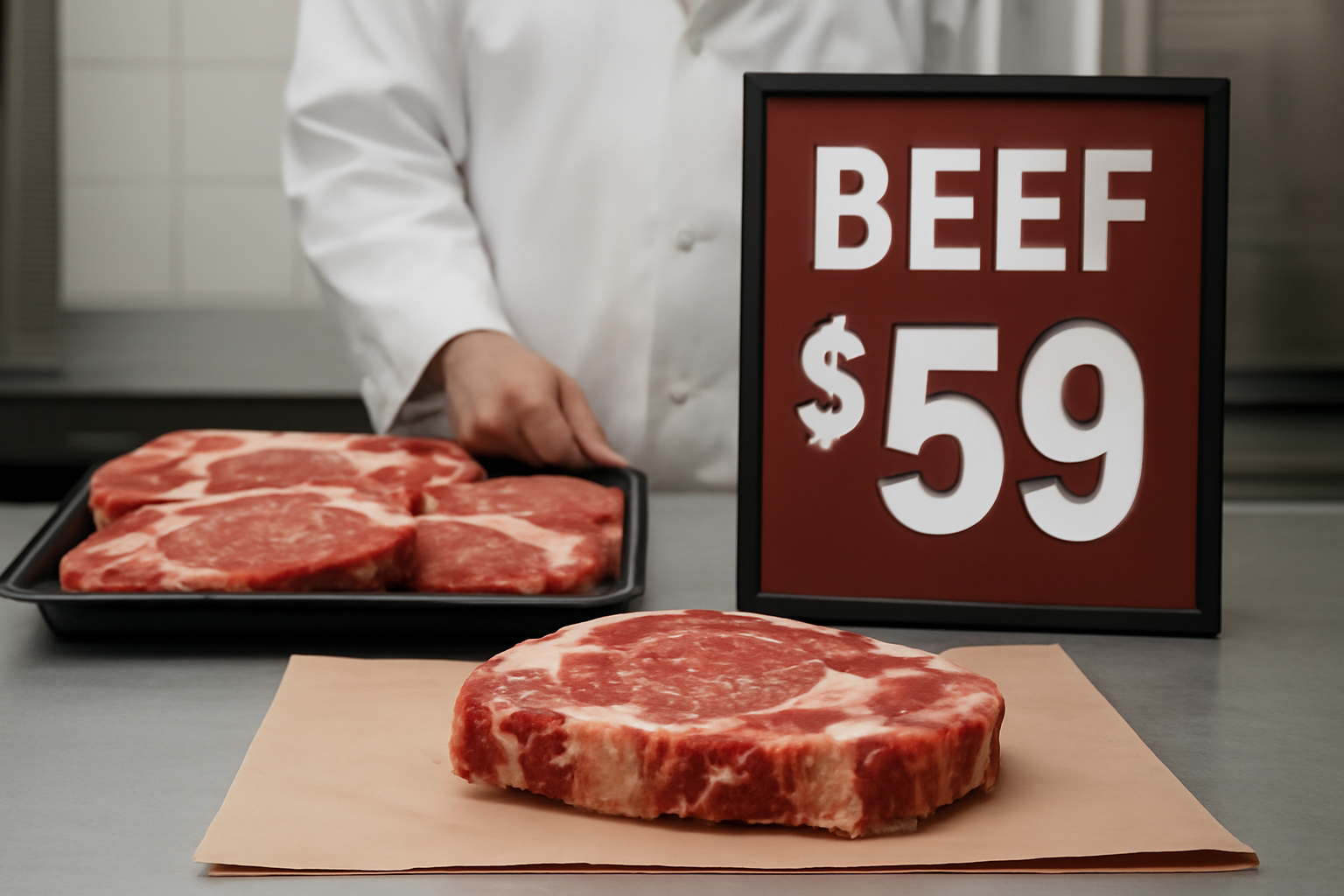
Retail beef crosses $8 per pound
The national average retail price for all fresh beef reached $8.15 per pound in July 2024, the first time it had exceeded $8, according to the US Department of Agriculture’s Economic Research Service. The American Farm Bureau Federation said the record reflected a supply contraction that had developed over several years rather than a single disruption.
Pasture conditions began deteriorating in 2020, followed by three years of drought associated with La Niña. Feed-grain prices reached record levels while broader inflation raised ranchers’ costs. Producers responded by sending an unusually large share of female cattle to feedlots and slaughter instead of retaining them for breeding. That supported beef output in the short term but reduced the breeding base.
The resulting cattle inventory was the smallest in 73 years. Rebuilding is slow: a calf needs 18-24 months from birth to reach slaughter weight, while a retained female calf takes about a year before producing a calf of its own. The Farm Bureau warned that ranchers had not yet begun retaining females in sufficient numbers, leaving further upward pressure on retail prices.
Packers benefit from a short-term cattle surplus
Despite the reduced national herd, USDA data showed 11.1 million cattle on feed on August 1, slightly more than a year earlier. Feedlot placements totaled 1.7 million head, about 6% above 2023. Feed-grain prices had fallen about 25% during 2024, encouraging operators to place more cattle in feedlots and keep them there longer, producing a temporary supply of unusually heavy animals.
That availability allowed packers to reduce cash bids for cattle while selling processed and boxed beef at high values. Marketings reached 1.855 million head in August. The Farm Bureau’s assessment was that packers were capturing the benefit of high grocery-store prices during this phase, while farmers absorbed the decline in prices paid for fed cattle.
Cold-storage data reinforced the broader shortage. Total red-meat stocks on July 31 were down 3% from both the previous month and the same date in 2023. Beef stocks were about 1% lower year on year and roughly 20% below July 31, 2022. Strong domestic demand against that reduced buffer helped sustain retail prices.
High cattle prices do not guarantee expansion
Ranchers were receiving historically elevated prices, but gains were uneven. The five-area average fed-steer price for the week of August 25 was $185.54 per hundredweight, only 1.5% above the comparable week in 2023 but 56% above the 2018-2022 average. Southern Plains steers weighing 500-600 pounds averaged $288.91 per hundredweight, up 3% year on year and 67% above the 2018-2022 average.
Costs moved higher at the same time. USDA’s February 2024 forecast placed agricultural production expenses at a record $455 billion, up 4%, or $16.7 billion, for a sixth consecutive annual increase. Expanding a herd therefore requires buying expensive cattle, financing working capital at high interest rates and waiting years for additional beef supply. Selling animals generates immediate cash and avoids those risks. For ranchers, especially new entrants, the retail record is consequently not a reliable measure of profitability; for packers and retailers, future margins will depend on how quickly the current feedlot supply tightens.