US bans imports of foreign mobile robots and solar inverters over security risks
The United States has barred imports of newly approved foreign-made mobile robots and solar inverters, citing risks from network connectivity. The restrictions are expected to hit Chinese suppliers particularly hard, while previously authorized robots and stationary industrial systems remain unaffected.
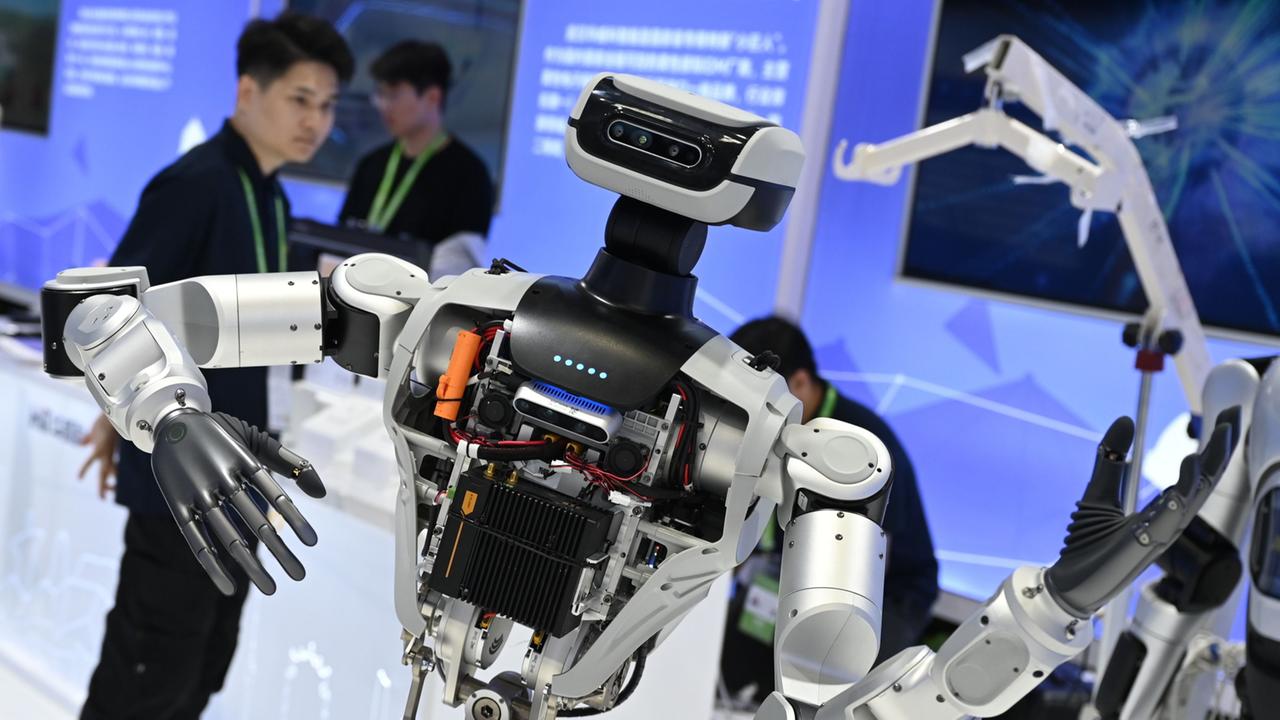
Authorization required for new mobile robots
The US government has prohibited imports of foreign-made robots capable of moving autonomously, according to German public broadcaster Tagesschau. Future models of two-legged humanoid robots and four-legged machines will be admitted only with special authorization, potentially from the Department of Defense, the Federal Communications Commission said.
The measure is expected to restrict Chinese manufacturers’ access to the US market and shield American developers from some foreign competition. Robots already approved by the FCC may continue to be imported and used. Stationary systems, including robots deployed in industrial production, are expressly excluded from the ban.
Network connections drive security concerns
The FCC based its decision on the robots’ network capabilities. US authorities argue that connected machines could be used to collect information, conduct surveillance or enable remote control. The government defines a mobile robot as a technical device weighing more than 2 kilograms that can move independently, avoid obstacles and use sensors, network connectivity and software for autonomous navigation.
That definition extends beyond humanoid and dog-like machines. Tagesschau reported that it could also cover advanced robotic vacuum cleaners, a market in which Chinese suppliers have overtaken US pioneer iRobot. The breadth of the criteria means manufacturers will need to assess products by their technical functions rather than their commercial category alone.
China dominates humanoid robot production
Companies in the United States and China are investing in two-legged humanoid systems and four-legged robots for factories, services and households. Some robots developed by Silicon Valley company Figure AI are already used for simple production-line tasks. Tesla chief Elon Musk intends to begin manufacturing the Optimus robot this year and has described it as “by far the biggest product of all time.”
Analysts estimate that about 85% of humanoid robots on the global market now come from China, Tagesschau reported. The FCC action therefore affects the industry’s dominant production base and could add pressure to relations between Washington and Beijing. Chinese Foreign Ministry spokesperson Mao Ning said China opposed expanding the concept of national security to suppress Chinese companies. She argued that protectionism would neither improve US competitiveness nor serve American consumers and said China would take necessary measures to defend its companies’ interests.
Solar inverters included in restrictions
The FCC also prohibited imports of foreign solar inverters, which convert direct current generated by solar panels into alternating current suitable for delivery to the public grid. Chinese companies lead the global market and are consequently expected to bear much of the impact.
US authorities cited similar concerns about connected inverters, saying network access could potentially be used to collect data or switch equipment off. By targeting both mobile robots and energy equipment, the policy places network security at the center of market access. For robot developers, solar suppliers and US buyers, future sales will depend not only on price and performance but also on authorization and the security of connected systems.