U.S. ban on selected Canadian imports threatens liquor and whey supplies
A U.S. ban on Canadian alcoholic beverages, whey and several other products is expected to create supply gaps for bars, specialty retailers and protein-supplement businesses. Economists expect concentrated disruption rather than a large increase in nationwide inflation.
Ban follows 50% tariffs on Canadian goods
A U.S. prohibition on selected Canadian imports is expected to make some alcoholic beverages and whey-based protein products harder to obtain, with the largest effects likely to fall on businesses that depend on specialized Canadian suppliers. Vinetur, citing a HuffPost report based on interviews with three economists, said the measure covers all alcoholic beverages from Canada, molasses, nonalcoholic beer and spirits, and whey.
The ban was announced on Sept. 29 after the administration had imposed 50% tariffs on many Canadian goods during the summer. Josh Stillwagon, an economics professor and division chair at Babson College, said the nationwide price impact should be limited because the earlier tariff had already made many affected imports difficult to sell profitably in the United States. The prohibition creates a different problem: products can disappear entirely instead of remaining available at a higher price.
Specialty beverage businesses face the sharpest gaps
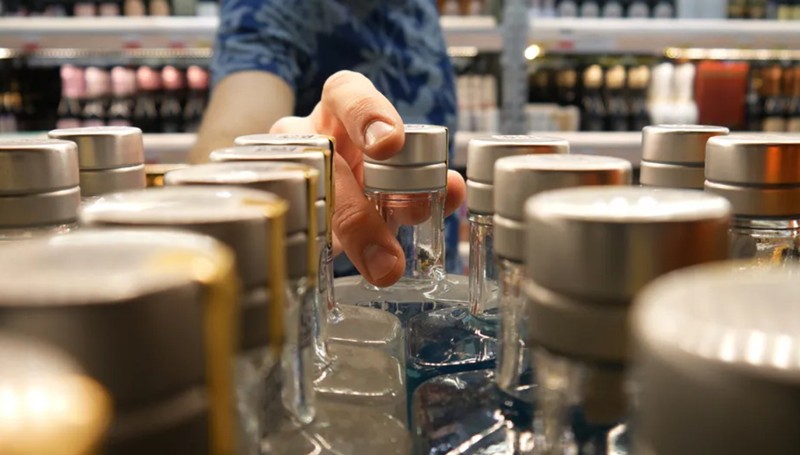
Bars, restaurants and retailers that carry Canadian spirits and beer could lose products from shelves and menus. Michael Klein, a professor of international economic affairs at the Fletcher School at Tufts University and executive editor of Econofact, cited Canadian Club whiskey as an example of a product that could become unavailable. He added that domestic competitors often raise prices when tariffs reduce competition from imports.
The impact will not be uniform. Fergus Hodgson, director of Econ Americas, said businesses near the U.S.-Canada border, operators with long-standing Canadian supply relationships and venues serving customers loyal to Canadian brands are particularly exposed. Large chains with broad inventories should have more substitution options than specialty stores and bars focused on limited-distribution labels.
Larger beverage companies may also have a logistical workaround. The rules include an exception for alcohol transported in bulk, allowing companies with sufficient scale and capital to move spirits in tanks, barrels or plastic totes and bottle them in the United States. Small Canadian craft distillers are less able to use this route, raising the risk that they lose U.S. market access while larger competitors reorganize their supply chains.
Whey users confront tighter sourcing
The whey restriction could affect smoothie shops, gyms and protein-supplement sellers as well as food retailers. Canada supplies most of the whey imported by the United States and has been the fastest-growing source of those shipments, according to the HuffPost report. Stillwagon said rising demand for protein products had already pushed the whey market higher, while a global whey powder market analysis estimates that market at 11.84 USD billion in 2025, and the ban could increase sourcing costs as supply tightens.
The national inflation effect may remain modest, but that average would conceal concentrated pressure on companies whose products rely on whey. Importers and manufacturers will have to seek alternative suppliers, reformulate products or absorb higher costs. The speed of adjustment will depend on available capacity outside Canada and the ability of buyers to qualify new sources.
Policy uncertainty could outlast the ban
The wider trade dispute is also affecting services. Stillwagon said Canadian travel to the United States remains about 25% below 2024 levels despite some recovery over the past year. Maine, Vermont, upstate New York and Michigan are among the border regions most exposed, while Klein said winter destinations including Arizona and Florida could also experience fewer Canadian visitors.
A policy reversal would not immediately restore normal commerce. Stillwagon said physical shipments might resume within days if Congress repealed the bans, but rebuilding contracts, inventories and established trade patterns could take a couple of quarters. Klein said the United States is increasingly regarded as an unreliable trade partner. That loss of confidence could keep Canadian suppliers, U.S. importers and distributors cautious even after formal restrictions end.